

From Silent Forests to Smart Sanctuaries: How AI is Rewriting the Future of Wildlife Conservation
Let’s be honest, for a long time, the narrative around wildlife conservation has felt overwhelmingly bleak. Every other day, it seems, we hear about another species teetering on the brink, another habitat shrinking, another devastating poaching incident. It’s enough to make even the most ardent nature lover feel a deep sense of despair, a quiet resignation that perhaps, we’ve already lost too much. But what if I told you there’s a new, powerful ally stepping into the ring? What if the very technology that’s reshaping our daily lives, from our smartphones to our entertainment, is now offering a genuine fighting chance to the creatures of our planet?
I’m talking about Artificial Intelligence, and its burgeoning, frankly astonishing, role in wildlife conservation. This isn’t just about fancy algorithms; it’s about giving conservationists superpowers, transforming how we monitor, protect, and understand the animal kingdom. And trust me, it’s a story worth telling.
The Silent Watchers: AI’s Eyes and Ears in the Wild
Imagine trying to track a single elusive snow leopard across vast, treacherous mountain ranges, or count the exact number of orangutans in a dense, sprawling rainforest. Historically, this has been a monumental, often impossible, task, relying on painstaking human effort, limited resources, and a good dose of luck. Enter AI. Today, we’re seeing an incredible shift.
Smarter Monitoring and Data Collection
- Camera Traps on Steroids: Traditional camera traps have been a game-changer, but sorting through millions of images for a handful of animal sightings is mind-numbing. AI-powered computer vision can now automatically identify species, count individuals, and even recognize specific animals by their unique markings. This isn’t just faster; it’s infinitely more accurate, allowing researchers to gather unprecedented data on population dynamics and distribution.
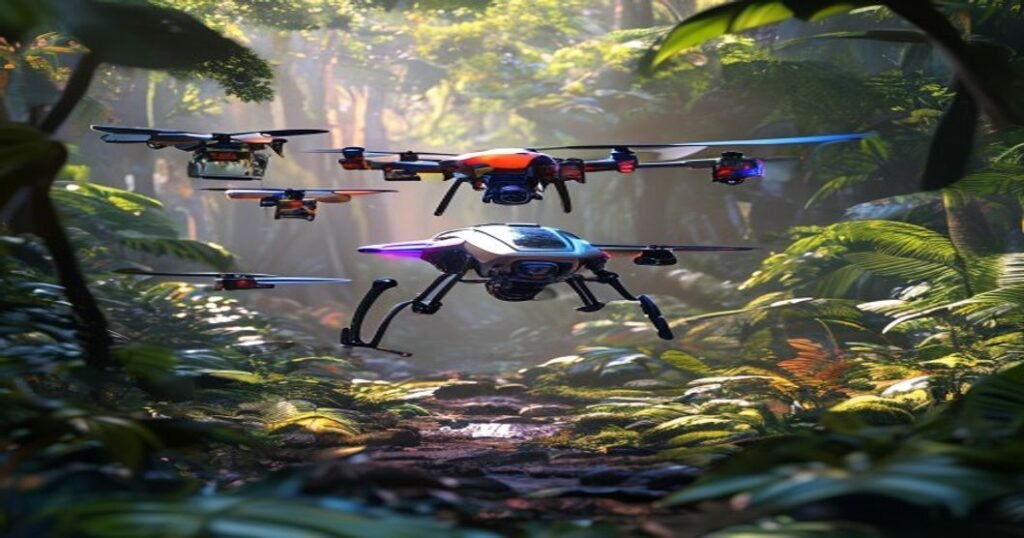
- Drones and Satellite Imagery: Drones equipped with thermal cameras and AI analytics are mapping habitats, detecting poachers in real-time, and even spotting animals from above without disturbing them. Combined with satellite data analyzed by AI, we can monitor deforestation, track animal migration patterns, and identify critical ecological changes on a scale previously unimaginable. It’s like having a global surveillance system dedicated to saving species.
- Acoustic Sensors: Think about the soundscape of a rainforest. AI algorithms can now sift through hours of recorded audio, distinguishing the calls of specific animals, detecting gunshots (a tell-tale sign of poaching), or even identifying the sounds of illegal logging. This ‘audio surveillance’ provides a non-invasive, continuous stream of information, turning passive listening into active intelligence.
The Unseen Guardians: Predictive Power and Anti-Poaching Efforts
One of the most heartbreaking aspects of conservation is the constant battle against poaching. It’s a high-stakes, often violent conflict, and rangers are frequently outmanned and outmaneuvered. But AI is turning the tide.
Predicting Threats and Deploying Resources
AI isn’t just reactive; it’s becoming incredibly predictive. By analyzing vast datasets including historical poaching incidents, weather patterns, moon phases, animal movement, and even local socio-economic factors, AI models can identify areas and times when poaching is most likely to occur. This allows conservation organizations to deploy their limited ranger resources strategically, creating a more effective deterrent. Imagine a system that tells you, with a high degree of confidence, where poachers might strike next week. That’s not science fiction anymore; it’s happening now. It’s a testament to how AI’s unstoppable march is the biggest story of our time, permeating even the most remote corners of our planet to make a tangible difference.
Real-Time Alerts and Smart Patrols
When an intrusion is detected, whether by an AI-powered camera or an acoustic sensor, the system can instantly alert rangers, sometimes even guiding them to the precise location via GPS-enabled devices. This dramatic reduction in response time can mean the difference between life and death for an endangered animal. It’s truly incredible how this technology empowers those on the front lines.
Restoring Habitats, Rebuilding Futures: AI in Ecological Restoration
It’s not enough to just protect animals; we also need to protect and restore the places they call home. Habitat loss is a primary driver of extinction, and AI is proving to be an invaluable tool in reversing this trend.
Smart Reforestation and Biodiversity Management
AI algorithms can analyze soil composition, climate data, and historical vegetation patterns to determine the most suitable tree species for reforestation efforts, maximizing their chances of survival and ecological benefit. They can even predict how different restoration strategies might impact local biodiversity over time. This kind of sophisticated planning removes much of the guesswork from complex ecological projects.
Understanding Animal Behavior Like Never Before
Beyond protection, AI is revolutionizing our understanding of animal behavior. By processing hours of video footage and complex tracking data, AI can identify subtle patterns in animal movement, social interactions, and feeding habits that human observers might miss. This deeper insight helps us design more effective conservation strategies, anticipate responses to environmental changes, and even improve captive breeding programs.
The Human Element: Citizen Science and Global Collaboration
The beauty of AI in conservation isn’t just about complex algorithms run by experts; it’s also about empowering ordinary people. Think about the potential for citizen science applications where individuals can contribute valuable data through their smartphones, which are increasingly becoming your smartest companion thanks to AI. Apps that identify birdsongs, plant species, or even track wildlife sightings can feed into larger AI models, creating a truly global network of data collection.
Moreover, AI facilitates collaboration across borders. Researchers from different continents can share and analyze vast datasets, accelerating discovery and problem-solving. It’s truly a collaborative effort that transcends geographical boundaries.
The Road Ahead: Challenges and Ethical Considerations
While the promise of AI in conservation is immense, it’s not without its challenges. There’s the perennial issue of data quality and bias – if the data fed to the AI is flawed or incomplete, the insights will be too. Ethical questions also arise, such as the potential for surveillance technologies to infringe on privacy, even in remote areas, or the risk of over-reliance on technology at the expense of traditional ecological knowledge.
Cost is another factor. Deploying sophisticated AI systems, drones, and sensor networks can be expensive, limiting access for smaller organizations or developing nations where conservation needs are often most acute. However, the accessibility of AI technologies is growing at an incredible pace, and we’re seeing how Pakistan’s AI awakening, for instance, is pushing for such advancements to benefit various sectors, including potentially local conservation efforts.
A New Dawn for Conservation? My Take.
Despite these hurdles, I am undeniably optimistic. What AI offers is not a silver bullet, but a profoundly powerful set of tools that amplify human effort, provide unparalleled insights, and create opportunities for intervention that simply didn’t exist before. It’s helping us understand our planet’s incredibly complex ecosystems with a clarity and scale that was once the stuff of science fiction.
From the depths of the oceans to the highest mountain peaks, AI is giving a voice to the voiceless and a fighting chance to the vulnerable. It’s allowing us to move beyond mere reaction and into proactive, intelligent conservation. The future of wildlife isn’t just about saving species; it’s about building smart sanctuaries where humans and technology work hand-in-hand to ensure the wild heart of our planet continues to beat strong.
It’s an exciting time to be involved in conservation, and for anyone who’s ever felt helpless watching the news about our planet’s diminishing biodiversity, take heart. The tide is turning, one algorithm, one drone, one smart sensor at a time. The revolution is here, and it’s fighting for the wild.


