
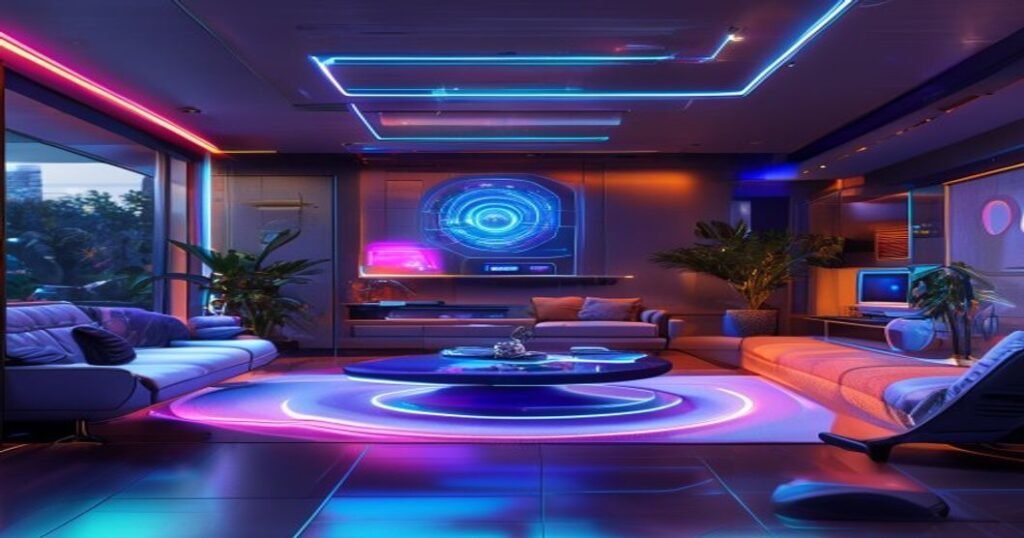

Beyond Walls: How AI is Sculpting the Smart, Personalized Homes of Tomorrow
Remember those sci-fi movies where homes anticipate your every need, adjusting lighting, temperature, and even your mood before you consciously think about it? Well, what was once cinematic fantasy is rapidly becoming our everyday reality. We’re standing at the precipice of an interior design revolution, driven not just by aesthetics and comfort, but by the invisible hand of Artificial Intelligence. It’s truly fascinating, isn’t it?
For too long, our homes have been static spaces, beautiful backdrops to our lives, perhaps, but ultimately passive observers. Now, imagine a home that truly understands you. A home that learns your routines, anticipates your preferences, and actively contributes to your well-being. This isn’t just about turning on lights with a voice command; it’s about a deep, intuitive integration of technology that transforms our living spaces into dynamic, responsive partners. This is the dawn of the AI-powered intuitive home, and honestly, it’s far more exciting than anything I’ve seen in decades of observing tech trends.
The Dawn of the Truly Intuitive Home
At its core, an intuitive home leverages AI to move beyond simple automation. Think of it less like a series of interconnected gadgets and more like a living, breathing ecosystem designed to optimize your comfort, efficiency, and safety. AI algorithms observe your habits – when you wake up, when you leave for work, your preferred temperature, even the type of music you enjoy at certain times of the day. It then uses this data to make predictive adjustments, often before you even realize you need them.
For example, your smart thermostat doesn’t just respond to a schedule; it learns when you typically arrive home and starts adjusting the climate earlier, ensuring perfect comfort the moment you walk through the door. Your lighting system doesn’t just dim; it adapts the color temperature throughout the day to mimic natural light cycles, supporting your circadian rhythm. This level of seamless integration and predictive capability is what sets the latest wave of smart homes apart. If you’re curious about the deeper implications of this shift, especially how AI is fundamentally changing our daily environments, you might find a broader perspective in how AI is revolutionizing interior design and daily living across the board.
AI as Your Personal Interior Design Assistant
Beyond the operational aspects, AI is also making significant inroads into the very art of interior design itself. Historically, designing a space involved countless hours of research, mood boards, samples, and agonizing decisions. Now, AI is stepping in as an incredibly powerful assistant, democratizing good design and making it accessible to everyone.
Imagine uploading photos of your existing space and having an AI generate dozens of design concepts tailored to your aesthetic preferences, budget, and even specific furniture pieces you want to keep. AI-powered tools can analyze vast databases of design styles, materials, and layouts to suggest optimal furniture placement, color palettes that evoke specific emotions, and even predict how different textures will interact under various lighting conditions. They can create 3D renders in moments, allowing you to virtually walk through your redesigned home before lifting a single paint brush. This isn’t just about efficiency; it’s about empowering homeowners to visualize their dreams with unprecedented clarity and speed, transforming what was once a luxury service into an accessible creative process.
Beyond Aesthetics: AI for Functionality, Well-being, and Resource Management
The beauty of AI in interior design extends far beyond mere aesthetics. It’s about creating spaces that are inherently more functional, healthier, and sustainable. Think about:
- Energy Efficiency: AI systems can optimize energy consumption by learning peak usage times, integrating with renewable energy sources, and making real-time adjustments to heating, cooling, and lighting based on occupancy and external weather conditions. This isn’t just good for the planet; it’s fantastic for your wallet.
- Enhanced Security: Advanced AI-driven security systems can differentiate between a pet and an intruder, detect unusual patterns of activity, and even use facial recognition to grant access or alert you to unfamiliar faces.
- Health and Wellness: Homes can monitor air quality, humidity levels, and even your sleep patterns, offering suggestions or automatically adjusting environmental factors to promote better health. Imagine a bedroom that subtly shifts lighting to wake you gently or a ventilation system that purifies the air based on real-time allergen levels.
- Accessibility: For individuals with mobility challenges, AI can control doors, appliances, and environmental settings with voice commands or even gaze tracking, making homes truly inclusive.
The potential for optimization and personalized experience is staggering. This push for intelligent optimization isn’t unique to homes, of course. We see similar algorithmic transformations in complex digital environments, where AI is the ultimate cheat code for developers and players alike in the gaming world, creating more immersive and responsive experiences. The same principles of learning and adaptation are now being applied to our physical living spaces.
The Human Element in an AI-Driven World
Now, I know what some of you might be thinking: Is AI going to replace human designers? Will our homes lose their soul if algorithms are calling the shots? And to that, I say, absolutely not. In fact, it’s quite the opposite.
AI, in the context of interior design, is a powerful tool. It’s an assistant, a data analyst, a visualization engine – but it’s not a substitute for human creativity, empathy, and personal touch. The true artistry comes from a human designer’s ability to interpret a client’s unspoken desires, to weave a story into a space, to infuse it with personality and warmth. AI handles the heavy lifting – the tedious measurements, the endless permutations, the instant renders – freeing up designers to focus on the higher-level conceptualization, the emotional connection, and the truly bespoke elements that make a home unique. It elevates the human designer from a task-doer to a visionary, equipped with unprecedented capabilities.
This symbiotic relationship between human ingenuity and artificial intelligence is not just reshaping individual homes but is part of a much larger global trend. Nations are actively investing in digital infrastructure and AI capabilities to fuel economic growth and enhance citizens’ quality of life. Much like how interior design is being revitalized, Pakistan’s digital revolution shows how AI and startups are igniting a nation’s future, demonstrating the pervasive impact of these technologies across all sectors.
AI and the Future of Interior Design – A Glimpse Ahead
What does the future hold? I predict even deeper integration. Imagine homes that can sense your stress levels through wearables and subtly adjust ambient lighting, sounds, and even aromatherapy to help you relax. Envision spaces that automatically reconfigure their layout for different activities – a dining room transforming into a yoga studio with movable walls and adaptive furniture. We’re talking about truly adaptive architecture, driven by AI.
Of course, this journey isn’t without its considerations. Data privacy and security will become paramount, as our homes gather more intimate details about our lives. Ethical guidelines for AI in domestic settings will need to be established to ensure the technology serves humanity, rather than dictating our choices. But these are challenges we are equipped to tackle as we move forward.
The Intelligent Evolution of Our Living Spaces
The revolution in interior design, powered by AI, is fundamentally changing our relationship with our homes. They are evolving from static shelters into intelligent, responsive entities that adapt to our lives, enhance our well-being, and simplify our daily routines. It’s a shift towards spaces that aren’t just aesthetically pleasing, but deeply intuitive and profoundly personal. For anyone passionate about creating meaningful environments, this era offers an unprecedented palette of possibilities.
As we continue to embrace AI in all facets of our lives, from optimizing financial decisions to revolutionizing creative industries, it’s clear that our homes are the next frontier. So, prepare to live in spaces that don’t just house you, but truly understand you. The future of interior design isn’t just smart; it’s intuitive, intelligent, and incredibly exciting.


