
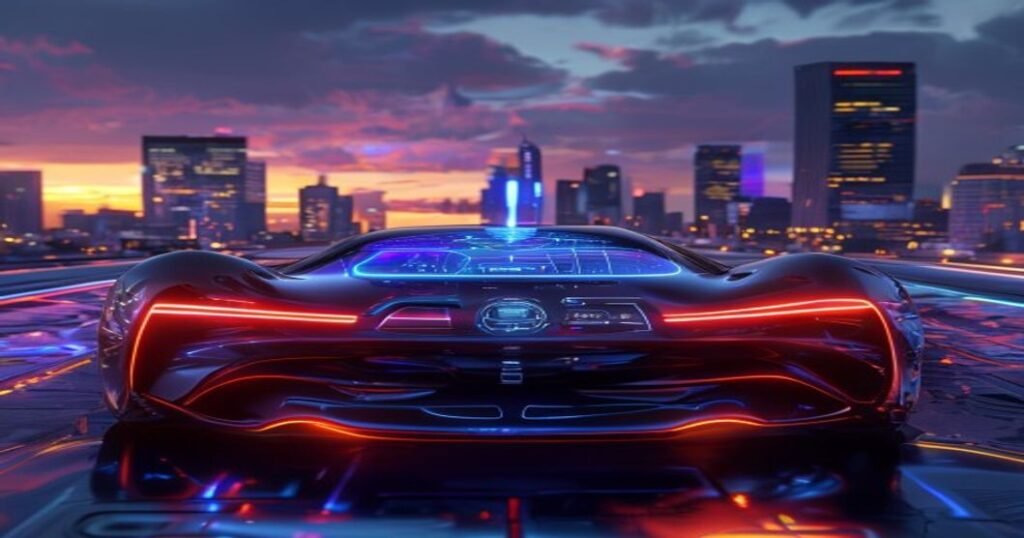

Remember when electric vehicles (EVs) were just a quirky, eco-friendly alternative? A bit quieter, maybe a touch slower (initially, anyway), and definitely a conversation starter about charging infrastructure. Fast forward to now, and EVs are no longer just about the electrons flowing to a motor. They’ve evolved, matured, and are now sitting at the precipice of an even bigger revolution, one powered not just by batteries, but by brains: Artificial Intelligence.
As a seasoned observer of the tech and auto worlds, I’ve seen countless trends come and go. But what’s happening in the EV space with AI isn’t just a trend; it’s a fundamental reimagining of what a car is. It’s no longer just a mode of transport; it’s becoming a sentient co-pilot, a personalized sanctuary, and an integral part of our digital lives. And honestly? Once you experience it, there’s no going back to the dumb cars of yesteryear.
More Than Just a Motor: The EV as a Digital Brain
Think about it. Traditional gasoline cars, for all their mechanical marvels, are largely analog machines. EVs, on the other hand, were born digital. They’re inherently software-driven, packed with sensors, processors, and connectivity that make them perfect canvases for AI integration. This isn’t just about fancy touchscreens; it’s about the very architecture of the vehicle allowing for continuous learning, adaptation, and personalization. Every EV rolling off the line today is a data center on wheels, constantly collecting information about its environment, the driver, and its own operational health.
This digital foundation is precisely what unlocks AI’s true potential in the automotive world. It allows for capabilities that go far beyond what we ever thought possible, transforming not just how we drive, but how we interact with our vehicles, how they fit into our homes, and even how they manage their own energy.
AI as Your Intuitive Co-Pilot: Safety & Smarts on the Road
The most visible impact of AI in EVs right now is arguably in advanced driver-assistance systems (ADAS). We’re talking about adaptive cruise control that doesn’t just maintain a set speed but anticipates traffic flow, or lane-keeping assist that feels more like a gentle nudge from an attentive friend than an aggressive correction. But AI is pushing this much further.
- Predictive Safety: Imagine a car that doesn’t just react to an obstacle but predicts potential hazards seconds before they become critical. AI analyzes a multitude of data points – road conditions, driver attention, surrounding traffic, even weather forecasts – to warn you, or even take pre-emptive action, far more effectively than any human ever could. It’s like having an extra pair of eyes, always alert, always learning.
- Personalized Driving Dynamics: AI can learn your driving style. Do you prefer a sporty feel or a smoother, more efficient ride? Your EV can adapt its regenerative braking, acceleration curves, and even steering response to match your preferences, creating a driving experience that feels uniquely tailored to you.
For me, this isn’t just about preventing accidents – though that’s a huge benefit. It’s about reducing the mental load of driving, making long commutes less stressful, and turning every journey into a more relaxed and confident experience. It’s about a car that truly understands and supports its driver.
The Hyper-Personalized Cabin: Your Car, Your Sanctuary
Once you step inside an AI-powered EV, the transformation continues. The cabin is no longer just a functional space; it’s an extension of your personalized digital life, an environment that molds itself to your preferences the moment you open the door. Forget adjusting your seat, mirrors, or climate control every time someone else drives your car – AI remembers and recalibrates instantly.
- Intuitive Infotainment: Your car’s AI knows your music tastes, your favorite podcasts, and even your preferred news sources. It can curate content on the fly, suggest destinations based on your calendar or mood, and even learn your vocal commands with uncanny accuracy, making interaction feel completely natural.
- Wellness Integration: Some advanced systems are even integrating biometric sensors to monitor driver fatigue, stress levels, or even vital signs. Should it detect a lapse in attention, it might suggest a break, adjust cabin lighting to be more invigorating, or play calming music. Your car is becoming a health guardian on wheels.
- Ambient Personalization: Beyond comfort, AI controls the very atmosphere of your car. Lighting, scent diffusers, even the feel of the seat material can adapt to create an optimal environment for concentration, relaxation, or exhilaration. It’s about creating a space that doesn’t just transport you, but truly understands and caters to your needs at that moment. In many ways, your car is evolving into a mobile extension of your personal haven, a lot like how we strive to create a bespoke living space at home. If you’ve ever thought about turning your living space into something truly unique and reflective of you, you might find some inspiration in how AI is making our vehicles feel like home. For more on creating such tailored environments, check out Beyond the Pinterest Board: How to Create an Urban Sanctuary That’s Uniquely YOU (And Why You Absolutely Need One).
Optimizing the Electric Ecosystem: Beyond the Drive
AI’s influence isn’t limited to what happens inside the car or on the road. It’s fundamentally changing how EVs interact with the broader energy grid and our daily routines, making ownership smoother and more efficient than ever before.
- Smart Charging: Charging an EV can seem daunting to newcomers, but AI simplifies it. Your car’s AI can learn your driving patterns, predict when you’ll need a charge, and even suggest the most opportune times to plug in based on electricity prices and grid demand. Some systems can even pre-condition your battery for faster charging when you approach a charging station, optimizing every electron.
- Intelligent Route Planning: Gone are the days of range anxiety. AI-powered navigation doesn’t just find the fastest route; it considers battery state, available charging stations, traffic conditions, topography, and even your driving style to recommend the most efficient and practical journey. It can seamlessly integrate charging stops into your travel plan, making long-distance EV travel feel as effortless as in a gasoline car. This level of granular, personalized planning truly redefines travel, much like how Escape the Tourist Trap: How Hyper-Personalized Travel is Rewriting Your Next Adventure is changing how we experience destinations.
- Vehicle-to-Grid (V2G) & Vehicle-to-Home (V2H): This is where things get really exciting. AI can manage your EV’s battery as a dynamic energy storage unit. Imagine your car intelligently discharging power back to your home during peak hours or selling it back to the grid when prices are high, then recharging when rates are low. Your EV isn’t just a consumer of energy; it’s an active participant in your personal and national energy ecosystem, generating potential savings and supporting grid stability.
The Quiet Revolution: When AI Becomes Second Nature
One of the most profound aspects of AI’s integration into EVs is how subtly it’s transforming our habits and expectations. Like a gentle, intelligent current, AI is quietly remaking our relationship with technology, making it so seamless we often don’t even notice its omnipresent hand.
- Predictive Maintenance: The days of unexpected breakdowns might soon be behind us. AI constantly monitors hundreds of vehicle parameters, predicting potential component failures long before they occur. Your car might proactively alert you to a worn brake pad, schedule its own service appointment, or even order the necessary part, saving you time, money, and stress.
- Over-the-Air (OTA) Updates: Your EV is designed to get smarter over time. Software updates, delivered wirelessly, can enhance performance, add new features, improve safety, and even boost efficiency. This means the car you buy today will be an even better, more capable vehicle tomorrow, without ever needing to visit a service center for a software upgrade.
- Car-to-X Communication (V2X): Imagine your car communicating with traffic lights to optimize flow, with other vehicles to prevent collisions, or with roadside infrastructure to find parking. AI orchestrates this symphony of data exchange, creating a safer, more efficient, and less congested driving environment for everyone.
This deep integration isn’t just about making things convenient; it’s about a fundamental shift in how we live our lives, often without realizing the depth of AI’s influence. It’s becoming such an inherent part of our existence that it’s worth pondering: Is Your Life Becoming a Smart Algorithm? How AI is Quietly Remaking Our Habits, Homes, and Happiness? Our cars are certainly a prime example of this pervasive transformation.
The Road Ahead: Challenges and Ethical Considerations
While the future of AI in EVs paints a picture of unparalleled convenience and safety, it’s not without its bumps in the road. As a society, we need to have robust conversations around critical issues:
- Data Privacy and Security: With so much data being collected, who owns it? How is it secured? Protecting personal driving data from misuse or breaches is paramount.
- Algorithmic Bias: Ensuring that AI decisions are fair, unbiased, and equitable for all drivers and situations is a complex but crucial challenge.
- Human-Machine Collaboration: Finding the right balance between AI assistance and driver control is key. When does the AI intervene, and when does the human remain firmly in charge?
- Infrastructure Readiness: For the full potential of V2X communication and smart charging to be realized, our cities and energy grids need to evolve alongside the vehicles themselves.
These aren’t insurmountable obstacles, but they require careful thought, transparent policies, and continuous innovation from policymakers, manufacturers, and consumers alike. The intelligent future of mobility depends on our ability to navigate these challenges responsibly.
Driving Towards an Intelligent Tomorrow
The convergence of electric powertrains and artificial intelligence is reshaping the automotive landscape in ways we’re only just beginning to grasp. EVs were the first step towards a greener, more sustainable future, but AI is the force that’s making that future truly intelligent, personalized, and deeply integrated into our daily lives. From predictive safety systems to hyper-personalized cabins and optimized energy management, AI is transforming every facet of the driving experience.
So, the next time you hear someone talk about electric cars, remember this: it’s no longer just about the battery. It’s about the brain. It’s about a future where your car isn’t just a machine, but a highly intelligent, empathetic, and indispensable partner on your journey. Are you ready to embrace the intelligent revolution on wheels? I certainly am.


