
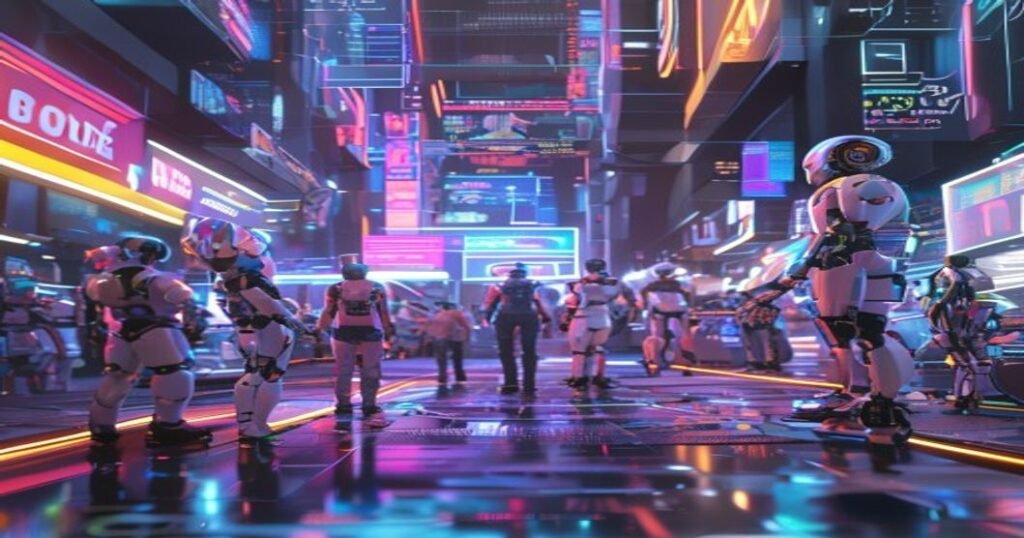

AI: Job Destroyer or Dream Creator? Why Your Career is About to Get a Major Upgrade (or Obsolescence!)
Let’s be honest, the buzz around Artificial Intelligence has reached a fever pitch. Everywhere you look, from tech journals to dinner table conversations, the same question echoes: “Is AI going to take my job?” It’s a valid, even primal, fear. We’ve all seen the headlines predicting mass unemployment, the robots coming for our livelihoods, the end of human endeavor as we know it. But as someone who lives and breathes the startup ecosystem and keeps a close eye on the pulse of innovation, I’m here to tell you: the reality is far more nuanced, exciting, and frankly, a bit more complicated than a simple doomsday scenario or a utopian fantasy. It’s not just about jobs disappearing; it’s about jobs transforming, evolving, and entirely new opportunities bursting forth like never before. And if you’re not paying attention, you might just get left behind.
The Great Automation Awakening: What’s Really Happening?
When AI first started making waves, the initial reaction was, understandably, panic. We saw machines performing tasks once thought exclusively human – writing articles, generating art, even composing music. For many, this conjured images of factories devoid of workers, customer service lines run by indistinguishable algorithms, and entire industries shrinking under the relentless march of automation. And yes, some jobs are indeed on the chopping block. Repetitive, data-heavy, or highly standardized tasks are prime candidates for AI takeover. Think data entry, basic administrative support, routine customer service inquiries, or even certain aspects of content generation.
But here’s where the narrative often gets oversimplified. While AI excels at efficiency and pattern recognition, it still largely lacks genuine human creativity, complex problem-solving in novel situations, emotional intelligence, and the ability to build truly deep interpersonal relationships. These are the superpowers that define us, and they are becoming more valuable than ever in an AI-infused world. So, instead of thinking of AI as a direct replacement for humans, it’s more accurate to view it as a powerful, accelerating tool. It’s not about if AI will change your job; it’s about how it will.
Beyond Replacement: The Rise of the AI-Augmented Professional
This is where the real story unfolds. We’re moving into an era where AI isn’t just taking over tasks; it’s augmenting human capabilities, making us faster, smarter, and more effective. Imagine a graphic designer using AI to generate hundreds of design variations in seconds, freeing them up to focus on the strategic and creative vision. Or a marketer leveraging AI to analyze vast datasets of consumer behavior, pinpointing trends and personalizing campaigns with unprecedented precision. These are not sci-fi fantasies; they are the realities of work right now.
Many forward-thinking companies, especially those in the startup world, are already harnessing the immense power of advanced AI. Startups, with their inherent agility and hunger for innovation, are often the first to embrace new paradigms. They understand that AI isn’t just a tool; it’s a strategic advantage, a Generative AI: The Startup Superpower Reshaping Industries – Are You Ready to Unleash It? The key is learning how to wield this superpower, not shy away from it. From streamlining operations to crafting hyper-personalized customer experiences, AI is enabling small teams to achieve what once required vast resources.
The New Landscape: Jobs You Never Imagined (and Skills You’ll Need)
While some roles fade, an entirely new ecosystem of jobs is emerging – roles that are either directly involved in creating, managing, or understanding AI, or roles that become newly essential because of AI’s existence. Consider the rise of the ‘prompt engineer,’ a job that barely existed a couple of years ago, now commanding significant salaries for effectively communicating with AI models. We’re also seeing massive demand for:
- AI Ethicists: Ensuring AI systems are fair, unbiased, and responsible.
- AI Trainers and Data Annotators: Teaching AI models by providing them with vast amounts of labeled data.
- Machine Learning Engineers: Designing, building, and deploying AI models.
- AI Product Managers: Bridging the gap between technical AI capabilities and market needs.
- AI Integration Specialists: Helping businesses seamlessly incorporate AI tools into their existing workflows.
Beyond these specialized roles, almost every job will require a degree of AI literacy. Understanding how AI works, what its limitations are, and how to effectively use AI tools will no longer be an optional add-on; it will be a fundamental skill. It’s similar to how knowing how to use a computer or the internet became non-negotiable for most careers decades ago. This isn’t just about technical skills either. The skills that differentiate us from machines – critical thinking, creativity, emotional intelligence, complex problem-solving, and adaptability – will only become more valuable. These are the very human qualities that algorithms cannot replicate, and they will be at the core of our competitive advantage.
Navigating the AI-Driven Career Shift
So, how do you future-proof your career in this rapidly evolving landscape? The answer is continuous learning and a proactive mindset. Don’t wait for your job description to change; anticipate it. Here are some actionable steps:
1. Embrace AI Literacy:
Start learning about AI, even at a basic level. Understand what it can do and, crucially, what it cannot. Play around with AI tools in your field. This isn’t just about keeping up; it’s about seeing the opportunities. As AI becomes more deeply embedded in our daily lives, often operating in the background, understanding its pervasive influence is key. It’s not always obvious, but Beyond the Chatbot: How AI is Secretly Rewriting Reality and Why You’re Already Living In It, from how you get news to how your recommendations are curated. Being aware of this ‘secret’ influence is the first step to harnessing it.
2. Develop ‘Uniquely Human’ Skills:
Focus on honing skills like creativity, strategic thinking, emotional intelligence, and interpersonal communication. These are the areas where humans will always excel and where AI will serve as a complement, not a replacement. Think of roles that require deep empathy, nuanced negotiation, or groundbreaking innovation – these are safe havens, and increasingly, high-demand areas.
3. Become an AI Co-Pilot:
Learn to collaborate with AI. Instead of seeing it as a competitor, view it as an intelligent assistant. How can AI take over the mundane aspects of your job, freeing you up for higher-value, more rewarding work? This might mean learning new software, integrating AI APIs, or simply developing efficient workflows with AI tools.
4. Stay Curious and Adaptable:
The pace of technological change isn’t slowing down. Cultivate a growth mindset and be prepared to continuously learn new tools, techniques, and even entirely new fields. The most successful professionals in the coming decades will be those who are most adaptable.
The AI Doctor and the Game Changer: Specific Opportunities
The impact of AI isn’t abstract; it’s tangible and sector-specific. Take healthcare, for instance. AI is revolutionizing diagnostics, drug discovery, and personalized treatment plans. This isn’t just about machines replacing doctors; it’s about creating an entirely new generation of health tech jobs – AI-powered medical device engineers, data scientists for genomics, AI clinical support specialists, and more. It signals a future where The AI Doctor Will See You Now: How Personalized Health is Rewriting Our Future (and Why You’re Already Part Of It). These advancements create demand for skilled professionals who can manage, interpret, and ethically deploy these powerful new tools.
And it’s not just healthcare. AI is fundamentally The AI Game Changer: How Algorithms Are Rewriting the Rules of Sports – And Why You’re Already on the Sidelines!, finance, manufacturing, and virtually every other industry. Each of these shifts creates new roles for those who understand how AI functions within these specific contexts, from sports analytics to smart city planning.
My Take: Fear is Natural, But Opportunity is Immense
Look, I get it. Change is scary, especially when it threatens the very means by which we support ourselves and our families. But clinging to the past is a guaranteed path to obsolescence. The AI revolution isn’t a distant future; it’s here, now, reshaping the very fabric of work. My opinion? It’s less about AI taking jobs and more about AI demanding a higher version of human work. It’s pushing us to elevate our skills, embrace our unique human attributes, and engage in more complex, creative, and strategically valuable tasks.
This is not a time for passive observation. This is a moment for proactive engagement, for learning, for adapting. The future job market isn’t about competing against AI; it’s about learning to compete with AI as your most powerful partner. Those who embrace this shift, who lean into learning new skills and cultivating their distinctly human strengths, aren’t just surviving; they’re poised to thrive in ways we’ve only just begun to imagine. Are you ready to lead the charge, or will you let the future happen to you?


