
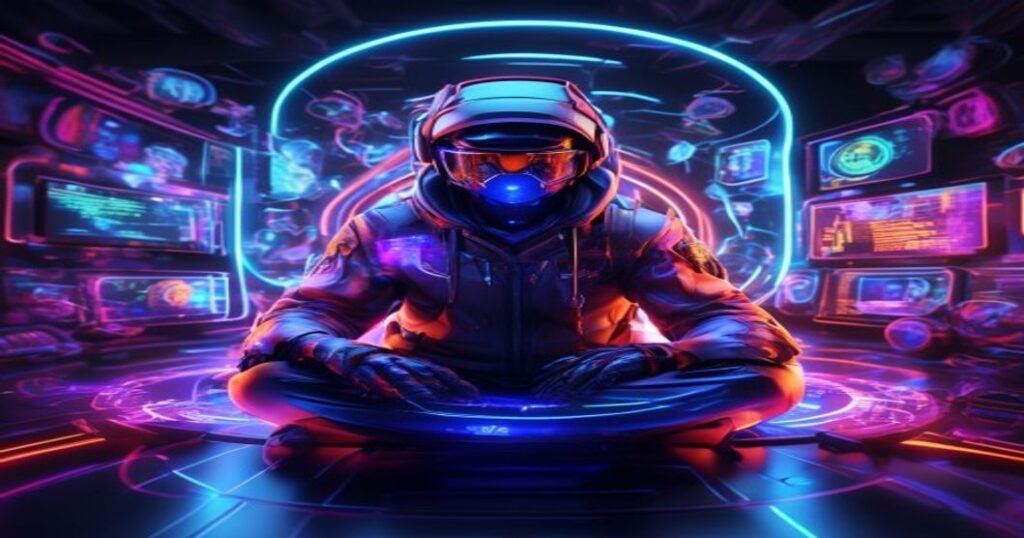

Level Up Your Reality: How AI is Radically Reshaping Gaming as We Know It
Remember when Artificial Intelligence in games meant a predictable enemy pathing or a non-player character (NPC) who repeated the same three lines of dialogue? Ah, those simpler times! It feels like just yesterday we were marveling at a slightly smarter enemy in our favorite shooter. But let me tell you, friends, what’s happening in the world of gaming and AI right now isn’t just an evolution; it’s a seismic shift, a revolution that’s fundamentally changing how we play, how games are made, and even what we expect from our virtual worlds.
We’re talking about an era where AI isn’t just a background process; it’s becoming the beating heart of the entire gaming experience. From the intricate narratives that adapt to your choices to the incredibly lifelike behaviors of in-game characters, AI is pulling the strings, creating a tapestry of possibilities that were once confined to the realm of science fiction. If you’ve been paying attention to the broader tech landscape, you’ll know that the AI revolution isn’t coming, it’s here, and its impact on gaming is nothing short of breathtaking.
The Architect Behind the Scenes: AI in Game Development
One of the most profound, yet often invisible, impacts of AI is in the very creation of games. Game development is an incredibly complex, time-consuming, and resource-intensive process. Artists toil over textures, designers craft intricate levels, and programmers write mountains of code. But AI is stepping in to lend a powerful, virtual hand.
Procedural Generation on Steroids
We’ve seen procedural generation before, creating vast, unique landscapes in games like Minecraft or No Man’s Sky. But modern AI takes this to a whole new level. It’s not just random generation; it’s intelligent generation. AI can now design complex levels, generate realistic environmental assets, and even create entire questlines that feel bespoke and organic. Imagine a game world that is literally infinite, constantly evolving and surprising you with new challenges and vistas, all crafted by intelligent algorithms. This isn’t just about making bigger games; it’s about making richer, more unpredictable worlds without exponentially increasing development costs.
Smarter Tools for Smarter Games
AI also empowers developers with advanced tools for animation, physics simulations, and even bug testing. Machine learning models can analyze vast amounts of data to identify glitches faster than any human QA team, or even predict potential issues before they arise. This means developers can focus on innovation and creativity, letting AI handle the more repetitive and data-heavy tasks. The result? More polished games, delivered more efficiently, and with fewer frustrating bugs.
The Player’s Playground: AI Transforming Gameplay
This is where most of us feel the direct impact of AI. The games we play are becoming increasingly intelligent, adaptive, and immersive thanks to AI.
NPCs That Feel Truly Alive
Gone are the days of cardboard cutout NPCs. Modern AI is giving us non-player characters with complex behaviors, emotional responses, and even dynamic learning capabilities. Imagine a companion character who genuinely adapts to your playstyle, offering assistance precisely when you need it, or an enemy AI that learns your combat strategies and counters them effectively. This isn’t just about making games harder; it’s about making them feel more authentic, like you’re interacting with real entities, not just lines of code. This kind of dynamic interaction contributes significantly to your personal blockbuster: how AI is reimagining entertainment and crafting your ultimate experience.
Personalized Experiences: Your Game, Your Rules
One of the most exciting aspects of AI in gaming is its ability to personalize the experience. AI can analyze your playstyle, preferences, and even your mood (through clever in-game metrics) to adapt difficulty, recommend content, or even tailor narrative branches. Struggling with a boss? The AI might subtly adjust its patterns. Love exploration? The game might generate more hidden paths for you. This means every player can have a unique journey, a game that feels almost custom-built just for them. It’s an incredibly powerful concept that moves us away from one-size-fits-all gaming.
Dynamic Storytelling and Emergent Worlds
Beyond adaptive difficulty, AI is pushing the boundaries of narrative. Instead of linear stories, we’re seeing games where AI agents manage complex plot points, character relationships, and environmental reactions, leading to truly emergent narratives. Your choices, combined with the AI’s intelligent systems, can weave a story that no two players will experience quite the same way. This creates a replayability factor that traditional linear storytelling simply cannot match, giving players a deeper sense of agency and ownership over their adventure.
Beyond the Controller: AI in Competitive Gaming and Esports
The impact of AI isn’t limited to single-player campaigns or open-world adventures. It’s making significant waves in the hyper-competitive world of esports and multiplayer gaming.
Training Partners and Strategic Analysis
Professional esports teams are already leveraging AI to analyze opponent strategies, identify weaknesses, and even simulate countless match scenarios. AI can act as an infinitely patient, tireless training partner, helping players hone their skills against incredibly sophisticated bots that mimic human behavior. This level of data analysis and strategic insight was once unimaginable, but now it’s a crucial component for top-tier competitive play. It’s a testament to how Game On, AI! How Artificial Intelligence is Radically Reshaping the World of Sports as We Know It, and esports is no exception.
Fair Play and Anti-Cheat
On the flip side, AI is also a formidable weapon in the fight against cheating. Sophisticated AI algorithms can detect suspicious patterns, aimbots, and other hacks with far greater accuracy and speed than human moderators alone. This helps maintain the integrity of competitive environments, ensuring a fair and enjoyable experience for everyone, which is absolutely vital for the growth and credibility of esports.
The ‘Invisible Hand’ and the Future of Gaming
The truth is, AI’s influence is becoming so pervasive that it’s often an invisible hand: how AI is quietly remaking your entire lifestyle, and gaming is merely one facet. As AI continues to advance, we can expect even more incredible developments in gaming:
- Hyper-Realistic Worlds: AI will drive even more photorealistic graphics, physics, and environmental interactions, blurring the lines between virtual and reality.
- Dynamic Content Creation: Imagine games that literally generate new missions, characters, and storylines on the fly, responding to global player trends or real-world events.
- Voice and Gesture Control: AI-powered natural language processing and advanced computer vision will make game interactions more intuitive and immersive than ever before.
- Ethical AI in Gaming: As AI becomes more sophisticated, discussions around AI ethics in games – from bias in content generation to the psychological impact of highly adaptive gameplay – will become increasingly important.
My Take: Embrace the Future, But Stay Critical
As a lifelong gamer, I can’t help but feel a rush of excitement for what AI is bringing to our beloved pastime. The potential for unparalleled immersion, truly personalized experiences, and infinite replayability is truly astounding. We’re moving beyond pre-scripted experiences into dynamic, living worlds that react to us in profound ways. This isn’t just about better graphics; it’s about deeper, more meaningful engagement.
However, it’s also crucial to remain critical. While AI can enhance creativity, we must ensure it doesn’t stifle the unique spark of human artistry that has always defined great games. The balance between algorithmic efficiency and human ingenuity will be key. We want AI to empower creators, not replace them entirely. The best games have always been a reflection of human passion and vision, and that should remain at the core, with AI serving as an incredibly powerful tool to amplify that vision.
The future of gaming isn’t just bright; it’s intelligently lit. AI isn’t just changing games; it’s redefining what a game can be. So, buckle up, gamers. The journey ahead promises to be nothing short of revolutionary, and I, for one, can’t wait to see where we level up next.


