
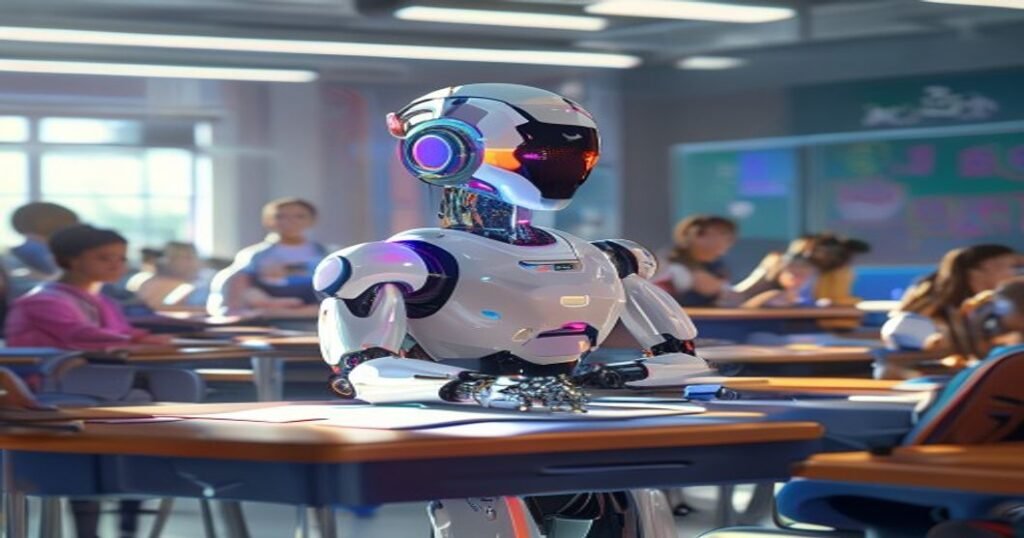

Remember sitting in a classroom, listening to a lecture that felt entirely disconnected from your own interests or learning pace? Or perhaps struggling with a concept, wishing the teacher had just a few more minutes to explain it *just to you*? Well, my friends, those days are fast becoming relics of a bygone era. We’re not just on the cusp of a revolution in education; we’re smack dab in the middle of it, and artificial intelligence (AI) is the engine driving this seismic shift. As a long-time observer of the tech landscape and someone deeply invested in how we prepare the next generation, I’m convinced that AI isn’t just another buzzword for educators; it’s a fundamental reimagining of what learning can and should be.
It’s easy to get lost in the noise surrounding AI, to feel overwhelmed by the sheer pace of its development. But when we strip away the hype, what we find in education is a tool, a partner, and a catalyst for profound change. This isn’t about replacing human teachers with robots (a common and understandable fear, I might add), but about empowering educators and learners with unprecedented capabilities. The AI revolution isn’t coming, it’s here, and the question for all of us, especially in the realm of education, is: Are you ready to ride the wave or drown in the data?
The Unveiling of Personalized Learning: AI’s Grand Promise
For decades, educators have dreamed of truly personalized learning. The idea that every student could have a curriculum, a pace, and a teaching style tailored precisely to their unique needs and strengths seemed like an unattainable utopia. But AI, with its incredible capacity to process vast amounts of data and identify patterns, is turning this dream into a tangible reality.
Personalized Learning Paths: No More One-Size-Fits-All
Imagine a learning platform that understands your child’s preferred learning style – do they thrive with visual explanations, hands-on activities, or auditory lessons? Imagine it knowing exactly which concepts they’ve mastered and where they need extra support, not just guessing based on a test score, but based on every interaction, every question asked, every problem solved. This is what AI-powered adaptive learning platforms are doing right now. They can dynamically adjust content, difficulty levels, and instructional strategies in real-time, creating a bespoke learning journey for each student. This isn’t just about faster learning; it’s about deeper understanding and fostering a genuine love for discovery.
Automated Assessment & Instant Feedback: Learning in the Moment
One of the biggest bottlenecks in traditional education is the time it takes for teachers to grade assignments and provide meaningful feedback. AI is a game-changer here. From grading multiple-choice questions and essays to analyzing coding projects and even speech patterns for language learners, AI can provide immediate, detailed feedback. This instant gratification isn’t just motivating; it allows students to correct misunderstandings and reinforce correct concepts while the information is still fresh in their minds. For educators, it frees up precious time, allowing them to focus on what AI can’t do: inspire, mentor, and address complex socio-emotional needs.
Bridging the Accessibility Gap: Education for Everyone
AI also holds immense potential to make education more accessible. Think about students with learning disabilities who might benefit from AI-powered tools that convert text to speech, provide real-time captioning, or offer alternative explanations in simpler language. Or consider students in remote areas who lack access to qualified teachers; AI tutors and online platforms can bring world-class education directly to their fingertips. This democratization of knowledge is perhaps one of AI’s most profound contributions to the educational landscape.
Beyond the Hype: Practical Applications We’re Seeing Now
So, what does this look like on the ground? It’s not just futuristic classrooms straight out of a sci-fi movie. It’s happening in various forms:
- Intelligent Tutoring Systems: AI chatbots and virtual assistants are available 24/7 to answer student questions, explain complex topics, and even generate practice problems.
- Content Curation and Creation: AI can help teachers find the most relevant and engaging educational resources from the vast ocean of the internet, and even assist in generating new, customized learning materials like quizzes, summaries, or lesson plans.
- Predictive Analytics: AI can analyze student performance data to identify students at risk of falling behind, allowing educators to intervene proactively before a small struggle turns into a significant setback.
- Language Learning: AI-powered apps offer personalized pronunciation feedback, grammar correction, and adaptive conversational practice, making language acquisition more engaging and effective than ever before.
The Human Element: Where Educators Still Reign Supreme
While AI can automate many aspects of learning, it cannot replace the irreplaceable human touch. In fact, I believe AI amplifies the importance of the teacher’s role, transforming them from content deliverers into facilitators, mentors, and innovators. The skills that AI can’t replicate – critical thinking, creativity, emotional intelligence, collaboration, ethical reasoning – become even more central to the human educator’s mission. AI takes care of the rote, allowing teachers to focus on nurturing these uniquely human attributes.
Our educators will be the architects of AI-integrated learning environments, designing experiences that leverage technology effectively while fostering deep human connection and meaning. They will be the ones teaching students not just *how* to use AI, but *how to think critically about* the information AI provides, *how to question* its biases, and *how to innovate* with it. This shift is not just exciting; it’s essential for preparing students for a world where the algorithmic avalanche is reshaping everything.
Navigating the Challenges and Ethical Dilemmas
Of course, no transformative technology comes without its share of challenges and ethical considerations. We must approach AI in education with a healthy dose of caution and a commitment to responsible implementation. Concerns include:
- Data Privacy and Security: The sheer volume of student data collected by AI systems raises significant questions about privacy, security, and who owns that data. Robust ethical guidelines and strict regulations are paramount.
- Algorithmic Bias: AI systems are only as good as the data they’re trained on. If that data contains existing societal biases, the AI can perpetuate or even amplify them, leading to unfair outcomes for certain student groups.
- The Digital Divide: Unequal access to technology and high-speed internet could exacerbate existing educational inequities, creating a deeper divide between those who can leverage AI’s benefits and those who cannot.
- Over-reliance and Deskilling: There’s a risk that students and even educators might become overly reliant on AI, potentially deskilling them in areas like independent research, problem-solving, or even basic arithmetic.
Addressing these issues requires thoughtful policy-making, ongoing research, and a collaborative effort from educators, technologists, policymakers, and parents.
Preparing for the AI-Powered Future of Work
Beyond the classroom, the impact of AI on the world of work is undeniable. Industries are being reshaped, new jobs are emerging, and existing roles are evolving at a breakneck pace. This means education must pivot to equip students with the skills needed to thrive in an AI-powered economy. It’s no longer just about memorizing facts; it’s about:
- AI Literacy: Understanding how AI works, its capabilities, and its limitations.
- Critical Thinking and Problem-Solving: The ability to analyze complex situations, evaluate information (including AI-generated content), and devise creative solutions.
- Creativity and Innovation: Leveraging AI as a tool to augment human creativity, not replace it.
- Adaptability and Lifelong Learning: The world is changing rapidly, and the ability to continuously learn and unlearn will be paramount.
- Ethical Reasoning: Navigating the moral dimensions of AI and technology in society.
- Collaboration and Communication: Working effectively with both humans and AI systems.
This isn’t just about technical skills; it’s about fostering a new mindset. Our education systems need to proactively integrate these competencies, because AI is radically rewriting the rules of business and entrepreneurship as we speak, and our students need to be prepared not just to participate, but to lead.
Pakistan’s Place in the Global EdTech Shift
For a nation like Pakistan, embracing AI in education isn’t merely an option; it’s an imperative for national development and global competitiveness. We have a youthful population, a burgeoning tech sector, and immense potential to leapfrog traditional educational challenges. Imagine AI-powered platforms helping teachers in remote villages deliver high-quality content, or personalized learning experiences empowering students in underserved areas to compete on a global stage. The challenges of infrastructure, access, and digital literacy are real, but so are the opportunities.
There’s a growing awareness and effort in the country to leverage technology for progress. With initiatives and investments in digital infrastructure and tech education, Pakistan’s algorithmic ascent is riding the AI wave to a digital future. By strategically integrating AI into our educational frameworks, we can not only improve learning outcomes but also cultivate a workforce equipped for the demands of tomorrow, ensuring that our youth are not just consumers of technology, but creators and innovators.
The Future is Now: A Call to Action
The integration of AI into education is not a distant future scenario; it’s happening now, shaping the way millions learn and grow. As content creators, educators, policymakers, and parents, we have a collective responsibility to understand, engage with, and strategically implement AI in education. This is not about letting algorithms dictate our learning; it’s about harnessing their power to unlock human potential on an unprecedented scale.
My belief is simple: AI will not replace great teachers, but teachers who use AI will replace those who don’t. The future of learning is personalized, adaptive, and deeply human-centered, all made possible by the intelligent scaffolding of artificial intelligence. Let’s embrace this journey with optimism, a critical eye, and a shared commitment to empowering every learner for a future that is, without a doubt, more intelligent than ever before.


