

Beyond the Dashboard: How AI is Revolutionizing Our Cars, Our Drives, and Our Lives Forever
Remember a time when your car was, well, just a car? A glorious machine of metal and combustion, designed simply to get you from point A to point B. It had a radio, maybe a CD player if you were fancy, and certainly no opinions about your driving style or your favorite coffee shop. Fast forward to now, and that’s all changing at breakneck speed. We’re not just talking about electric cars, folks; we’re talking about an intelligence revolution under the hood and in the cabin, powered by Artificial Intelligence.
Let’s be honest, for a long time, the automotive industry felt a little… traditional. Incremental changes, sure, but nothing that fundamentally redefined our relationship with our vehicles. But with the advent of sophisticated AI, our cars are morphing from mere conveyances into intelligent companions, personal assistants, and even guardians. This isn’t just about self-driving capabilities – though that’s a huge piece of the puzzle – it’s about every single aspect of the automotive experience being rethought, re-engineered, and redefined by algorithms.
The Car as a Supercomputer: More Than Just Four Wheels
It’s easy to get caught up in the hype of fully autonomous vehicles, but the real magic of AI in the auto world is far more pervasive. Think of your car’s central computer system today. It’s no longer just managing the engine and brakes; it’s a networked brain, processing torrents of data in real-time. From optimizing fuel efficiency to predicting maintenance needs, AI is making our cars smarter, safer, and remarkably more efficient.
Modern vehicles use AI for everything from advanced driver-assistance systems (ADAS) like adaptive cruise control and lane-keeping assist, to sophisticated pedestrian detection and automatic emergency braking. These systems aren’t just reacting; they’re learning. They’re processing camera feeds, radar data, and ultrasonic sensor input faster and more accurately than any human ever could, making split-second decisions that can prevent accidents. It’s truly mind-boggling when you consider the sheer computational power required for these tasks. In many ways, your car is becoming Your Pocket Supercomputer: How On-Device AI is Revolutionizing Smartphones and Our Lives Forever, but on a much grander, more safety-critical scale.
Your Personalized Cockpit: AI as Your Ultimate Co-Pilot
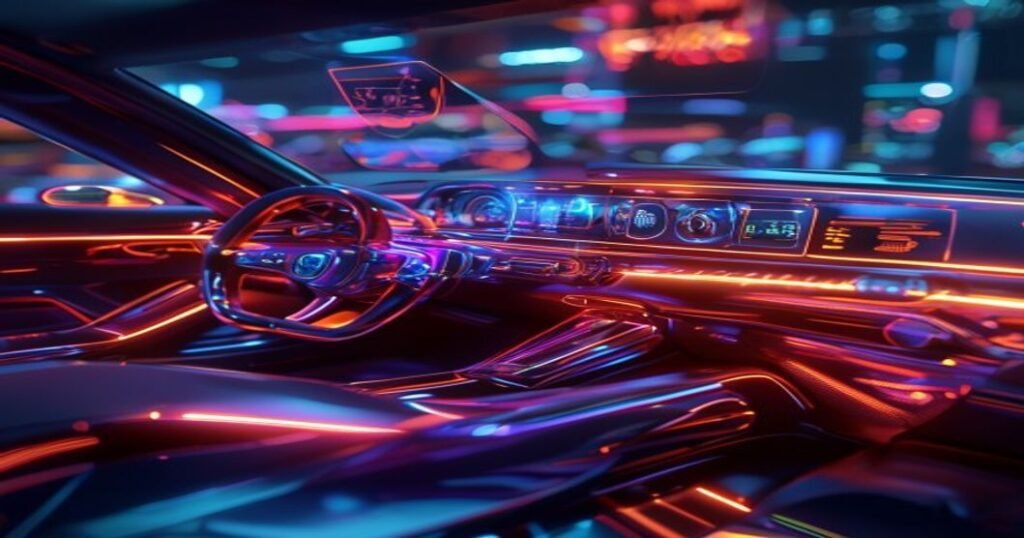
The interior of a car is no longer just about seats and a steering wheel. It’s transforming into a personalized sanctuary, an extension of your digital life, thanks to AI. Imagine stepping into your car, and it instantly recognizes you, adjusting the seat, mirrors, climate control, and even your favorite playlist to your exact preferences. This isn’t science fiction; it’s the current reality in many high-end vehicles, and it’s rapidly trickling down to more accessible models.
AI-powered infotainment systems are a game-changer. Voice assistants, far more advanced than anything we’ve seen before, can understand natural language commands, learn your routines, and even anticipate your needs. “Hey Car, find me the nearest EV charging station,” or “Set the mood lighting to calm blue,” are becoming standard interactions. The car isn’t just listening; it’s learning your habits, predicting your routes based on traffic patterns, and even suggesting alternative stops for fuel or food. This level of personalization makes your car feel less like a machine and more like a trusted confidante. Just like Beyond Walls: How AI is Sculpting the Smart, Personalized Homes of Tomorrow, our cars are evolving into smart, personalized environments.
Wellness on Wheels: The Car That Cares
Beyond convenience, AI is also making our drives healthier and safer in subtle, yet profound ways. Driver monitoring systems, for instance, use AI to detect fatigue, distraction, or even sudden health issues. Cameras track eye movement and head position, warning you if you’re nodding off or spending too much time looking away from the road. Some systems can even monitor your heart rate through the steering wheel or seat, providing alerts if something seems amiss. This integration of health monitoring into our daily commute echoes the advancements we’re seeing in personal healthcare, where The Algorithmic Doctor: How AI is Rewriting the Future of Personalized Health and Longevity for Everyone by offering proactive, personalized insights. Imagine your car suggesting a rest stop because it detects your stress levels rising or reminding you to hydrate on a long journey.
The Invisible Hand: AI in Automotive Manufacturing and Design
The impact of AI isn’t limited to the end-user experience; it’s revolutionizing the entire lifecycle of a vehicle, starting from its inception. Generative AI and machine learning algorithms are being used by designers and engineers to simulate countless design iterations, optimize aerodynamics, improve crashworthiness, and even create lighter, stronger materials. This dramatically cuts down development time and costs, allowing manufacturers to bring innovative, safer, and more efficient vehicles to market faster than ever before. AI also plays a critical role in quality control on the assembly line, identifying defects with precision that human eyes might miss. This isn’t just about efficiency; it’s about pushing the boundaries of what’s possible in automotive engineering.
The Road Ahead: Navigating Challenges and Embracing Opportunity
Of course, this technological leap isn’t without its challenges. Data privacy is a significant concern; as cars collect more and more personal information, ensuring its security is paramount. The ethical implications of AI making life-or-death decisions in autonomous driving scenarios also demand careful consideration and robust regulatory frameworks. There’s also the infrastructure needed to support fully connected and autonomous vehicles – smart roads, V2X (Vehicle-to-Everything) communication, and robust 5G networks. These are massive undertakings that require collaboration across industries and governments.
However, the opportunities are simply too immense to ignore. AI in automotive promises safer roads, reduced traffic congestion, lower emissions through optimized driving, and greater accessibility for those unable to drive. It also opens up entirely new business models, from ride-sharing networks powered by autonomous fleets to personalized in-car services that generate new revenue streams. For nations embracing digital transformation, like those detailed in articles such as Pakistan’s Digital Revolution: How AI and Startups are Igniting a Nation’s Future, the automotive sector presents a fertile ground for innovation and economic growth. Local startups can play a crucial role in developing region-specific AI solutions for mobility, whether it’s navigating unique traffic patterns or providing services tailored to local needs.
My Take: Buckle Up, The Future Is Here
The convergence of AI, connectivity, and electrification is fundamentally reshaping our understanding of personal mobility. The car of today is already light-years ahead of its predecessors, and the pace of innovation is only accelerating. We’re on the cusp of a truly intelligent automotive ecosystem where vehicles aren’t just machines, but active participants in our daily lives, enhancing safety, convenience, and even our well-being.
As a content creator and an enthusiast for all things tech, I find this transformation utterly thrilling. The thought of a car that learns, adapts, and cares for its occupants isn’t just a cool gadget; it’s a profound shift in how we interact with technology and how we experience the world around us. So, get ready to ditch the old notions of driving. The future isn’t just about getting there; it’s about how intelligently, safely, and personally you arrive. And AI is absolutely in the driver’s seat of this incredible journey.


