
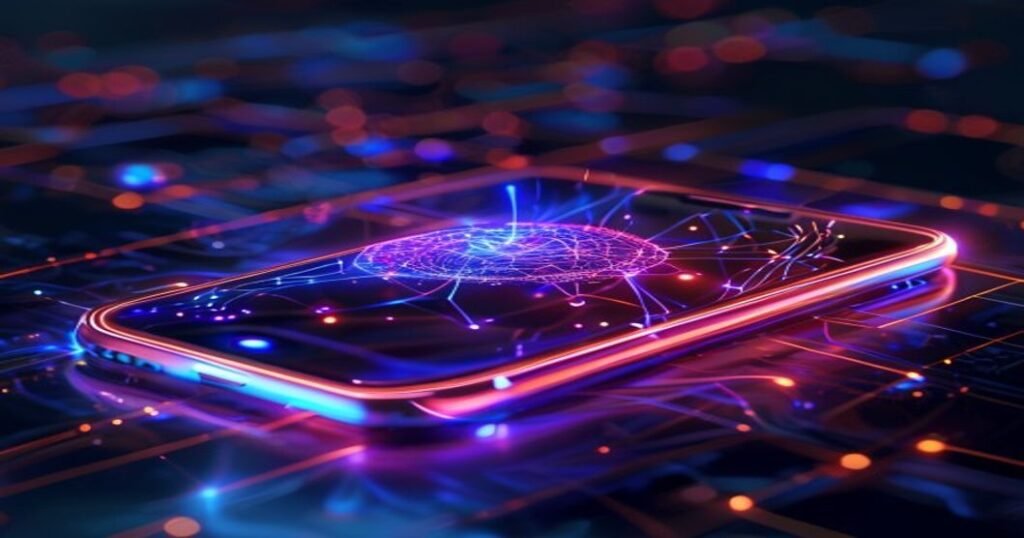

Your Pocket Supercomputer: How On-Device AI is Revolutionizing Smartphones and Our Lives Forever
Remember that old science fiction trope where a powerful computer could fit in your hand and pretty much do anything? Well, guess what? We’re living it! The smartphone in your pocket isn’t just a communication device anymore; it’s a window into a future powered by artificial intelligence, specifically, on-device AI. And frankly, it’s mind-blowing how quickly things are evolving.
For years, when we talked about AI powering our apps, we mostly meant big data centers in the cloud doing the heavy lifting. Your phone would send a query, a massive server farm would crunch the numbers, and then send the result back. It was good, but it had its limitations – latency, privacy concerns, and the need for a constant internet connection. But a silent revolution has been brewing, and now, the most sophisticated AI algorithms are running directly on your phone’s processor. This isn’t just a minor upgrade; it’s a seismic shift that’s redefining what a smartphone can be.
What Exactly is On-Device AI, and Why Does it Matter?
Simply put, on-device AI means that the artificial intelligence computations happen directly on your smartphone’s chip, rather than being sent to a remote server. Think of it this way: instead of calling an expert across town every time you have a question, you now have a mini-expert living inside your phone, ready to answer instantly and privately.
Modern smartphone chipsets come with dedicated Neural Processing Units (NPUs) or AI engines. These specialized hardware components are designed to efficiently handle the complex mathematical operations required for AI tasks like machine learning, neural networks, and deep learning. They’re what allow your phone to understand your voice, recognize faces, enhance photos, and even predict your next move, all without ever leaving your device.
Why does it matter? Speed, privacy, and reliability. When AI runs on-device, tasks are completed almost instantaneously. Your data stays on your phone, offering a new level of privacy. And critically, these features work even when you’re offline, which is a huge game-changer for usability in all sorts of scenarios.
The AI-Powered Transformations Happening in Your Hand
The impact of on-device AI is already widespread, even if you don’t always realize it’s AI doing the heavy lifting. Let’s dive into some of the most compelling areas:
1. Computational Photography: Beyond Point-and-Shoot
This is arguably where most people first experience the magic of on-device AI. Gone are the days when a great photo relied solely on expensive lenses and perfect lighting. Today’s smartphones use AI to literally compute the perfect picture. Features like:
- Scene Recognition: Your phone instantly identifies if you’re shooting a pet, food, a landscape, or a sunset, and adjusts settings accordingly.
- Night Mode: AI stitches together multiple exposures, reduces noise, and enhances detail in incredibly low light, turning darkness into dazzling shots.
- Portrait Mode: AI precisely separates the subject from the background, creating that professional-looking bokeh effect with remarkable accuracy.
- Video Enhancements: Real-time stabilization, intelligent cropping, and even cinematic effects are now processed on the fly.
It’s not just taking a photo; it’s intelligently crafting one, making everyone feel like a professional photographer.
2. Hyper-Personalized User Experience
Your smartphone is learning you. It’s observing your habits, preferences, and even your mood (through usage patterns, not mind-reading, thankfully!). On-device AI enables:
- Adaptive Battery Management: AI learns which apps you use and when, optimizing power consumption to make your battery last longer.
- Predictive Text & Keyboard Intelligence: It’s not just autocorrect anymore; your keyboard predicts entire phrases based on your conversation history and writing style.
- Smart Notifications: Your phone learns which notifications are important to you and delivers them at the right time, minimizing distractions.
- Voice Assistants: While many voice assistant queries still hit the cloud, on-device AI handles an increasing number of commands locally, making them faster and more secure for basic tasks.
3. Gaming: A New Dimension of Mobile Entertainment
Mobile gaming has evolved from simple time-killers to graphically intensive, immersive experiences. On-device AI is a massive factor in this evolution. It optimizes game performance, manages graphics rendering more efficiently, and can even create more intelligent in-game characters. Imagine games that adapt their difficulty based on your skill level in real-time, or NPCs that learn from your gameplay. It’s a truly exciting frontier. If you’re fascinated by how these intelligent systems are transforming virtual worlds, you might want to explore how Generative AI is rewriting the rules of gaming forever, bringing unprecedented realism and dynamic content to your fingertips.
4. Health and Wellness Monitoring
Smartphones, combined with wearables, are becoming powerful personal health hubs. On-device AI processes data from sensors to provide accurate insights into your activity, sleep patterns, heart rate, and even stress levels. It can detect anomalies, offer personalized fitness recommendations, and much more, all while keeping your sensitive health data secure on your device. This fusion of personal tech and health monitoring is part of a larger trend where The Algorithmic Doctor is rewriting the future of personalized health and longevity for everyone, making advanced health insights accessible right from your palm.
5. Seamless Smart Home Integration
Your smartphone is increasingly the command center for your entire connected home. On-device AI makes these interactions smoother and more intuitive. Imagine your phone automatically adjusting your smart thermostat as you approach home, or setting the perfect lighting scene based on the time of day and your typical routine. It understands context, anticipates your needs, and communicates with other devices directly, creating a truly unified smart living experience. For those interested in the broader picture of intelligent living spaces, delve into how AI is sculpting the smart, personalized homes of tomorrow, with your smartphone as the ultimate orchestrator.
The Broader Impact: A Global Digital Revolution
These advancements in smartphone technology aren’t just isolated features; they’re symptomatic of a much larger global digital transformation. The ability to run powerful AI locally on affordable devices is democratizing access to cutting-edge technology, opening up possibilities for innovation and economic growth in every corner of the world. This wave of digital empowerment is creating new opportunities and industries, propelling entire regions forward. It’s a testament to the power of technology to drive change, and it’s exciting to witness how Pakistan’s Digital Revolution is igniting a nation’s future through the very same principles of AI and startup innovation.
The Road Ahead: Challenges and Untapped Potential
While the benefits are clear, on-device AI isn’t without its challenges. Power consumption is still a factor, as running complex AI models locally demands significant energy. Developers also face the challenge of optimizing these models to run efficiently on diverse hardware. Ethical considerations around data usage, even if processed on-device, and potential biases in AI algorithms remain crucial areas of focus.
However, the potential for future innovation is immense. We’re only scratching the surface. Imagine:
- Proactive Assistants: Phones that anticipate your needs even before you vocalize them, offering relevant information or actions.
- Real-time Language Translation: Seamless, instantaneous translation during live conversations, all handled on-device for privacy.
- Advanced Augmented Reality: AI-powered AR experiences that are hyper-realistic and contextually aware, transforming how we interact with the physical world.
- Personalized Learning and Creativity Tools: Your phone becoming an intelligent tutor or a creative partner, adapting to your style and helping you generate content.
My Take: This Isn’t Just Tech; It’s a Lifestyle Upgrade
To me, on-device AI isn’t just a technical spec; it’s a fundamental upgrade to how we experience and interact with the world through our smartphones. It’s about making technology work for us in a more intuitive, private, and powerful way. It’s about turning that rectangular slab of glass and metal into a truly intelligent companion that understands and anticipates our needs, seamlessly integrating into every facet of our lives.
We’ve moved beyond mere functionality to an era of genuine intelligence in our pockets. The future of smartphones isn’t just brighter; it’s smarter, more personal, and undeniably exciting. So next time you pick up your phone, take a moment to appreciate the silent revolution happening right there in your hand. It’s truly a supercomputer, and it’s only just getting started.


