
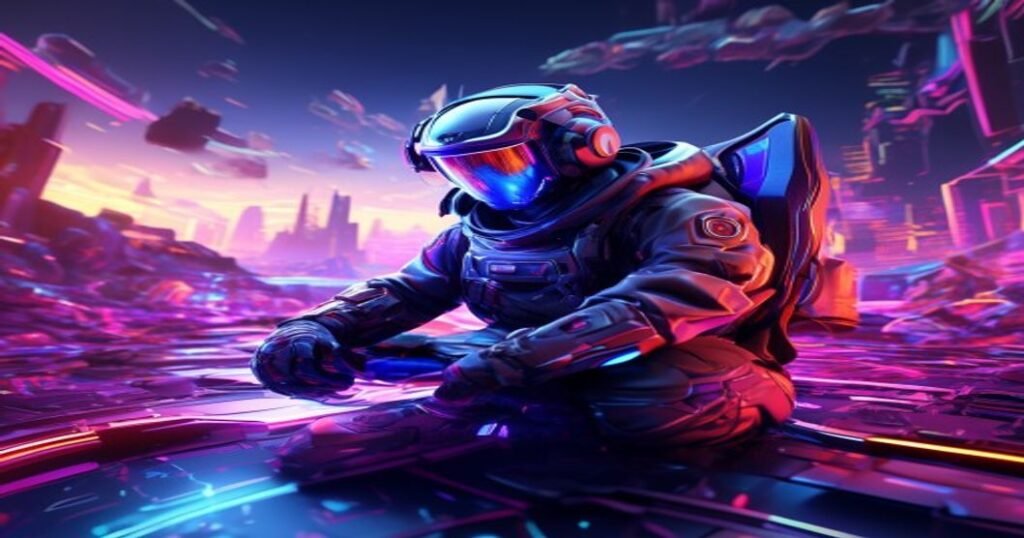

Remember when games felt… static? When every playthrough was essentially the same story, the same levels, the same outcomes, just with different player choices? Don’t get me wrong, there’s an undeniable charm to meticulously crafted linear experiences. But let’s be honest, we’ve always dreamed of something more. Something truly dynamic, evolving, and uniquely *ours* with every single session. Well, buckle up, because that dream is rapidly becoming a reality, and the driving force behind it is nothing short of revolutionary: Generative AI.
For years, AI in games meant smarter enemies, better pathfinding, or perhaps a rudimentary dialogue tree. Important, yes, but hardly groundbreaking in terms of content creation. Now, we’re talking about AI that doesn’t just react; it *creates*. It designs, it writes, it builds, it learns, and it does so with a speed and scale that’s frankly mind-boggling. This isn’t just an upgrade; it’s a paradigm shift, a veritable ‘brain upgrade’ for the entire gaming ecosystem. And if you want to understand just how fundamentally this technology is changing the game for both creators and players, you need to explore Gaming’s Brain Upgrade: Why AI is the Ultimate Cheat Code for Developers and Players Alike. It’s no longer about pre-baked experiences; it’s about infinite possibilities.
The Core Idea: From Static Worlds to Living Universes
At its heart, Generative AI in gaming is about moving beyond hand-authored content for every single pixel, every line of dialogue, every quest. Instead, AI models are trained on vast datasets of existing game assets, narrative structures, environmental designs, and even player behavior. Then, given certain parameters, they can generate entirely new, original content that adheres to the game’s style, lore, and mechanics. Think about that for a second: procedural generation has existed for ages, giving us random maps or dungeons. But Generative AI takes this to an entirely different dimension, crafting elements that are not just random, but *intelligent*, *contextual*, and often, astonishingly coherent.
This isn’t just about making developers’ lives easier (though it certainly will). It’s about unlocking experiences that were previously impossible due to the sheer cost and time involved in manual creation. Imagine worlds that literally evolve as you play, characters whose personalities shift based on your interactions, or quests that are tailor-made for your specific playstyle and current in-game situation. The days of hitting an invisible wall because the developers ran out of budget for more content might soon be a relic of the past.
Rewriting the Developer Playbook: Speed, Scale, and Innovation
Automated Asset Creation: The Art of Instant Art
One of the most immediate and impactful applications of Generative AI is in asset creation. Creating high-quality 3D models, textures, animations, and sound effects is incredibly time-consuming and expensive. Generative AI can rapidly produce variations or entirely new assets based on input prompts or existing styles. A developer could, for instance, feed an AI a concept art image and generate dozens of variations of a monster, a tree, or an entire building facade, complete with textures and even rudimentary animations. This drastically reduces the grunt work, freeing up human artists to focus on more creative, high-level tasks and quality assurance.
Dynamic Level Design: Worlds That Breathe
Gone are the days when every pixel of a map had to be meticulously placed by a designer. While human touch will always be crucial for curated experiences, Generative AI can now assist in creating vast, intricate, and believable environments. Imagine an AI generating an entire city, complete with unique architectural styles, street layouts, and even interior designs, all while adhering to specific thematic constraints. Or perhaps an endlessly explorable alien landscape, where every biome is procedurally generated with AI-designed flora, fauna, and geological formations. This means potentially infinite replayability for open-world games and an unprecedented scale for even smaller titles.
Narrative and Dialogue Generation: Every Story is Your Story
This is where things get truly exciting for many players. Imagine an RPG where the non-player characters (NPCs) don’t just recite canned lines but generate dynamic, context-aware dialogue. What if quests aren’t just fetch missions but evolve based on your choices, relationships with characters, and even your past actions? Generative AI can craft intricate storylines, branching narratives, and even personalized character backstories on the fly. This isn’t just about surface-level changes; it’s about creating a truly emergent narrative where the story feels like it’s unfolding *for you*, not just around you.
Unlocking Unprecedented Player Experiences: Beyond the Script
Personalized Gameplay: Your Game, Your Rules
AI’s ability to analyze player data is already a given. But Generative AI takes it a step further. Imagine a game that adapts its difficulty, enemy types, puzzle designs, or even environmental hazards specifically to your skill level, preferred playstyle, and even emotional state. Feeling stressed? The game might dial back the intensity. Mastering combat? Prepare for tougher foes and more complex encounters. This level of personalization can make every game feel like it was crafted specifically for you, enhancing immersion and engagement in ways we’re only just beginning to comprehend.
Dynamic Storytelling: The Eternal Narrative
The Holy Grail for many game designers is truly dynamic storytelling. With Generative AI, this is no longer a pipe dream. Imagine an AI dungeon master constantly adapting the narrative, introducing new characters, creating unexpected twists, and reacting to player actions in real-time. This isn’t just about choice and consequence; it’s about a living, breathing narrative engine that ensures no two playthroughs are ever truly alike. The game essentially becomes a collaborative storytelling experience between the player and the AI.
Evolving Game Worlds: A Universe That Never Sleeps
What if game worlds weren’t just maps to explore, but living entities that change, grow, and react to the sum total of player actions? Imagine an AI overseeing the long-term evolution of a multiplayer world, introducing new factions, environmental shifts, or even historical events based on aggregated player behavior. This creates a sense of persistent, organic change that vastly extends the lifespan and appeal of games, offering a truly unique experience every time you log in.
The Algorithmic Avalanche: Broader Implications
The impact of Generative AI isn’t confined to the gaming world. This technology is part of a larger, global Algorithmic Avalanche: How Generative AI is Reshaping Our World, Right Now, touching everything from art and music to medicine and finance. In gaming, it represents a pivotal moment, much like the advent of 3D graphics or online multiplayer. For aspiring game developers and tech entrepreneurs, understanding and leveraging these tools isn’t just an advantage; it’s becoming a necessity. The landscape of digital creation is shifting rapidly, and nations like Pakistan are already recognizing this, investing heavily in a Pakistan’s Digital Revolution: How AI and Startups are Igniting a Nation’s Future to harness the power of AI across various sectors, including creative industries like gaming.
Challenges and the Human Element: Not a Replacement, But a Partner
Of course, no revolution comes without its caveats. The rise of Generative AI in gaming sparks legitimate questions: Will it diminish the role of human artists and designers? Could it lead to a glut of procedurally generated, soulless content? Will intellectual property rights become a tangled mess?
These are valid concerns that the industry is actively grappling with. However, the prevailing sentiment isn’t that AI will replace human creativity, but rather augment it. Think of it as a powerful new set of tools. An artist can still paint, but now they have an AI assistant that can generate thousands of brushstroke variations or suggest color palettes. A writer can still craft compelling narratives, but now an AI can help brainstorm plot points or generate dialogue for minor characters, freeing the writer to focus on the core story and character arcs. The magic, the soul, the *human touch* in games will remain vital. AI is here to handle the repetitive, the mundane, and the computationally intensive, allowing humans to soar higher in creativity and innovation.
Moreover, the ethical considerations around data bias, intellectual property, and even the potential for AI-generated content to be indistinguishable from human-made content will require careful navigation, robust legal frameworks, and industry-wide best practices. This isn’t just about making games; it’s about shaping the future of digital interaction responsibly.
The Road Ahead: What to Expect Next
We’re truly just at the beginning of this journey. The current crop of AI-powered tools offers a glimpse into what’s possible, but the pace of innovation is blistering. Expect to see:
- More sophisticated AI game masters: Capable of running entire campaigns, adapting to player behavior in real-time, and creating dynamic narrative arcs.
- Hyper-realistic, dynamically generated worlds: Environments that respond to player actions and environmental factors in incredibly nuanced ways.
- Truly intelligent NPCs: Characters with unique personalities, memories, and motivations that evolve over time and interactions.
- Player-driven content creation: Tools that empower players to generate their own assets, levels, and stories within existing game engines, blurring the lines between player and developer.
- Personalized educational and training games: Beyond entertainment, AI will craft adaptive learning experiences tailored to individual needs.
The future of gaming isn’t just about better graphics or faster processors; it’s about more intelligent, more adaptive, and ultimately, more *personal* experiences. Generative AI is the key to unlocking that next frontier, pushing the boundaries of what we thought was possible in digital entertainment. It’s an exciting time to be a gamer, a developer, or anyone fascinated by the convergence of technology and creativity.


