
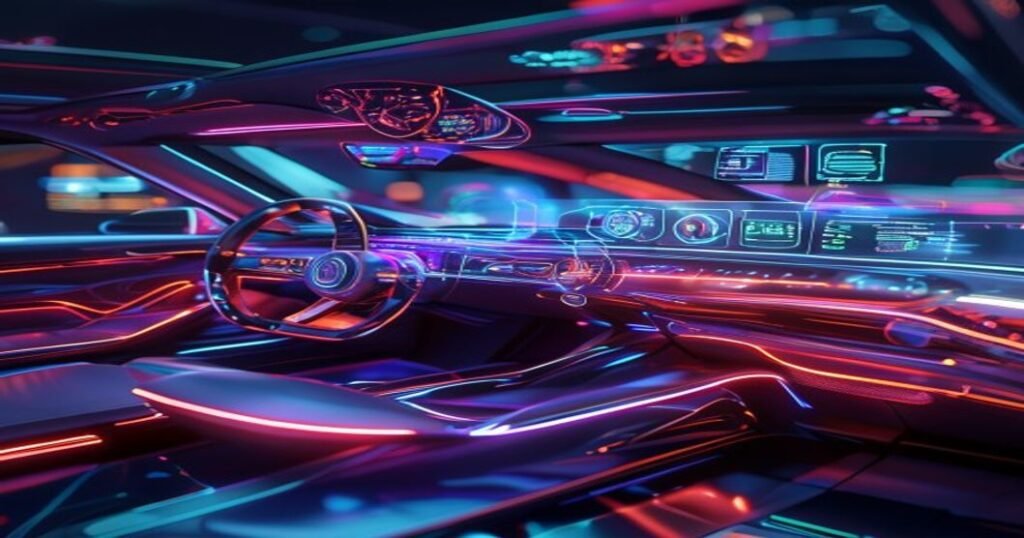

Remember the days when a car was just a machine that took you from A to B? A simple steering wheel, a gear stick, maybe a radio if you were lucky. Fast forward to now, and we’re not just driving cars; we’re interacting with sophisticated machines that are almost living, breathing entities. The roar of the engine is being complemented, and often replaced, by the hum of electric motors and the silent whir of advanced processors. What’s truly transforming our rides isn’t just electrification, though that’s massive. It’s the invisible, omnipresent force of Artificial Intelligence (AI) that’s quietly, yet profoundly, reshaping everything we know about getting behind the wheel. It’s no longer just about horsepower; it’s about brainpower, and frankly, the implications are mind-blowing.
The Autonomous Dream – Is It Here Yet?
Ah, the self-driving car. The stuff of sci-fi movies, promised for decades, always “just around the corner.” But let’s be real, “around the corner” is becoming a shorter distance every day. We’ve moved far beyond cruise control; now we have cars that can steer themselves on highways, change lanes with a flick of a signal, and even park themselves in tight spots. This isn’t just fancy tech; it’s a fundamental shift towards freeing us from the most tedious and dangerous aspects of driving.
The industry categorizes autonomous driving into levels, from Level 0 (no automation, just you and the road) to Level 5 (full automation, where the car handles everything, everywhere). Currently, most advanced production vehicles sit comfortably in Level 2 or Level 2+, offering sophisticated driver-assistance systems like adaptive cruise control, lane-keeping assist, and automatic emergency braking. Some pioneering companies are pushing into Level 3, where the car can handle most driving tasks under specific conditions, but still requires the human driver to be ready to take over. And then there are the tantalizing Level 4 and Level 5 experimental vehicles, operating in geofenced areas or specific routes, truly embodying the dream of a car without a driver.
The allure is undeniable: fewer accidents, less traffic congestion, more efficient use of fuel (or battery), and perhaps most appealingly, the gift of reclaimed time. Imagine commuting not stuck staring at brake lights, but reading a book, catching up on emails, or simply enjoying a hands-free conversation with your family. Yet, the road to full autonomy is fraught with challenges. There are the ethical dilemmas of who’s responsible in an accident, the complex regulatory frameworks struggling to keep pace with innovation, and, perhaps most importantly, winning the trust of everyday drivers. Can we truly hand over control to a machine? My gut says yes, eventually, but it will be a gradual, trust-building process. This entire domain is a hotbed of innovation, with countless startups riding the AI avalanche, pushing boundaries and trying to be the first to truly crack the code of safe, reliable, and widespread autonomous transportation.
Beyond the Drive – The Smart Cockpit Revolution
Even if full autonomy is still a few years off for mass adoption, the AI revolution is already making our cars smarter in ways we interact with them every single day. Forget clunky buttons and confusing menus; the modern car cockpit is becoming an intuitive, personalized hub. We’re talking about voice assistants that understand natural language, not just canned commands, allowing you to change the temperature, find a new route, or even order a coffee with a simple conversational prompt.
AI is also enabling predictive maintenance, where your car monitors its own health, anticipating issues before they become major problems and even scheduling service appointments for you. It learns your habits – your preferred seat position, climate settings, favorite radio stations – and automatically adjusts the environment before you even ask. Think about the convenience! Augmented reality dashboards are beginning to project navigation directions and critical information directly onto the windshield, making it feel like the road itself is guiding you. It’s like something out of a futuristic movie, but it’s becoming our present reality. This shift in how we interact with our vehicles mirrors the transformation we’ve seen in our personal devices. Just as AI is secretly supercharging your smartphone, making it more intuitive and powerful, it’s now doing the same for our cars, turning them into extensions of our digital lives rather than mere modes of transport. The car isn’t just smart; it’s becoming an emotionally intelligent companion, anticipating your needs and seamlessly integrating into your daily rhythm.
Entertainment and Productivity on Wheels
Once the car takes over the mundane task of driving, what do we do with all that newfound freedom? The answer, for many, will be entertainment and productivity. The concept of the “third space” – a comfortable environment that isn’t home or work – is expanding to include our vehicles. Imagine streaming your favorite shows on a large, integrated screen, catching up on a podcast without needing headphones, or even holding video conferences while commuting. The car transforms from a transient space into a mobile office, a private cinema, or a personal relaxation pod.
AI is at the heart of this transformation, too. It’s not just about playing music; it’s about curating playlists based on your mood, the time of day, or even your destination. It’s about recommending new podcasts or audiobooks based on your listening history, turning every journey into a personalized experience. Game developers are already exploring in-car entertainment systems, envisioning interactive experiences that engage passengers, making long trips fly by. This is where the lines blur between transportation and immersive media. Much like how AI and interactive entertainment are rewiring our brains and our living rooms, they are now poised to do the same for our commutes, transforming dead time into enriching or entertaining moments. The possibilities are truly endless, limited only by our imagination and, of course, the ever-evolving bandwidth capabilities.
The Economic and Societal Shake-Up
The ripple effects of this automotive AI revolution extend far beyond individual car owners. Entire industries are poised for disruption, and new economic models are emerging. Think about logistics: autonomous trucks operating 24/7 could revolutionize supply chains, making goods transportation faster, cheaper, and safer. Public transport could see massive overhauls, with on-demand, self-driving shuttles providing personalized mobility solutions, potentially reducing the need for private car ownership in urban areas.
Urban planning will need to adapt to a world with fewer parking lots (as cars can drop you off and self-park miles away, or even be part of a shared fleet) and potentially less traffic. The job market will undoubtedly shift, with new roles in AI development, data management, and ethical oversight emerging, while traditional driving jobs evolve or diminish. This profound shift isn’t just happening in tech hubs; it’s a global phenomenon. Developing nations, with their rapidly growing populations and increasing demand for efficient infrastructure, are also keen adopters and innovators. For instance, we’re seeing how Pakistan’s digital awakening, fueled by youth grit and innovation, could pave the way for local adaptations and unique mobility solutions in areas that might bypass older, established infrastructure entirely. The economic engines of nations will be profoundly reshaped by how quickly and effectively they embrace and integrate this new paradigm of intelligent transportation.
Conclusion
So, where does this leave us? On the cusp of an exhilarating, perhaps a little daunting, new era in automotive history. AI isn’t just an add-on; it’s becoming the very central nervous system of our vehicles, transforming them from mere machines into intelligent companions. From navigating complex cityscapes autonomously to curating our in-car entertainment, AI is redefining what it means to drive, or rather, to be driven. The journey ahead will undoubtedly have its bumps – regulatory hurdles, cybersecurity concerns, and the ever-present question of public acceptance. But one thing is clear: the future of driving is intelligent, interconnected, and infinitely more personalized. Fasten your seatbelts, because the ride is just getting started, and it’s going to be absolutely revolutionary.

