
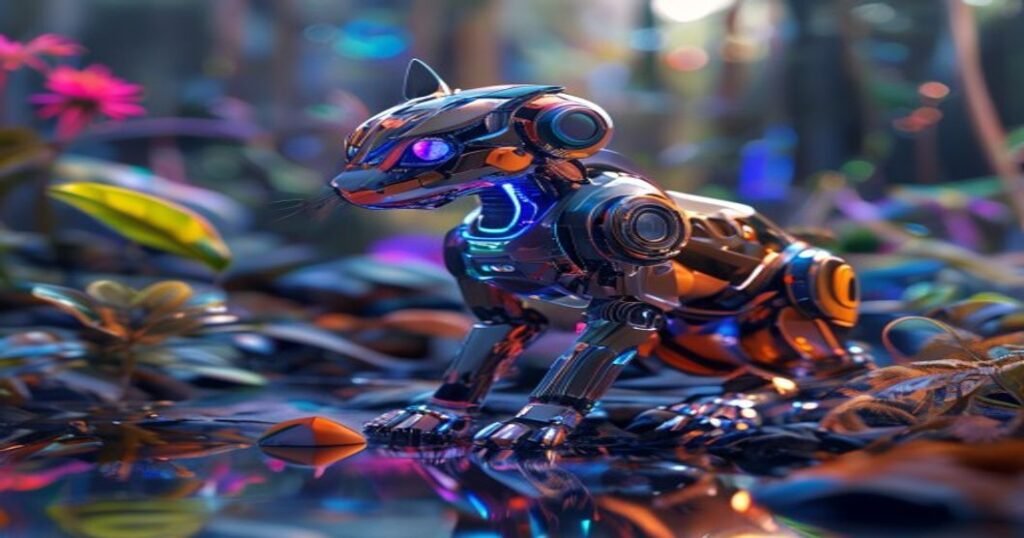

From Smart Collars to Savanna Sentinels: How AI is Redefining Our Relationship with the Animal Kingdom
Let’s be honest, for centuries, our relationship with the animal kingdom has been a mix of wonder, utility, companionship, and often, a hefty dose of human-centric oversight. We’ve domesticated, admired, protected, and sometimes, tragically, exploited. But what if I told you that a new force is rapidly changing this ancient dynamic? A force that promises to make our pets healthier, our wildlife safer, and our understanding of the natural world profoundly deeper? I’m talking, of course, about Artificial Intelligence.
It’s a fascinating time to be alive, isn’t it? As technology sprints forward, it touches every facet of our existence, and our interactions with animals are no exception. We’re moving beyond simple automation; we’re entering an era where intelligent machines can monitor, analyze, and even predict the needs and behaviors of the creatures sharing our planet. And frankly, my take is that this isn’t just a trend; it’s a fundamental shift that demands our attention, our scrutiny, and our thoughtful engagement.
The Domestic Domain: Pets, AI, and Our Ever-Evolving Bond
Think about your furry, feathered, or scaled companions at home. For many of us, they’re not just pets; they’re family. And like any family member, we want the best for them. This is where AI is truly making waves, transforming everyday pet care into something remarkably sophisticated.
I mean, who would have thought that a device could tell you your dog is feeling anxious, or that your cat’s eating habits have subtly changed, indicating a potential health issue before it becomes serious? We’re seeing an explosion of smart pet tech – from automated feeders that dispense precisely measured meals based on your pet’s activity levels, to litter boxes that analyze waste for early signs of illness. Smart collars now track location, sleep patterns, and even heart rates, giving owners an unprecedented window into their pets’ well-being. It’s a level of oversight and proactive care that was unimaginable just a short while ago.
This isn’t just about convenience, though that’s a huge part of it for busy modern pet parents. It’s about leveraging data to provide better, more personalized care. AI-powered cameras can identify your pet’s unique facial expressions or body language, alerting you to distress or unusual behavior while you’re away. There are even AI-driven toys that adapt their play patterns to keep your pet engaged, combating boredom and loneliness. If you’ve ever wondered how these intelligent tools are truly reshaping the lives of our animal companions and why we, as their caregivers, should be paying close attention, then you absolutely need to dive into topics like Smart Paws, Smarter Homes: How AI is Reshaping the Lives of Our Beloved Pets (And Why We Should Care). The insights are genuinely eye-opening.
Of course, there’s a flip side. Are we risking over-reliance on technology, potentially diminishing our direct, intuitive bond with our pets? It’s a valid question. My personal take is that these tools should enhance, not replace, human connection. They should be viewed as powerful assistants that give us more informed insights, allowing us to be better, more responsive caregivers, rather than simply outsourcing our responsibilities.
From Concrete Jungles to Wild Frontiers: AI’s Conservation Cavalry
Now, let’s shift our gaze from our cozy homes to the vast, untamed wilderness. Here, AI isn’t just improving lives; it’s quite literally saving them. Wildlife conservation faces monumental challenges – poaching, habitat destruction, climate change, and the sheer scale of monitoring vast, remote areas. Traditional methods, while invaluable, often struggle to keep pace with these threats.
Enter AI, a truly transformative force. Imagine drones equipped with thermal cameras and AI algorithms that can detect poachers in dense forests, even at night, distinguishing humans from animals with remarkable accuracy. This isn’t science fiction; it’s happening right now. AI is being deployed to analyze colossal datasets from satellite imagery, identifying deforestation, monitoring changes in animal migratory patterns due to climate shifts, and even tracking the health of entire ecosystems from space.
Consider the plight of endangered species. AI-powered acoustic sensors can listen for the unique calls of specific animals, alerting conservationists to their presence or absence across vast territories, providing critical data on population health and distribution. Facial recognition technology, previously used for humans, is now being adapted to identify individual animals, like elephants or primates, allowing for more precise tracking and monitoring without invasive tagging. This level of data collection and analysis empowers conservationists with real-time, actionable intelligence, giving them a significant edge in the fight to protect biodiversity.
The potential is truly immense. From predicting disease outbreaks in animal populations to optimizing patrol routes for anti-poaching units, AI is proving to be an indispensable ally. It allows us to be proactive rather than reactive, offering a glimmer of hope for species teetering on the brink. This isn’t just about preserving nature for nature’s sake; it’s about safeguarding the delicate balance of our planet’s ecosystems, upon which all life, including our own, ultimately depends.
The Broader Canvas: AI’s Pervasive Influence
What we’re witnessing in pet care and wildlife conservation isn’t an isolated phenomenon. It’s part of a much larger, global transformation. Artificial Intelligence is no longer a futuristic concept; it’s a driving force that’s fundamentally reshaping industries, economies, and societies across the board. From healthcare breakthroughs to optimizing supply chains, and from artistic creation to scientific discovery, the reach of AI is expansive and undeniable.
Understanding this broader context is crucial because the advancements we see in animal-focused AI are direct reflections of this overarching technological surge. It’s part of a world where intelligent machines are becoming increasingly adept at tasks once thought exclusively human. If you’re seeking to grasp the full scope of this seismic shift and understand why its impact is so profound, then the insights shared in articles like The AI Revolution is Here: Why Intelligent Machines Are Redefining Our World (And What You Need to Know NOW) offer an essential perspective. The animal kingdom, in its own unique way, is simply another frontier being reshaped by this powerful technological wave.
Navigating the Ethical Maze: The Human-Animal-AI Triad
With great power comes great responsibility, right? As we increasingly integrate AI into the lives of animals, both domestic and wild, a complex web of ethical questions emerges. For instance, what about data privacy for our pets? If smart devices are collecting detailed information about their health, location, and behavior, who owns that data, and how is it protected? These aren’t trivial concerns in an age where data breaches are all too common.
Then there’s the question of animal autonomy. While AI can certainly enhance welfare, we must be careful not to turn animals into mere data points or objects of technological control. Our goal should always be to enrich their lives and protect their natural behaviors, not to monitor them to the point of intrusion or to try and ‘fix’ them with technology when a simpler, more natural solution might exist. We must ask: are we building solutions for the animals, or for our own convenience and perceived control?
Furthermore, while AI offers incredible tools for conservation, we must ensure equitable access. Are these advanced technologies only available to well-funded organizations in certain regions, or are efforts being made to democratize their use so that local communities and developing nations can also benefit? The digital divide isn’t just a human problem; it has implications for global conservation efforts as well. My opinion is clear: ethical considerations must be baked into the design and deployment of AI for animals from the very beginning. It’s not an afterthought; it’s foundational.
A Call to Action: Seizing the Opportunity
For nations like ours, the rise of AI in animal care and conservation presents a dual opportunity. Firstly, it’s a chance to adopt and adapt these cutting-edge technologies to address our own unique challenges – from managing livestock health more effectively to safeguarding our diverse, yet often threatened, wildlife. Secondly, and perhaps more importantly, it’s an invitation to innovate. We have incredible natural resources and a vibrant, growing tech community. Imagine local startups developing AI solutions tailored to the specific needs of our indigenous species or the practices of our rural communities.
The global AI landscape is evolving rapidly, and the question for every nation is whether they will be a consumer or a contributor. For a deeper discussion on this very topic, and to understand the critical choices facing our region regarding technological advancement, articles like Pakistan’s AI Crossroads: Will We Seize the Digital Future or Be Left Behind? highlight the urgency and potential of embracing this revolution. The impact of AI on animals is just one powerful example of how seizing these opportunities can lead to significant positive change, both economically and ecologically.
The Future is Now: A Symbiotic Path Forward
The integration of AI into the animal kingdom is no longer a distant dream; it’s a vibrant, evolving reality. From the smart collar on your beloved pet to the AI-powered drone patrolling a national park, intelligent machines are transforming our understanding and interaction with animal life. While the promises are immense – healthier pets, more effective conservation, deeper insights – the path forward requires careful stewardship, ethical consideration, and a commitment to ensuring these technologies truly serve the well-being of animals and the planet.
My hope is that we leverage AI not just for efficiency or convenience, but to foster a more empathetic, informed, and ultimately, more harmonious coexistence with the incredible diversity of life that surrounds us. The revolution is here, and it’s time we played our part in shaping its trajectory for the betterment of all creatures, great and small.


