
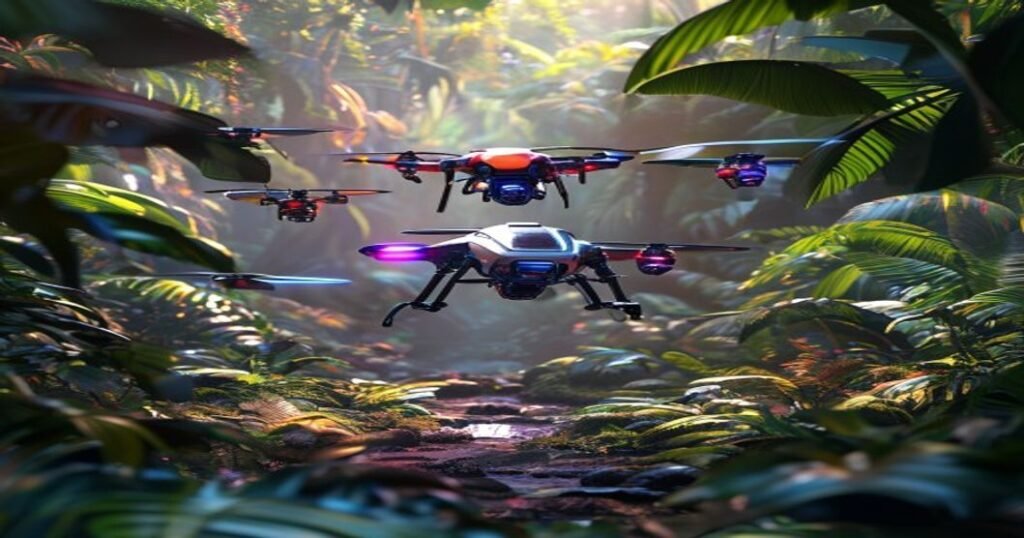

For too long, understanding the secret lives of animals felt like trying to read a book written in an alien language, with only a few tantalizing glimpses through binoculars or muddy footprints. The sheer scale of the natural world, coupled with the elusive nature of its inhabitants, made comprehensive wildlife monitoring a monumental, often impossible, task. We knew animals were disappearing at an alarming rate, but we often lacked the granular data, the real-time insights, or the predictive power to truly intervene effectively. But here’s the thing: that narrative is changing, dramatically and rapidly. We are currently witnessing a silent revolution in animal conservation, one powered by an army of sensors, drones, and, crucially, artificial intelligence.
It’s no exaggeration to say that the way we approach wildlife protection is undergoing a radical transformation. Gone are the days when conservation efforts relied solely on dedicated field rangers, pen-and-paper data collection, and hopeful guesswork. While the dedication of those on the ground remains paramount, they are now being equipped with tools that would have seemed like science fiction just a decade ago. This isn’t just about making things a little easier; it’s about fundamentally reshaping our capacity to understand, track, and protect the world’s incredible biodiversity. And frankly, it’s about time.
The Old Guard: Necessary, But Limited
Before we dive into the dazzling tech, let’s acknowledge the heroes. Traditional conservation methods, involving countless hours of observation, manual tracking, and meticulous surveys, have provided foundational knowledge. Rangers risking their lives to combat poachers, scientists painstakingly collecting samples, and communities working to protect local habitats – these are the bedrock. However, these methods are inherently limited. Vast territories, dense forests, deep oceans, and the sheer difficulty of spotting rare species meant we were often playing catch-up, reacting to crises rather than preventing them. The data collected, while invaluable, was often sparse, labor-intensive to gather, and slow to process. We were always a step behind, and the planet’s diverse species were paying the price.
A New Pair of Eyes and Ears: The Tech Toolkit Arrives
The first wave of change came with accessible hardware. Think about it: drones soaring silently above rainforest canopies, mapping deforestation and spotting poacher camps in real-time. Satellite imagery, once the exclusive domain of governments, now provides commercial-grade data on everything from elephant migration patterns to the expansion of illegal mines. Camera traps, strategically placed in remote areas, capture millions of images, documenting everything from the fleeting glimpse of a snow leopard to the nightly routine of a tapir. Acoustic sensors, often hidden in trees, are listening to the symphony of the forest, picking up the distinct calls of endangered birds, the buzz of chainsaws, or even the crack of a poacher’s rifle. Bio-logging devices, tiny and non-invasive, attach to animals, transmitting data on their movements, heart rates, and even social interactions.
This unprecedented flood of raw data is a game-changer. But here’s the kicker: raw data, by itself, is overwhelming. Imagine a single camera trap capturing thousands of images a day, or a network of acoustic sensors recording non-stop audio. Manually sifting through this mountain of information is simply impossible for human teams, no matter how dedicated. This is where the real magic, and the quiet revolution, begins.
The AI Alchemists: Turning Data into Discovery
This isn’t just about collecting more pictures or longer audio files; it’s about what we *do* with them. This is where artificial intelligence steps onto the stage, becoming the invisible hand that sorts, analyzes, and deciphers the immense data deluge. Just as Artificial Intelligence is quietly reshaping your entire world and you barely notice, it’s now profoundly impacting the wild world too. AI algorithms are trained on vast datasets of animal images, sounds, and movement patterns, learning to identify specific species, individual animals (think facial recognition for primates!), and even predict behavior.
- Species Identification & Counting: AI can automatically identify species from camera trap photos, distinguishing between a tiger and a leopard, or even recognizing individual elephants by their unique ear patterns. This allows researchers to get accurate population counts and track individuals without human bias or error, drastically speeding up fieldwork analysis.
- Anti-Poaching Efforts: Acoustic monitoring systems powered by AI can differentiate between the sounds of gunshots, vehicle engines, and chainsaws, alerting rangers in real-time to potential illegal activities. Predictive algorithms, fed with historical poaching data, weather patterns, and even local market prices for illegal wildlife products, can forecast high-risk areas, allowing for more targeted and efficient patrols.
- Habitat Monitoring: Satellite imagery combined with AI can detect subtle changes in vegetation, identify deforestation hotspots, monitor water levels, and track human encroachment, all critical for understanding habitat health and guiding restoration efforts.
- Disease Surveillance: By analyzing changes in animal behavior or population densities identified through AI-powered tracking, scientists can get early warnings about potential disease outbreaks, crucial for both wildlife and human health.
It’s truly incredible. Instead of having a human review millions of images, the AI sifts through them in seconds, flagging only the relevant ones for human review. This frees up precious human resources to focus on interpretation, strategy, and direct intervention. It’s a game-changer, and it’s a perfect example of how AI is quietly rebuilding every industry from the ground up, conservation included.
From Reactive to Proactive: AI’s Predictive Power
Think about it: instead of reacting to a poaching incident after it happens, what if we could predict *where* and *when* it’s most likely to occur? This isn’t science fiction anymore. AI models, fed with historical data, weather patterns, economic indicators, and even social media sentiment, can create predictive maps for anti-poaching patrols. This kind of intelligence allows conservationists to deploy their limited resources much more effectively, acting proactively to prevent harm rather than just cleaning up the aftermath. It’s moving from playing defense to playing offense in the fight for wildlife.
The Startup Spark: Driving Innovation
The beauty of this technological shift is the incredible innovation coming from nimble startups. These aren’t just established conservation giants; it’s often the smaller, more focused teams that are developing groundbreaking AI algorithms, affordable sensor networks, and user-friendly data platforms. They embody the spirit of the AI tidal wave: why startups are either riding it to glory or getting swept away, and thankfully, many are riding it straight into the heart of wildlife protection. From AI-powered apps that help identify invasive species to platforms that connect citizen scientists with data analysis tasks, these startups are agile, innovative, and crucial to accelerating the adoption of these powerful tools.
Beyond Tracking: Unlocking Animal Communication and Behavior
The potential of AI extends far beyond mere tracking. Researchers are now using AI to delve into the very communication of animals. Projects like CETI (Cetacean Translation Initiative) are employing machine learning to analyze the clicks and whistles of whales, hoping to decipher their complex language. Similarly, AI is being used to understand the intricate rumbles of elephants, the calls of specific bird species, and even the nuances of primate gestures. This isn’t just fascinating science; understanding how animals communicate can give us profound insights into their social structures, their needs, and potential stressors – knowledge that is invaluable for effective conservation.
Consider the complex, dynamic worlds built in advanced video games – where AI governs non-player characters, adapts environments, and crafts intricate narratives. The algorithms at play, while designed for entertainment, share a surprising kinship with the sophisticated models now used to understand and manage real-world ecosystems. Just as AI is silently rewriting every rule in gaming, similar computational power is now allowing us to ‘level up our reality’ when it comes to comprehending the intricate rules of nature. The ability to simulate complex ecological interactions, predict species responses to climate change, and even model the impact of human development is becoming increasingly sophisticated thanks to AI.
The Ethical Compass and the Indispensable Human Touch
Lest we get carried away by the shiny new tech, it’s vital to remember that AI and advanced technology are tools, not saviors. They come with their own set of challenges. Issues of data privacy (especially when monitoring human activity near wildlife areas), the digital divide (ensuring these technologies are accessible and affordable for conservation efforts in developing nations), and the potential for misuse all need careful consideration. Moreover, technology can never replace the human element: the deep ecological knowledge of indigenous communities, the tireless dedication of field rangers, and the passion of local conservationists. These technologies are most powerful when they augment human effort, not replace it.
The Wild Future: A Symbiotic Relationship
What we’re witnessing is the forging of a powerful, symbiotic relationship between cutting-edge technology and the ancient rhythms of the wild. AI is granting us unprecedented clarity into ecosystems, allowing us to see patterns, predict threats, and understand behaviors that were once utterly beyond our grasp. It offers a beacon of hope in a time when biodiversity loss often feels overwhelming. We are no longer just guessing; we are observing, learning, and intervening with precision. This isn’t just about saving individual species; it’s about preserving the intricate web of life that sustains us all. The future of conservation isn’t just about fences and reserves; it’s about data, intelligence, and the unwavering belief that with the right tools, and the right heart, we can safeguard the planet’s most precious treasures for generations to come. And honestly, it makes me feel genuinely optimistic for a change.


