
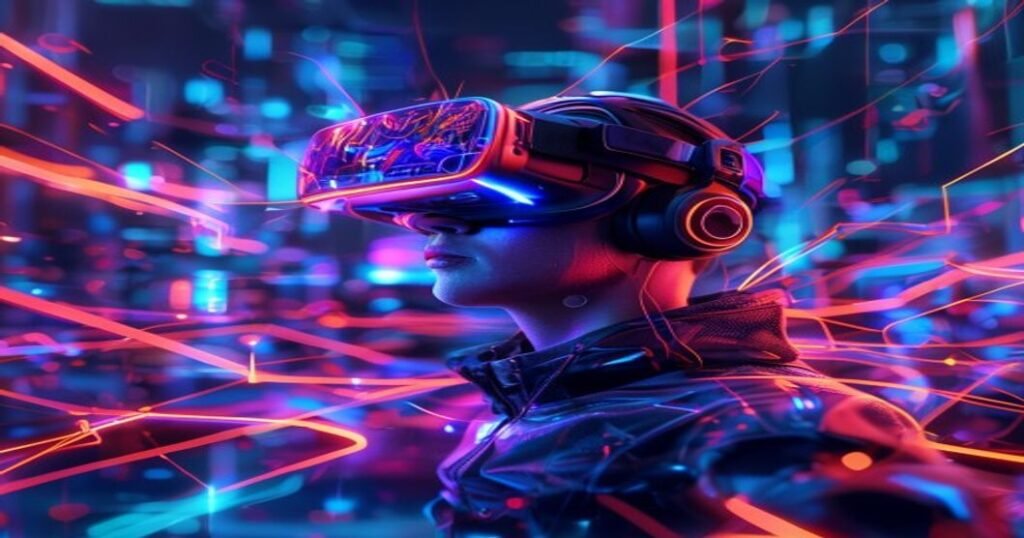

Level Up Your Reality: How AI is Silently Rewriting Every Rule in Gaming – And Why You’re Already Playing in Its World
Remember when Artificial Intelligence in games meant a Goomba walking in a straight line or a single-minded enemy soldier who always knew where you were, despite the concrete wall between you? Yeah, those were the days. Nostalgic, perhaps, but quaint. Because what’s happening in the world of gaming AI now isn’t just an evolution; it’s a quiet, seismic revolution. We’re not just talking about smarter enemies anymore; we’re talking about entire game worlds, narratives, and player experiences being fundamentally reshaped by an invisible hand of intelligence. And honestly, it’s thrilling, terrifying, and utterly inevitable all at once.
As a lifelong gamer and someone obsessed with the intersection of tech and culture, I’ve watched this unfold with a mixture of awe and healthy skepticism. But there’s no denying it: AI isn’t just a buzzword developers sprinkle into their marketing copy. It’s the engine driving the next generation of interactive entertainment, redefining what’s possible both behind the scenes and right there on your screen.
The Game Dev’s New Best Friend: AI in Creation
Let’s pull back the curtain on game development. For decades, creating sprawling, detailed game worlds was a grueling, labor-intensive process. Artists painstakingly modeled every tree, every rock; designers manually placed every enemy patrol route. It was a monumental effort that often took years, even decades, for the most ambitious titles. Now? AI is stepping in not to replace, but to supercharge, the creative process.
Procedural Generation on Steroids
Think about games with vast, explorable landscapes. While many have used procedural generation for years (algorithms creating content based on rules), AI is taking this to a whole new level. Imagine AI not just generating a random forest, but one that makes sense – with ecosystems that feel natural, hidden nooks that tell a story, and terrain that intuitively guides the player. AI can learn from existing world designs, artist sketches, and even real-world geography to create environments that are not only immense but also artistically coherent and rich with potential gameplay opportunities. This means developers can spend less time hand-crafting every pixel and more time refining core mechanics and narrative arcs.
Automating the Mundane, Freeing the Creative
Beyond world-building, AI is tackling the grunt work that used to bog down development teams. Asset creation, for instance, can now be augmented by AI tools that generate textures, 3D models, and even animations based on simple prompts or examples. This isn’t about AI making masterpieces, but about it creating a robust baseline that artists can then refine and inject with their unique vision. Think of it as a super-efficient junior artist who never sleeps and never complains.
Then there’s testing. Bug squashing is notorious for being repetitive and mind-numbingly tedious. AI agents can now autonomously play through games, identify glitches, and even suggest fixes, often catching issues that human testers might miss until release day. This significantly shortens development cycles and improves game quality, making for a smoother experience for us, the players.
The impact of this isn’t limited to AAA studios with limitless budgets. Startup game developers, often resource-constrained but brimming with innovative ideas, are finding AI tools to be absolute game-changers. By leveraging AI for content generation and automation, smaller teams can achieve production values that were previously out of reach, allowing them to compete in a crowded market. This phenomenon isn’t exclusive to gaming; it’s part of a tidal wave where startups are either riding AI to glory or getting swept away across numerous industries. It’s a testament to how AI democratizes capabilities, bringing powerful tools to those with the vision to use them.
Smarter Worlds, Deeper Immersion: AI for the Player
But what does all this AI wizardry mean for us, the people actually holding the controller or tapping on the screen? It means games are getting smarter, more responsive, and incredibly more immersive. The experience of playing a game is being subtly, yet profoundly, transformed.
NPCs Who Don’t Just Stand There
Gone are the days when non-player characters (NPCs) felt like glorified cardboard cutouts, repeating the same three lines of dialogue and following pre-set, predictable paths. Modern AI allows NPCs to exhibit truly adaptive behaviors. They can learn from player actions, react to environmental changes, and even develop rudimentary ‘personalities’ that make interactions feel genuinely dynamic. Imagine an enemy who remembers your preferred combat style and adjusts its tactics, or a friendly NPC whose trust you earn over time through your decisions. This isn’t just about difficulty; it’s about making the game world feel alive and reactive to your presence.
Personalized Play, Tailored Adventures
AI is also becoming the ultimate game master, silently adjusting the experience to fit each individual player. Struggling with a boss fight? AI can subtly tweak its health or attack patterns without you even noticing, ensuring you stay challenged but not frustrated. Excelling at a particular challenge? The AI might ramp up the difficulty or introduce new mechanics to keep you on your toes. This dynamic difficulty scaling, combined with AI-driven content recommendations (think ‘next mission’ suggestions or loot drops tailored to your playstyle), means that no two playthroughs might be exactly alike. It’s a personalized adventure crafted just for you, in real-time. This is precisely how the AI revolution in gaming is rewriting every rule you thought you knew, turning static experiences into fluid, adaptive journeys.
AI Companions and Emergent Narratives
The dream of truly intelligent companions in games, characters who feel like genuine allies rather than just health pack dispensers, is closer than ever. AI can drive complex companion behaviors, enabling them to assist you strategically, offer contextual advice, and even engage in conversations that evolve based on your shared experiences. This opens the door to truly emergent narratives, where the story isn’t just a fixed script, but something that unfolds organically through the interplay of player choices and intelligent AI reactions.
Beyond the Controller: AI’s Broader Gaming Influence
AI’s reach extends far beyond the game client itself, subtly impacting how we consume, share, and even compete in gaming. This is part of a larger trend where the invisible AI hand is quietly reshaping your entire world, and you barely notice.
Esports and Strategic Edge
In the hyper-competitive world of esports, AI is becoming a powerful analytical tool. It can parse thousands of hours of gameplay, identify optimal strategies, predict opponent moves, and even provide real-time coaching suggestions for professional players. Teams are using AI to dissect their own performance and that of their rivals, uncovering weaknesses and formulating winning tactics with unprecedented precision. For the casual player, AI-powered analytics can help improve individual skills by pinpointing areas for growth.
Streaming, Content Creation, and Community Management
For content creators and streamers, AI is streamlining workflows. AI-powered tools can automatically edit highlight reels, generate captions, moderate chat, and even create engaging thumbnails. This frees up creators to focus on what they do best: entertaining their audience. Furthermore, AI is helping platforms understand user preferences better, recommending new games or streams that align with individual tastes, fostering stronger communities and discovery.
Monetization and Player Retention
Love ’em or hate ’em, microtransactions and personalized offers are here to stay, and AI plays a huge role. By analyzing player behavior, spending habits, and in-game achievements, AI can tailor offers, predict churn, and optimize engagement strategies. It’s about delivering the right content to the right player at the right time, ideally enhancing the overall enjoyment and retention, rather than just maximizing profit.
The Ethical Frontier and The Unwritten Future
Of course, with such transformative power comes important questions and even some anxieties. As AI becomes more sophisticated, we have to consider the implications.
Challenges and Concerns
- Job Displacement: Will AI-powered tools eventually replace human artists, designers, and testers? The consensus right now is augmentation, not replacement, but it’s a valid concern we must proactively address.
- Creative Control: If AI generates entire worlds or narratives, where does the human creator’s unique vision fit in? The answer likely lies in AI becoming a sophisticated brush, not the painter itself.
- Bias: AI learns from data. If that data reflects existing biases, those biases can inadvertently be baked into game content, creating exclusionary or problematic experiences. Vigilance and ethical AI development are paramount.
- The ‘Soul’ of a Game: Can an AI truly create the heart and soul, the unquantifiable magic, that makes a game beloved? Many argue no, but the lines are blurring.
The Thrilling Horizon
Despite these challenges, the possibilities are breathtaking. Imagine games where every NPC has a unique, evolving story, or where the entire world dynamically shifts based on the collective actions of millions of players. We’re talking about hyper-realistic simulations, entirely new genres emerging from AI’s capacity for complex, emergent systems, and experiences that blur the lines between virtual and reality in ways we can only just begin to conceive.
AI isn’t just a feature; it’s becoming the underlying operating system of our digital worlds. And this isn’t just happening in gaming; beyond the hype, AI is quietly rebuilding every industry from the ground up – and why you’re already part of it. Gaming is simply one of the most visible and exciting frontiers of this transformation.
The Game Has Changed, Forever.
The bottom line is this: AI has fundamentally altered the landscape of gaming, and there’s no turning back. From the tools developers use to sculpt their visions, to the intelligent worlds we inhabit, to the very fabric of our interactive experiences, AI is the invisible force making it all possible. It’s no longer a novelty; it’s an essential, evolving component that’s pushing the boundaries of what we thought games could be. We are living in an extraordinary time where the games we play are becoming smarter, more responsive, and more immersive than ever before. So, the next time you pick up a controller or dive into a virtual world, take a moment to appreciate the silent revolution unfolding beneath your fingertips. You’re not just playing a game; you’re playing in an AI-powered future.


