
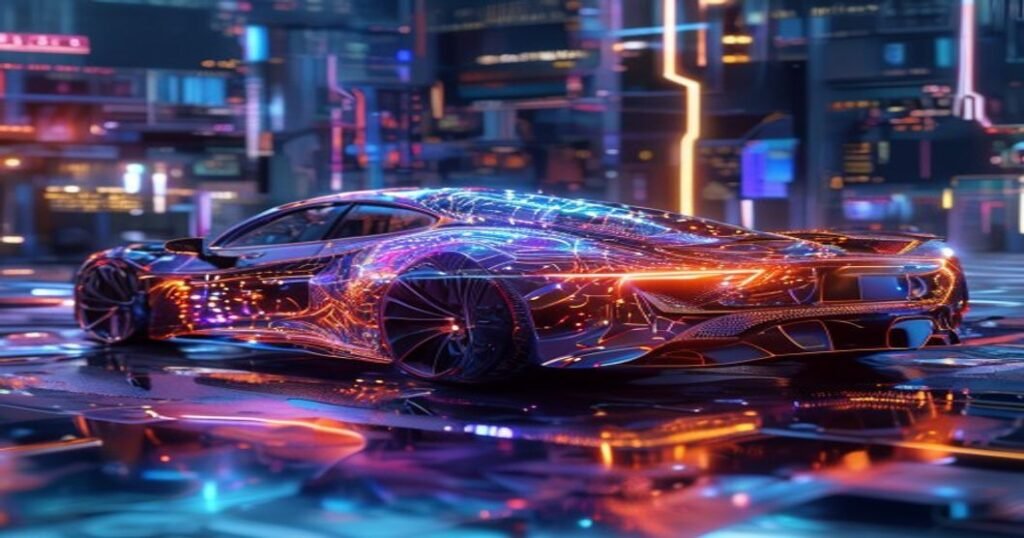

Remember those futuristic cartoons? The ones where cars flew themselves, talked to you, and practically read your mind? Well, guess what? We’re not too far off. In fact, many elements of that imagined future are already here, quietly transforming the automotive world as we know it. And the driving force (pun intended!) behind this monumental shift is Artificial Intelligence (AI).
For too long, the ‘car of tomorrow’ felt like a distant dream, perpetually just over the horizon. But if you’ve bought a new vehicle recently, or even just read the latest industry headlines, you’ll know that tomorrow is very much today. AI isn’t just an add-on; it’s rapidly becoming the very brain, nerve system, and intuitive assistant for everything related to our cars – from how they’re designed and manufactured to how they drive, and even how we interact with them. It’s a silent revolution, as profound as the invention of the automobile itself, and I’m personally convinced we’re only just scratching the surface of its potential.
Beyond the Driver’s Seat: AI’s Brain Behind the Wheel
Let’s be honest, the biggest splash AI has made in the auto world is undoubtedly in autonomous driving. It’s the sci-fi dream brought to life, and while fully self-driving cars for every road and every condition are still evolving, the progress is breathtaking. Think about it: AI-powered sensors, cameras, and radar systems are constantly scanning the environment, predicting traffic flow, identifying pedestrians, and making instantaneous decisions far faster than any human could. This isn’t just about convenience; it’s about a radical reimagining of safety.
Current advanced driver-assistance systems (ADAS) are already employing sophisticated AI algorithms to offer features like adaptive cruise control, lane-keeping assist, and automatic emergency braking. These systems are learning from billions of miles driven, becoming smarter, more accurate, and more reliable with every passing moment. They’re like an extra pair of eyes and a lightning-fast reflex system, working tirelessly to prevent accidents. The idea that our cars can not only navigate complex environments but also anticipate dangers before we even perceive them is truly mind-boggling. It underscores just how AI is not merely enhancing features but truly rewiring our cars and our roads from the ground up, moving us towards a future where driving might become a choice, not a necessity.
The Art of Anticipation: Predictive Maintenance and Safety
But AI’s influence extends far beyond the act of driving itself. Have you ever wished your car could tell you *before* something went wrong? Well, thanks to AI, that’s increasingly becoming a reality. Modern vehicles are equipped with an array of sensors that collect vast amounts of data on performance, engine health, tire pressure, and countless other metrics. AI algorithms analyze this data in real-time, identifying subtle patterns that might indicate an impending issue.
This predictive maintenance capability is a game-changer. Instead of costly, unexpected breakdowns, your car could alert you to a potential problem days or even weeks in advance, suggesting when and where to get it serviced. This not only saves money and hassle but significantly enhances safety by addressing issues before they become critical. Imagine a world where catastrophic failures due as simple as a flat tire or a dying battery become rare events because your vehicle’s AI brain saw it coming. This proactive approach is a powerful demonstration of how AI is enhancing reliability and longevity, turning our vehicles into truly intelligent machines.
The Personalized Ride: Your Car, Your AI Co-Pilot
Step inside a modern vehicle, and you’ll quickly realize that the experience is no longer just about getting from point A to point B. It’s about a personalized, connected journey. AI is at the heart of this transformation, turning your car into a highly responsive, intelligent co-pilot tailored specifically to you. From advanced voice assistants that understand natural language to infotainment systems that learn your preferences, AI is making every drive more intuitive and enjoyable.
Think about it: your car’s AI can learn your favorite routes, suggest alternative paths based on real-time traffic, adjust cabin temperature to your liking before you even ask, and even curate playlists based on your mood or destination. It’s not just about convenience; it’s about creating a truly immersive and custom-fit environment. This level of personalization is profound, making the car feel less like a machine and more like an extension of yourself. It’s why I believe the AI Co-Pilot is rewriting your travel story, and why you’ll love it. It anticipates needs, understands context, and ultimately makes the time you spend in your vehicle more productive, relaxing, or entertaining.
From Design to Assembly Line: AI’s Blueprint for Better Cars
The impact of AI isn’t limited to what happens on the road; it’s revolutionizing the very genesis of our vehicles. In the realm of automotive design and manufacturing, AI is becoming an indispensable tool. Designers are using generative AI to explore thousands of design variations for components, optimizing for aerodynamics, weight, safety, and aesthetics far quicker than human teams ever could. This means faster development cycles and ultimately, better, more innovative vehicles.
On the factory floor, AI-powered robotics and vision systems are enhancing precision and efficiency, reducing errors, and accelerating production. Supply chains are being optimized by AI, predicting demand, managing inventory, and even identifying potential disruptions before they occur. This translates to lower costs, higher quality, and faster delivery of new models. The entire lifecycle of a car, from the initial concept sketch to its production line debut, is becoming smarter and more streamlined thanks to AI’s analytical prowess.
The Road Ahead: AI’s Vision for Mobility
Looking further down the road, AI is not just changing individual cars; it’s fundamentally reshaping the entire concept of mobility. We’re moving towards a future of smart cities where autonomous vehicles communicate with traffic infrastructure, reducing congestion and pollution. AI will optimize ride-sharing services, making them more efficient and accessible, potentially reducing the need for individual car ownership in dense urban areas. Imagine a future where your ‘car’ is a service you summon, optimized by AI to get you where you need to go with minimal fuss.
This grand vision of connected mobility, where vehicles, infrastructure, and even pedestrians communicate seamlessly, is driven by sophisticated AI algorithms processing unimaginable amounts of data. It’s about creating an ecosystem that is safer, greener, and more efficient for everyone. It truly highlights how AI is reshaping everything we know, and why you’re already part of it – the automotive industry is merely one of the most visible arenas for this change.
Navigating the Ethical Lane: Challenges and the Human Element
Of course, with such transformative technology come significant challenges. Questions of data privacy, cybersecurity, and the ethical dilemmas of autonomous decision-making are paramount. Who is responsible in an accident involving a self-driving car? How do we ensure that AI systems are unbiased and fair? These aren’t easy questions, and they require thoughtful consideration and robust regulatory frameworks as the technology evolves.
There’s also the human element. For many, driving is more than just transportation; it’s a passion, a symbol of freedom, or even a therapeutic activity. As AI takes on more control, how do we balance the undeniable benefits of safety and efficiency with the joy and engagement of driving? I believe the answer lies in choice – allowing AI to assist and augment, but always retaining the option for human control when desired, ensuring that the magic of the open road doesn’t get lost in the pursuit of perfection.
The Journey Continues: Embrace the Intelligent Ride
The automotive industry is in the midst of its most exciting, and perhaps most challenging, transformation in decades. AI is not merely an upgrade; it’s the fundamental operating system for the future of transportation. From making our cars safer and more efficient to personalizing our journeys and optimizing our cities, its impact is undeniable and ever-expanding.
As we navigate this new era, one thing is clear: the cars of today are far more intelligent than those of yesterday, and tomorrow’s vehicles will be smarter still. This isn’t just about technology for technology’s sake; it’s about solving real-world problems, enhancing human lives, and creating a more sustainable and accessible future for mobility. So, buckle up! The autonomous awakening is here, and it’s taking us on an incredible ride into the future.


