

Let’s be brutally honest: our planet’s incredible wildlife is in peril. From the majestic rhinos targeted by poachers to the tiny, vital insects losing their habitats, the headlines are grim. It’s enough to make you throw your hands up in despair, right? We’ve all seen the documentaries, read the alarming reports, and felt that pang of helplessness. But what if I told you there’s a powerful, often unseen force rising to the challenge? A force that’s not just documenting the decline but actively fighting back, providing a glimmer of hope in what often feels like an impossible battle? I’m talking about Artificial Intelligence, and its quiet, revolutionary impact on animal conservation is nothing short of breathtaking. This isn’t just about saving exotic creatures; it’s about preserving the delicate balance of our entire ecosystem, a balance that ultimately impacts every single one of us.
The AI Earthquake: Shaking Up Conservation as We Know It
For decades, conservation efforts relied heavily on human boots on the ground, traditional tracking methods, and often, sheer luck. Don’t get me wrong, those efforts were heroic and vital. But the scale of the problem today demands something more – something faster, smarter, and infinitely more analytical. This is where The AI Earthquake: How this Unstoppable Force is Reshaping Industries, Innovation, and Your Future comes into play, not just in boardrooms and tech labs, but in the deepest jungles and vastest oceans. AI isn’t just a buzzword; it’s becoming the backbone of a new era in wildlife protection.
Think about it: imagine a world where conservationists can predict poaching hotspots before they even happen, identify individual animals from thousands of camera trap photos in seconds, or monitor the health of an entire ecosystem from space. This isn’t science fiction anymore; it’s the reality AI is crafting for us.
Eyes in the Sky, Ears in the Wild: Smarter Monitoring
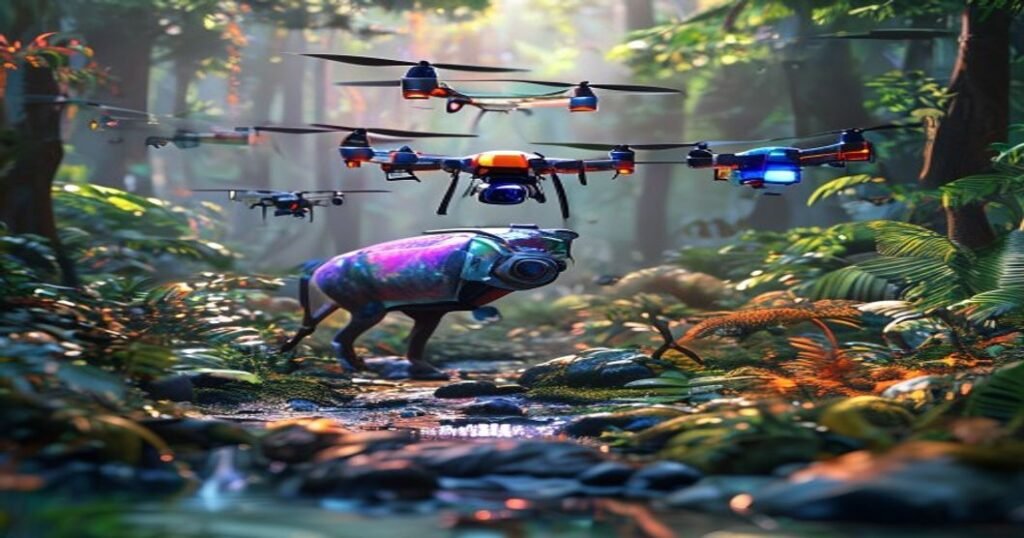
- Drones & Satellite Imagery: Forget expensive, risky manned aerial surveys. Drones equipped with AI-powered cameras can cover vast, remote areas, counting animal populations, mapping deforestation, and even detecting illegal mining operations with unprecedented accuracy. Satellites feed terabytes of data into AI models that can spot changes in habitat patterns, identify individual animals, and even track migratory routes, giving us a real-time pulse on the planet’s health.
- Smart Camera Traps: Traditional camera traps used to generate mountains of irrelevant photos – a leaf blowing in the wind, a false alarm. Now, AI-powered traps can differentiate between a squirrel and a tiger, focusing only on the data that matters. This drastically reduces the time scientists spend sifting through images, allowing them to focus on analysis and intervention.
- Bioacoustics: The Language of the Wild: AI is literally helping us listen to the planet. Specialized microphones placed in critical habitats record the sounds of the wild, from bird calls to elephant rumbles. AI algorithms then analyze these vast audio datasets, identifying species, detecting anomalies (like gunshots or chainsaws), and even monitoring biodiversity health. It’s an invisible revolution, working tirelessly behind the scenes.
The Invisible Revolution: Stopping Crime Before It Happens
One of the most heartbreaking aspects of conservation is the fight against poaching and illegal wildlife trade. It’s a multi-billion dollar industry that pushes countless species to the brink. But here too, AI is proving to be a game-changer. It’s part of The Invisible Revolution: How AI is Quietly Reshaping Your Daily Life and Supercharging Your Lifestyle, extending its reach from smart homes to the very wild places we cherish.
- Predictive Analytics for Anti-Poaching: Imagine knowing where poachers are likely to strike next. AI algorithms analyze historical poaching data, weather patterns, moon cycles, human population density, and even social media chatter to predict high-risk areas. This allows rangers to deploy resources more effectively, turning reactive responses into proactive interventions.
- Facial Recognition for Wildlife: Yes, you read that right. AI isn’t just for human faces. Researchers are developing algorithms that can identify individual animals (like specific elephants, rhinos, or even whales) based on unique markings, ear notches, or fin shapes. This helps track individuals, monitor their movements, and even identify victims of poaching.
- Supply Chain Interception: The illegal wildlife trade often relies on complex global networks. AI is being used to analyze shipping manifests, customs data, and online marketplaces to identify suspicious patterns and intercept illegal wildlife products before they reach their destination, choking the supply lines of these cruel operations.
Beyond Monitoring: Understanding and Healing Ecosystems
AI’s role isn’t limited to just spotting problems. It’s also about understanding complex ecological systems and even aiding in their recovery.
Genetic Insights and Health Management
- Genetic Analysis: AI can sift through vast genetic datasets to identify endangered species with low genetic diversity, pinpointing populations most at risk and informing breeding programs to strengthen their gene pools. It’s like a digital blueprint for survival.
- Animal Health Diagnostics: Wearable sensors (when ethical and non-invasive) combined with AI can monitor an animal’s vital signs, activity levels, and behavior, flagging potential health issues early, allowing for timely veterinary intervention in the wild.
Simulating Futures with Generative AI
Perhaps one of the most exciting, and sometimes daunting, applications involves predictive modeling and simulation. This is where concepts like Generative AI: The Ultimate Creative Revolution (Or a Digital Pandora’s Box?) become incredibly relevant. Generative AI can create highly realistic simulations of environments, predicting how different conservation strategies might play out over time, or how a change in climate might affect species distribution. This allows conservationists to test hypotheses and design more effective interventions without risking real-world resources or animal lives.
Moreover, AI is helping us understand animal cognition and behavior in ways we never thought possible. By analyzing vast datasets of movement, communication, and interaction, AI is revealing patterns that could unlock deeper insights into animal intelligence. Could this lead us closer to a future where we better understand animal communication, moving towards Mind Over Machine: How Brain-Computer Interfaces Are Rewiring Our Future – And Our Very Humanity in the animal kingdom, albeit in a non-invasive, observation-based sense? It’s a fascinating, complex question for our ongoing development.
The Human Element: Why AI Isn’t Enough (But Is Indispensable)
Now, before you think AI is some magic bullet, let me bring us back to reality. AI is a tool, an incredibly powerful one, but a tool nonetheless. It doesn’t replace the dedicated park rangers, the tireless scientists, or the passionate activists. In fact, it empowers them, giving them superpowers they could only dream of a decade ago. It gives them better data, more accurate insights, and the ability to be in the right place at the right time. The human element – our empathy, our determination, and our ethical compass – remains paramount.
There are also challenges: the cost of implementing these advanced AI solutions, ensuring data privacy and security (even for animal data!), and preventing the misuse of such powerful technology. We must also be vigilant about the potential for AI to create new blind spots or biases if not carefully managed and audited. As with any profound technological advancement, the ethical considerations are as important as the innovations themselves.
Looking Ahead: A Wild Future with AI
The future of animal conservation, driven by AI, is one of cautious optimism. We are on the cusp of an era where technology doesn’t just observe but actively participates in the safeguarding of our planet’s biodiversity. From predicting disease outbreaks in wild populations to identifying and protecting crucial migration corridors, AI is transforming every facet of conservation.
It’s a future where a small team of conservationists, armed with AI-powered insights, can achieve what once required armies. It’s a future where we understand the intricate dance of ecosystems with unparalleled clarity. And ultimately, it’s a future where humanity, leveraging its ingenuity, steps up to protect the incredible diversity of life that makes our planet so uniquely vibrant. The AI safari has just begun, and its journey promises to be wild, challenging, and profoundly impactful for all living things.

