
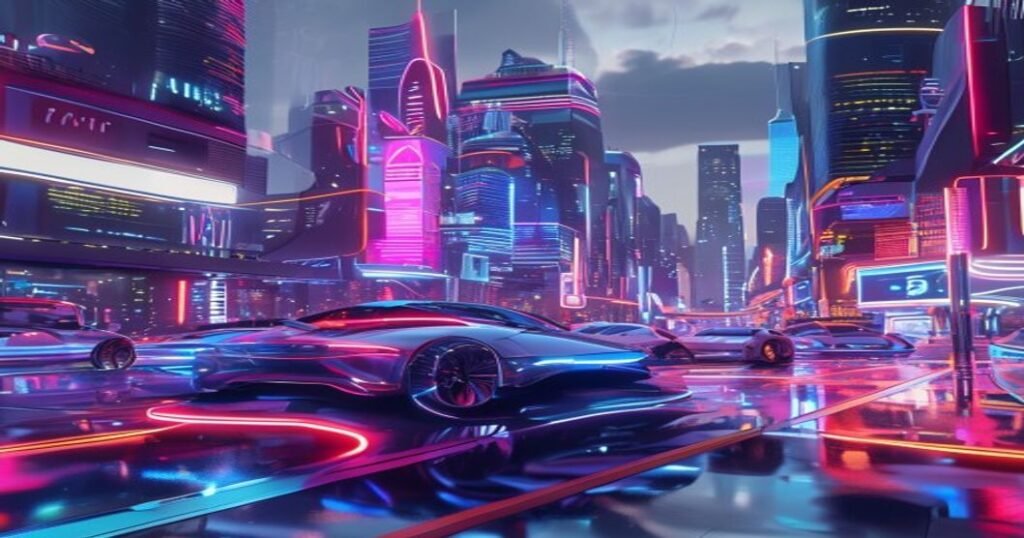

Remember that feeling? The rumble of a combustion engine, the smell of petrol, the pure, unadulterated joy of hitting the open road with complete control. For decades, that’s been the essence of driving. But let me tell you, friends, that era is rapidly becoming a quaint memory. We’re not just on the cusp of a change; we’re smack dab in the middle of a transportation revolution so profound, it makes the shift from horse and buggy look like a minor software update.
I’m talking, of course, about the seismic convergence of Electric Vehicles (EVs) and Artificial Intelligence (AI). These two titans aren’t merely coexisting; they’re intertwining to create something genuinely groundbreaking – a future where our cars aren’t just machines we drive, but intelligent companions that learn, adapt, and even anticipate our needs. It’s an exciting, slightly unsettling, but undeniably exhilarating prospect, and if you haven’t started paying attention, you’re about to be left in the dust.
The Electric Revolution: More Than Just Wires and Batteries
Let’s start with EVs. For years, they were a fringe interest, dismissed as glorified golf carts or expensive toys for the environmentally conscious. Oh, how the tables have turned! Now, we’re seeing sleek, powerful electric machines that don’t just match their gasoline counterparts but often surpass them in acceleration, quietness, and sheer driving pleasure. The instant torque is addictive, the silent glide through traffic feels futuristic, and let’s be honest, the idea of ditching petrol pumps for charging stations that you can often find at home or work is incredibly appealing.
The environmental argument is compelling, no doubt. Cleaner air in our cities, a reduced carbon footprint – these are tangible benefits that resonate deeply with a generation increasingly aware of our planet’s fragility. But the EV story is no longer just about saving the environment; it’s about a superior driving experience, lower running costs (especially with fluctuating fuel prices), and a platform that is inherently more suited for the digital age. Think about it: an EV is essentially a giant computer on wheels, powered by a massive battery, with a drivetrain that’s far simpler and more robust than any internal combustion engine.
Enter AI: The Brain Behind the Beauty
Now, take that sophisticated electric platform and inject it with a heavy dose of Artificial Intelligence. This is where things get truly mind-bending. AI isn’t just about self-driving cars; that’s merely one (albeit dramatic) application. It’s about every single interaction you have with your vehicle, every system working in harmony, and every byte of data being processed to make your journey safer, more efficient, and more enjoyable.
If you’ve been following the broader tech landscape, you’ll know that AI is not just a buzzword; it’s a foundational shift across every industry. From finance to healthcare, and yes, most certainly automotive, The AI Tidal Wave: How Startups Are Riding the Biggest Tech Shift in Generations (Or Getting Swallowed Whole!) is reshaping how we work, live, and interact with technology. And our cars are no exception.
Autonomous Driving: The Ultimate AI Frontier
The dream of fully autonomous vehicles, where you can kick back and read a book while your car navigates rush hour, is slowly but surely inching towards reality. We’ve moved past mere cruise control to advanced driver-assistance systems (ADAS) that offer adaptive cruise control, lane-keeping assist, automatic emergency braking, and even sophisticated parking assist features. These aren’t just gadgets; they’re AI-powered co-pilots making driving safer and less stressful.
The journey to Level 5 autonomy (full self-driving in all conditions) is complex, fraught with technical and ethical challenges. But even the incremental advancements at Level 2+ and Level 3 are already profoundly changing our relationship with the driver’s seat. Imagine a world where road accidents, predominantly caused by human error, become a rarity. That’s the promise of AI in autonomous driving.
Beyond Self-Driving: The Intelligent Car Experience
But AI in your car goes far beyond just driving itself. Think about:
- Predictive Maintenance: Your car’s AI constantly monitors its own health, identifying potential issues before they become catastrophic failures. It might even proactively schedule a service appointment for you.
- Personalized Infotainment: The car learns your music preferences, podcast habits, and even your preferred cabin temperature, adjusting settings automatically before you even ask. It becomes an extension of your digital life, seamlessly integrating with your smartphone and smart home devices.
- Optimized Energy Management: For EVs, AI is crucial. It analyzes traffic patterns, terrain, and your driving style to optimize battery usage, suggest efficient routes, and even locate the fastest charging stations when needed. This is key to alleviating range anxiety.
- Enhanced Safety: AI-powered sensors and cameras detect not just other vehicles but pedestrians, cyclists, and even potential hazards in conditions where human eyes might struggle. It can react faster than any human, preventing collisions before they occur.
The Perfect Synergy: How AI and EVs Amplify Each Other
This is where the magic truly happens. EVs provide the ideal platform for AI. They are inherently software-defined, with fewer mechanical parts, more sensors, and a constant flow of data. This “data stream” is the lifeblood of AI, allowing it to learn, improve, and make increasingly intelligent decisions. Conversely, AI unlocks the full potential of EVs, making them smarter, safer, and more user-friendly.
It’s not just about an electric car, or an AI-powered car; it’s about an intelligent electric car. This powerful combination is what is The Road Ahead: How AI and EVs Are Rewriting the Very Rules of Driving. The traditional barriers between hardware and software are dissolving, giving rise to vehicles that are less like machines and more like sophisticated, mobile data centers that happen to transport us from point A to point B.
What This Means for You (And Your Daily Commute)
So, what does this mean for the average person, for us? It means a fundamental shift in how we perceive and use transportation. Commutes could become productive time, not wasted time. Parking could become a problem of the past. Road rage might become an archaic concept, as AI-driven traffic flow optimizes for efficiency rather than human aggression.
For city planners, it means rethinking urban infrastructure. For businesses, it means new models for ride-sharing, logistics, and even mobile services. And for entire nations, embracing these technologies is not just an economic opportunity but a necessity for future growth and environmental sustainability. Countries like ours, with burgeoning populations and a strong entrepreneurial spirit, have a unique chance to leapfrog older technologies. Indeed, understanding and leveraging this technological shift is paramount for progress, echoing how Pakistan’s AI Revolution: The Untold Story of a Nation on the Cusp of a Digital Leap is unfolding in various sectors.
Challenges on the Road Ahead
Of course, it’s not all smooth sailing. There are significant challenges. Infrastructure for charging EVs needs to expand dramatically, especially in developing regions. The cost of these advanced vehicles, while decreasing, still remains a barrier for many. Regulatory frameworks need to catch up with the pace of technological innovation, particularly concerning autonomous driving liability and data privacy.
Then there’s the ethical dimension: who is responsible when an AI-driven car makes a difficult decision? How do we ensure these systems are unbiased and fair? These are complex questions that require thoughtful discussion and collaboration across industries, governments, and civil society.
The Future is Now, and It’s Electrically Intelligent
Despite these hurdles, the trajectory is clear and irreversible. The future of automotive is electric, and it is intelligent. We are witnessing the birth of a new era of mobility, one that promises unprecedented levels of safety, efficiency, and convenience. It will redefine cities, transform economies, and fundamentally alter our daily lives.
As a seasoned tech journalist, I’ve seen many “revolutions” come and go, but few have had the transformative power of this EV-AI convergence. It’s not just about a new car; it’s about a new paradigm. So, buckle up, because the ride is just getting started, and it’s going to be absolutely electrifying. The silent hum of an EV, guided by the invisible hand of AI, is the soundtrack to our future, and I, for one, can’t wait to hear it.


