
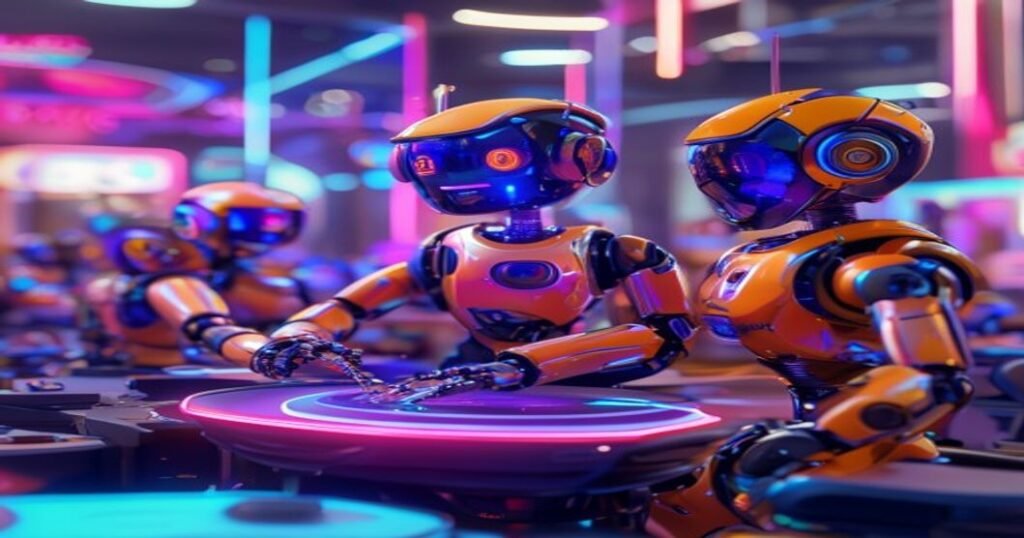

Let’s be honest: our world is changing at a breakneck pace, and nowhere is this more evident, or more thrilling, than in the realm of entertainment. From the way we binge-watch our favorite shows to the increasingly immersive video games we get lost in, a silent, powerful force is at play. I’m talking, of course, about Artificial Intelligence. It’s no longer just a futuristic concept confined to sci-fi films; AI is actively shaping, enhancing, and even creating the entertainment we consume daily. And if you think you’ve seen it all, trust me, we’re just getting started.
The AI Takeover: Not Just in Boardrooms, But in Your Living Room
For a while now, we’ve heard whispers and even shouts about how AI is revolutionizing industries, from healthcare to finance. But the true ‘wow’ factor, for many of us, comes when we see its tangible impact on our downtime. Think about it: the moment you finish a series on Netflix and it immediately suggests another you’ll probably love, or when Spotify curates a playlist that feels like it was plucked from your very soul – that’s AI working its magic. It’s subtle, it’s personal, and it’s making our entertainment experiences smoother and more engaging than ever before. In fact, if you’ve been following the broader discussions, you’ll know that The AI Takeover: It’s Not Sci-Fi Anymore – How Artificial Intelligence is Stealthily Rewiring Our Entire Reality isn’t just about corporate giants; it’s about the very fabric of our daily lives, including how we unwind and escape.
From Blank Page to Blockbuster: AI’s Role in Content Creation
This is where things get truly wild. AI isn’t just recommending content; it’s actively helping to *create* it. Picture this: a screenwriter grappling with writer’s block, turning to an AI to generate plot twists, character arcs, or even full scene dialogues. Or a music producer using AI to experiment with new harmonies and melodies that human ears might never have conceived. We’re witnessing a paradigm shift where machines are becoming creative collaborators. Generative AI, in particular, is an absolute game-changer. It’s not just automating tasks; it’s crafting original works of art, music, and narratives. This is truly The Generative AI Earthquake: How AI is Not Just Transforming, But Redefining Our Reality, extending its tremors deep into the creative industries.
- Screenwriting & Storytelling: AI algorithms can analyze thousands of successful scripts to identify patterns, generate character profiles, and even predict audience reception. This doesn’t replace human writers (yet!), but it offers powerful tools for brainstorming and refinement.
- Music Composition: From background scores for games to pop songs, AI can compose unique pieces, adapt music to specific moods, or even generate entire albums. Tools exist now that allow artists to feed in a style and have AI produce variations.
- Visual Arts & Animation: AI is adept at generating stunning visuals, from concept art for films to animating complex scenes. Think about the potential for indie creators to produce high-quality content without massive budgets.
- Deepfakes (The Double-Edged Sword): While controversial, deepfake technology, powered by AI, can realistically alter videos and audio. In entertainment, this has applications from bringing deceased actors back to life for a cameo (ethically murky, I know) to creating hyper-realistic special effects and virtual influencers.
Gaming’s Glorious Leap: More Than Just Smart NPCs
For gamers, AI has been a quiet constant, from basic enemy pathfinding to complex strategy game opponents. But the current generation of AI is pushing gaming into uncharted territory. We’re talking about NPCs (Non-Player Characters) that learn from your playstyle, adapt their strategies, and even develop unique personalities. Imagine a game where every playthrough feels genuinely different because the world and its inhabitants respond organically to your choices, not just pre-programmed scripts. This isn’t just about making games harder; it’s about making them more immersive, more unpredictable, and ultimately, more replayable.
Procedural generation, heavily reliant on AI, allows game developers to create vast, unique worlds on the fly. No Man’s Sky is a famous example, but it’s becoming more prevalent, allowing for infinite exploration and discovery. The future of gaming might not just be about playing a story, but about influencing one that’s constantly being written by the AI alongside you.
The Personalized Paradise: Streaming and Beyond
Beyond creation, AI’s biggest impact on consumption is personalization. We’ve all grown accustomed to our streaming services knowing us almost better than we know ourselves. Netflix’s recommendation engine is legendary, using vast amounts of data to predict what you’ll want to watch next. But it’s evolving.
- Dynamic Content: Imagine a show where the ending changes based on your viewing habits, or where character dialogue adapts to your preferred tone. This isn’t far-fetched; interactive storytelling is already experimenting with these concepts, and AI is the engine making it scalable.
- Hyper-Targeted Ads (for better or worse): AI ensures that the ads you see are relevant to your interests, making them less intrusive and potentially more useful (or creepier, depending on your perspective).
- Virtual Hosts & Influencers: AI-powered virtual beings are already hosting events, conducting interviews, and even acting as social media influencers, blurring the lines between the digital and the real.
The Entertainment You Carry: AI in Your Pocket
Our smartphones have become our primary entertainment hubs, haven’t they? And it’s no surprise that AI is at the core of making these devices smarter and our experiences richer. From the predictive text that helps you write a tweet to the advanced camera features that make your photos look professional, AI is everywhere on your phone. When it comes to entertainment, this translates to:
- Optimized Streaming: AI algorithms ensure your video streams are high-quality, even on spotty connections, by intelligently buffering and adjusting resolution.
- Enhanced Mobile Gaming: AI helps optimize game performance, manages battery life, and even powers advanced augmented reality (AR) games that blend digital elements with your real-world surroundings.
- Personalized News & Feeds: Your news aggregators and social media feeds are carefully curated by AI to show you content you’re most likely to engage with, keeping you informed and entertained.
Our phones aren’t just ‘smart’ anymore; they’re becoming true intelligent companions, constantly learning and adapting to our needs. This evolution of personal devices is perfectly encapsulated by the idea of The AI Brain in Your Pocket: How Smartphones Are Evolving from Smart Devices to Intelligent Companions, making our entertainment seamless and always available.
The Human Element: Where Do We Stand?
With all this talk of AI, it’s natural to wonder about the future of human creativity and jobs in the entertainment industry. Will AI replace artists, musicians, writers, and actors? My take? Not entirely, but it will certainly redefine their roles. AI is a tool, an incredibly powerful one, but a tool nonetheless. It can handle repetitive tasks, generate ideas, and optimize processes, freeing up human creators to focus on the unique spark of intuition, emotion, and cultural understanding that only humans possess. The best entertainment will likely emerge from a collaborative synergy between human ingenuity and AI’s immense processing power.
Of course, there are ethical considerations. The misuse of deepfakes, copyright issues with AI-generated content, and the potential for echo chambers created by overly personalized algorithms are all valid concerns that the industry, and society at large, must address as AI continues its rapid ascent.
The Curtain Call: A Future We Can Only Imagine
The entertainment landscape is undergoing a monumental transformation, driven by the relentless innovation of Artificial Intelligence. From the creative studios where stories are born, to the algorithms that deliver them directly to your screens, AI is embedding itself into every layer of how we experience fun, wonder, and escape. We’re moving towards an era of hyper-personalized, endlessly engaging, and dynamically evolving entertainment. It’s a future where every movie, every game, and every song might feel tailor-made just for you.
As a content creator and an avid consumer, I find this future both exhilarating and a little daunting. The possibilities are boundless, but so are the responsibilities. One thing is certain: the entertainment world is about to get a whole lot more intelligent, and the show, as they say, must go on. Are you ready for the AI encore?


