
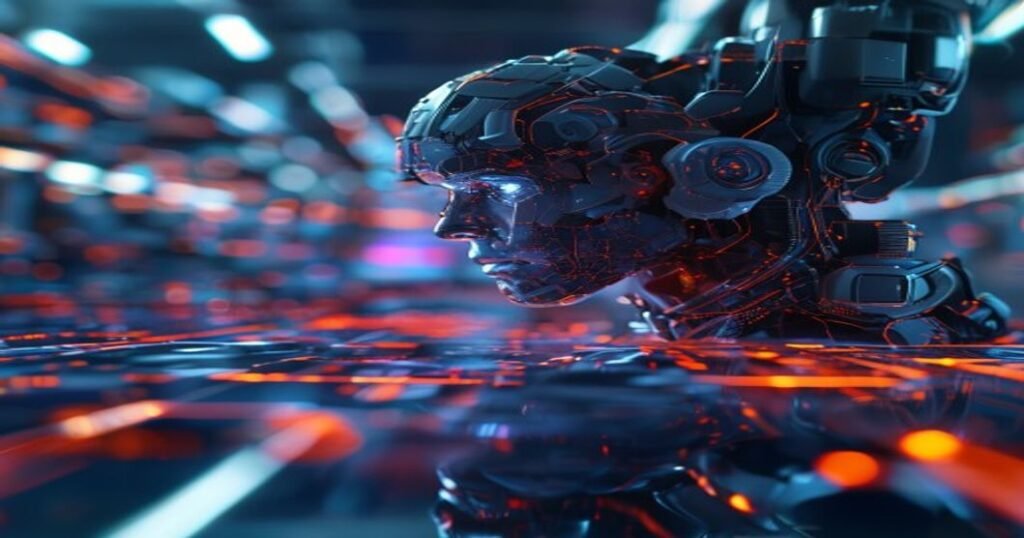

The year 2026 stands as a pivotal moment in technological history, marking the transition from AI’s nascent stages to its pervasive integration across the globe. While the past decade introduced us to rudimentary AI, 2026 is the year Generative AI truly unleashes its full potential, moving beyond mere content creation to fundamentally redefine industries, empower individuals, and drive an unprecedented wave of innovation. This isn’t just about algorithms; it’s about a new era of intelligence that can create, innovate, and adapt, promising a future that was once confined to the realm of science fiction.
Understanding Generative AI’s Leap by 2026
Generative AI, in its simplest form, refers to AI models capable of producing new data – be it text, images, audio, video, or even complex simulations – that resembles human-created input. By 2026, these models have matured significantly. We’re talking about multi-modal AI systems that can understand context across different data types, synthesize information from vast datasets, and generate highly complex, coherent, and useful outputs at scale. This evolution is fueled by:
- Advanced Foundation Models: Larger, more sophisticated models trained on colossal and diverse datasets, enabling broader applicability and deeper understanding.
- Enhanced Algorithmic Efficiency: Breakthroughs in neural network architectures and training methodologies make these models faster, more efficient, and accessible.
- Hardware Acceleration: The relentless march of computational power, particularly in specialized AI chips and quantum computing advancements, provides the necessary infrastructure.
- Democratization of Tools: User-friendly interfaces and robust APIs allow businesses and individuals, regardless of their technical expertise, to harness Generative AI’s power.
Transforming Industries: A Sector-by-Sector Revolution
Healthcare: Precision, Discovery, and Personalized Care
In 2026, Generative AI is not merely assisting healthcare professionals; it’s actively participating in the discovery and delivery of medicine. From designing novel drug compounds and predicting protein folding structures with unprecedented accuracy to generating personalized treatment plans based on an individual’s unique genetic profile and lifestyle data, AI is revolutionizing patient care. It can simulate clinical trials, accelerating the path from lab to patient, and even create realistic patient models for surgical training. The insights gleaned from vast, anonymized patient data by generative models are uncovering new pathways for disease prevention and treatment, making a significant impact on global health outcomes. For a deeper dive into this transformative shift, explore how AI in Healthcare: Unlocking a New Era of Medicine by 2026 is becoming a reality.
Creative Industries & Entertainment: Beyond Imagination
Generative AI has moved from creating basic images and text to crafting entire virtual worlds, generating complex musical scores, and writing compelling narratives that blur the line between human and machine creativity. Filmmakers use AI to design elaborate set pieces, characters, and even entire scenes, drastically cutting production times and costs. Musicians leverage AI to explore new genres and create adaptive soundtracks. In the gaming world, generative AI powers hyper-realistic environments, dynamically evolving storylines, and incredibly intelligent NPCs (Non-Player Characters), offering players unparalleled immersion and replayability. This fusion of AI with virtual and augmented realities is propelling us into new dimensions of experience. Indeed, the concept of Beyond the Screen: The Metaverse, AI, and Hyper-Realism Revolutionizing Gaming by 2026 is no longer a distant dream but a tangible present.
Manufacturing & Robotics: The Era of Intelligent Production
Generative AI is optimizing every stage of the manufacturing process. It can design new product prototypes from scratch, suggesting innovative materials and structures based on desired performance metrics. Robotics, enhanced by generative models, can learn complex tasks more rapidly, adapt to changing environments, and even self-diagnose and repair. Supply chains are becoming ‘self-optimizing,’ with AI predicting demand fluctuations, identifying potential bottlenecks, and generating alternative logistical routes in real-time. This leads to reduced waste, increased efficiency, and the ability to customize products at mass-production scale.
Education & Research: Personalized Learning at Scale
The education sector is undergoing a profound transformation. Generative AI creates personalized learning pathways for students, tailoring content, exercises, and feedback to individual needs and learning styles. It can generate dynamic course materials, simulations, and interactive tutors, making learning more engaging and effective. For researchers, AI accelerates the process of hypothesis generation, experimental design, and data analysis, unlocking new frontiers of scientific discovery at an unprecedented pace.
Sustainability & Climate Action: Designing a Greener Future
Perhaps one of Generative AI’s most critical applications in 2026 is its role in addressing global environmental challenges. AI models are designing more efficient renewable energy systems, optimizing smart grids, and creating novel materials for carbon capture and sustainable packaging. They can simulate complex climate scenarios, predict environmental impacts, and generate solutions for urban planning that prioritize ecological balance. This deep integration of AI with environmental initiatives is crucial for navigating the broader societal shifts towards a more sustainable future, reflecting a Global Reset 2026: Navigating the Confluence of AI, Sustainability, and Human Potential.
Societal and Economic Impact: Embracing the AI-Powered World
The Evolving Job Market and Human Potential
While Generative AI is automating repetitive tasks, it’s simultaneously creating entirely new roles and demanding new skill sets. The emphasis is shifting from execution to oversight, prompt engineering, ethical AI development, and creative problem-solving that leverages AI as a co-pilot. Understanding how to collaborate with AI effectively, interpret its outputs, and guide its creative process is paramount. This necessitates a proactive approach to lifelong learning and reskilling. Indeed, for individuals looking to not just survive but thrive in this rapidly changing landscape, understanding how to embark on Future-Proofing Your Career: Thriving in the AI-Powered Job Market of 2026 and Beyond! is more critical than ever.
Startup Ecosystem and Innovation Surge
Generative AI has significantly lowered the barrier to entry for many startups. Entrepreneurs can now rapidly prototype ideas, generate marketing content, develop code, and even design initial product iterations with unprecedented speed and efficiency. This has ignited a ‘quantum leap’ in the startup universe, where innovative solutions, once requiring massive teams and capital, can now emerge from nimble, AI-augmented teams. The ability of generative models to accelerate research and development means that the pace of innovation has dramatically increased across all sectors, making 2026 a boom year for frontier tech adoption and entrepreneurial ventures. The sheer velocity of technological advancement and its profound impact on new businesses truly illustrates The Quantum Leap: How Frontier Tech & AI Are Igniting the Startup Universe in 2026.
Challenges and Ethical Considerations
The rapid advancement of Generative AI isn’t without its challenges. Concerns around:
- Bias and Fairness: Ensuring AI models are trained on diverse, unbiased data to avoid perpetuating societal inequalities.
- Misinformation and Deepfakes: The potential for hyper-realistic fake content to sow discord and manipulate public opinion.
- Intellectual Property: Navigating the complexities of ownership and originality for AI-generated works.
- Security and Privacy: Protecting sensitive data used for training and ensuring the robust security of AI systems.
- Energy Consumption: The enormous computational power required for training and running advanced generative models.
Governments, ethical bodies, and the tech community are collaborating intensely in 2026 to establish robust regulatory frameworks, develop explainable AI, and promote responsible AI development practices to mitigate these risks.
The Road Ahead: A Symbiotic Future
By 2026, Generative AI is no longer just a tool; it’s a partner in creation, a catalyst for discovery, and a driver of progress. Its influence is expanding beyond specific applications, weaving itself into the fabric of our daily lives, from personalized digital assistants that anticipate our needs to smart cities that adapt to citizen demands in real-time. The future is one of human-AI symbiosis, where the unique strengths of human creativity, empathy, and critical thinking combine with AI’s unparalleled processing power and generative capabilities to solve complex problems and unlock new levels of human potential. The journey has just begun, and 2026 is merely a breathtaking glimpse into the generative future.

