
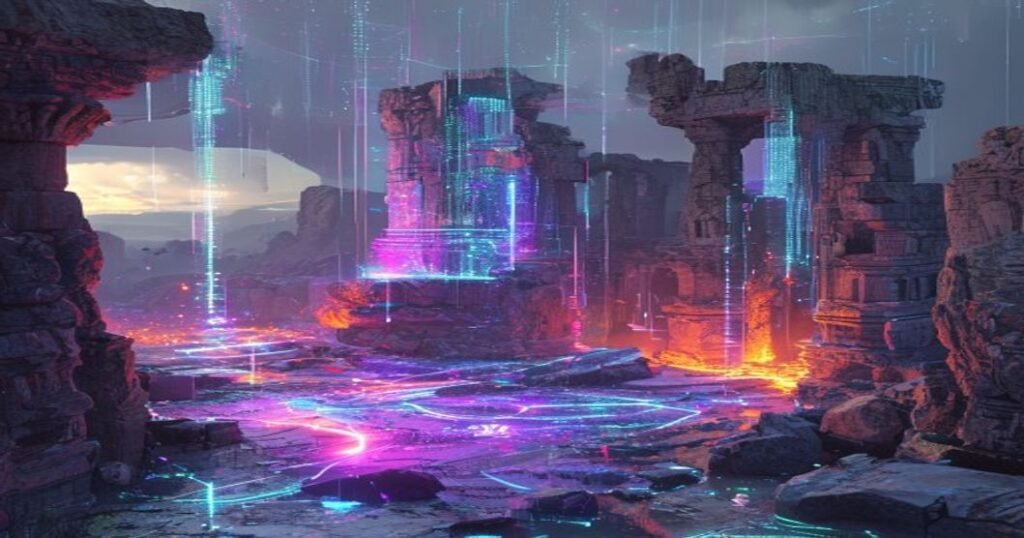

The Echoes We Can’t Ignore: Why History Is More Alive Than Ever
There’s something inherently magical about the past, isn’t there? That quiet thrill we get from imagining lives lived thousands of years ago, the rise and fall of empires, the secrets buried beneath layers of earth and time. For many of us, history felt like a dusty tome in school, a collection of facts and dates to be memorized. But I’ve got to tell you, that perception couldn’t be further from the truth now. History isn’t a static, finished story; it’s a dynamic, ever-unfolding narrative, and right now, it’s bursting with more life and revelations than perhaps ever before.
Think about it: every week, it seems, we hear about some incredible new discovery – a previously unknown Roman fort, a vast Maya city hidden by jungle, or a shipwreck revealing forgotten trade routes. These aren’t just isolated finds; they’re pieces of a much larger, global puzzle that are fundamentally challenging what we thought we knew about humanity’s journey. We’re not just looking back; we’re actively re-engaging with history, peeling back the layers with a fervor and capability that would have seemed like science fiction just a generation ago. It’s exhilarating, and honestly, a little humbling.
Beyond the Shovel: How Technology Is Rewriting the Ancient Narrative
Gone are the days when archaeology was primarily about a single intrepid explorer with a shovel and a keen eye. While the human element remains absolutely critical, the tools at our disposal have transformed the game entirely. We’re talking about an arsenal of high-tech marvels that allow us to ‘see’ beneath the earth, through dense foliage, and across vast landscapes without ever breaking ground.
Technologies like LiDAR (Light Detection and Ranging), ground-penetrating radar, and hyperspectral imaging are no longer niche academic curiosities; they are mainstream archaeological powerhouses. Imagine flying a drone or a plane over a seemingly impenetrable jungle and having it generate a detailed 3D map of the terrain, revealing the outlines of ancient plazas, roads, and residential structures that have been swallowed by nature for centuries. This isn’t speculation; it’s happening right now in places like the Guatemalan lowlands, where LiDAR has mapped extensive Maya mega-cities, reshaping our understanding of their population density and urban planning on an unprecedented scale. Similarly, satellite imagery helps us trace ancient irrigation systems in arid regions or locate forgotten Roman marching camps across Europe. These remote sensing techniques provide a ‘big picture’ view, allowing archaeologists to strategically target specific areas for excavation, making the entire process far more efficient and revelatory.
The Digital Oracle: AI’s Astonishing Role in Unlocking Forgotten Worlds
But here’s where things get truly mind-bending: the sheer volume of data generated by these new technologies is astronomical. Terabytes of LiDAR scans, gigabytes of photographic evidence, and reams of geophysical readings. How do human researchers possibly sift through all of that to find the crucial clues? This, my friends, is where Artificial Intelligence steps in, transforming from a mere tool into a genuine partner in discovery.
AI’s ability to process vast, complex datasets, identify subtle patterns, and cross-reference information at speeds impossible for any human team is nothing short of revolutionary. It’s like having an army of tireless digital assistants, each with an encyclopedic memory and an unparalleled knack for spotting anomalies. Just as AI is quietly rebuilding our global future, brick by digital brick, meticulously optimizing everything from logistics to urban planning, it’s also diligently reassembling the scattered fragments of our ancient past. AI algorithms can be trained to recognize specific archaeological features – ancient walls, mounds, field systems – within aerial images, drastically speeding up the mapping process and uncovering sites that might otherwise remain hidden.
The Whispers of Lost Languages: AI as Our Universal Translator
One of the most thrilling applications of AI in history is its potential to help us decipher ancient texts. Imagine staring at an ancient scroll, a clay tablet, or a crumbling inscription, filled with symbols that have defied human understanding for centuries. From the mysterious Rongorongo script of Easter Island to various undeciphered Bronze Age Aegean scripts, these are some of humanity’s greatest linguistic challenges. Traditional epigraphers spend decades, sometimes entire careers, painstakingly trying to find patterns, compare glyphs, and make educated guesses.
AI, however, can analyze these unknown scripts at an incredible scale, looking for statistical regularities, recurring sequences, and potential semantic relationships. While it’s not a magic bullet that instantly translates everything, AI can act as a powerful accelerator, sifting through millions of potential permutations and offering up hypotheses that human scholars can then test. It can highlight previously overlooked connections, identify subtle linguistic shifts, and even suggest grammatical structures. This collaborative approach – AI presenting possibilities, human experts providing contextual understanding and intuition – is proving incredibly fruitful, hinting at a future where more of humanity’s linguistic heritage might finally be understood.
Reconstructing Ghosts: Virtual Archaeology and the Power of Prediction
Beyond finding and deciphering, AI is also helping us visualize the past in ways we never thought possible. From fragments of pottery, eroded foundations, and historical records, AI can assist in creating incredibly detailed 3D reconstructions of ancient buildings, cities, and even entire landscapes. This virtual archaeology allows us to walk through long-lost temples, explore submerged cities, or witness daily life in a Roman villa, bringing history to vibrant, interactive life. It’s an immersive experience that deepens our empathy and understanding of past cultures.
But AI goes beyond mere reconstruction; it enters the realm of prediction. Using machine learning, algorithms can analyze environmental data, geographical features, and patterns of ancient settlement to predict where new archaeological sites are most likely to be found. This means less random digging, more targeted and effective surveys, and ultimately, more discoveries. It’s a bit like imagining your future smartphone, which is already becoming incredibly intuitive, almost psychic in its ability to anticipate your needs – your next smartphone won’t just be smart, it’ll be psychic, thanks to on-device AI. Now imagine that same predictive power, that ability to forecast probabilities, applied to unearthing historical truths. It’s an exciting prospect, opening doors to secrets we didn’t even know to look for.
Why Now? The Convergence of Curiosity and Capability
So why are we witnessing this incredible surge in historical discoveries right now? It’s a perfect storm of factors. Firstly, the technology itself has matured, becoming more accessible and powerful. LiDAR units are smaller, cheaper, and more precise than ever. Satellite data is increasingly available. And, crucially, the AI algorithms powering the analysis are constantly improving, learning, and becoming more sophisticated.
Secondly, there’s a growing global collaborative spirit in archaeology. Researchers from different nations are pooling resources, sharing data, and working together on monumental projects. The digital age has fostered a community where knowledge spreads faster and hypotheses can be tested by a wider array of experts.
Finally, and perhaps most importantly, there’s a palpable, renewed societal interest in our roots. In an increasingly fast-paced and interconnected world, there seems to be a collective yearning to understand where we came from, what lessons the past holds, and how those lessons can inform our present and future. It’s a powerful cultural current that complements the technological advancements perfectly. This confluence of factors is creating an invisible revolution that is rewriting your daily life, and extending its reach into the very fabric of our ancient past, revealing untold stories and challenging long-held assumptions.
The Human Heart in the Machine: Navigating the Ethics of Digital Discovery
While the allure of technology and AI is undeniable, it’s vital to remember that these are tools, albeit incredibly powerful ones. The human element – the meticulous fieldwork, the nuanced interpretation, the ethical considerations – remains paramount. AI can crunch numbers and spot patterns, but it cannot yet fully grasp the cultural significance of an artifact, the spiritual weight of a site, or the complex narratives that weave through human history. That still requires human intuition, empathy, and expertise.
Furthermore, the explosion of new discoveries brings with it renewed ethical questions. Who owns the past? How do we ensure proper preservation when sites are exposed? How do we respect indigenous communities whose ancestral lands are being explored? These are complex questions that require careful, thoughtful engagement, ensuring that our pursuit of knowledge is balanced with respect, responsibility, and collaboration.
So, What Does This Mean for Us, Right Now?
These constant revelations from the past are far from mere academic exercises. They have profound implications for us, right here, right now. Understanding the intricate social structures of ancient civilizations, the environmental challenges they faced, the innovative solutions they devised, or even the reasons for their eventual decline, offers invaluable lessons for our own time. It contextualizes our current struggles, our triumphs, and our very existence.
When we discover a vast, interconnected Maya city, it forces us to reconsider the scale of ancient urbanism. When we decipher new fragments of an ancient philosophical text, it broadens our understanding of human thought. Each new discovery doesn’t just add a fact to a timeline; it adds texture, complexity, and a deeper sense of our shared humanity. It reminds us that innovation, resilience, and the capacity for both great creation and great destruction are threads woven deep into the fabric of our species.
The Unwritten Chapters: A Future Bursting with Discovery
If there’s one thing I’m absolutely certain about, it’s this: the future of history is more exciting than ever before. We are standing at the precipice of an age of unprecedented discovery, fueled by the relentless curiosity of humanity and supercharged by cutting-edge technology. There are countless lost cities still waiting to be found, countless scripts still waiting to be read, and countless stories still waiting to be told.
History isn’t just about what happened; it’s about what we’re learning, right now, that changes our perception of everything that came before. It’s a field brimming with possibility, where every new find is a reminder that the past isn’t buried and gone; it’s alive, it’s speaking, and with our new digital tools, we’re finally learning to listen. Get ready, because the ancient world is just beginning to tell us its most incredible secrets.


