
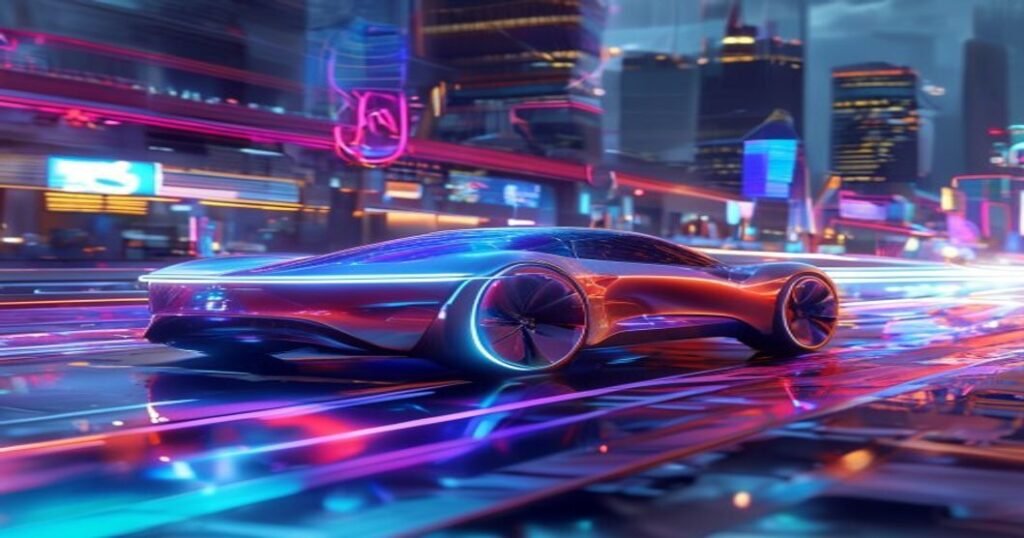

Remember those sci-fi movies where cars drove themselves, smoothly navigating through futuristic cities? For a long time, it felt like a distant dream, a cinematic fantasy. But here’s the kicker: that future isn’t just knocking on our door; it’s already parked in our driveway, silently updating its software. We’re talking about Artificial Intelligence (AI) and its seismic impact on autonomous vehicles, a revolution that’s set to completely redefine our relationship with cars and the very act of driving.
As someone who’s always had a keen eye on technological shifts, especially those that promise to disrupt our daily lives, I can tell you that what’s unfolding in the automotive world right now is nothing short of breathtaking. This isn’t just about taking your hands off the wheel; it’s about a complete reimagining of urban planning, logistics, safety, and personal freedom. It’s complex, it’s exciting, and yes, it comes with its own set of challenges, but one thing is clear: the road ahead is being paved by AI, and it’s going to be a wild, exhilarating ride.
The Promise vs. The Pavement: What’s the Reality Now?
For years, the promise of fully autonomous vehicles felt like a carrot on a stick, constantly just out of reach. We’ve seen concepts, prototypes, and a lot of grand announcements. But now, we’re witnessing a tangible progression. While fully driverless cars without any human intervention in all conditions (Level 5 autonomy) are still a work in progress, advanced driver-assistance systems (ADAS) are making our current cars smarter and safer than ever before. Think adaptive cruise control, lane-keeping assist, automatic emergency braking – these aren’t just fancy features; they are the foundational building blocks, powered by sophisticated AI algorithms.
The journey from assisted driving to fully autonomous requires an incredible leap in AI capabilities. It demands systems that can perceive the world with human-like (or even superhuman) acuity, predict the unpredictable, and make split-second decisions with flawless logic. This is where the true genius of AI comes into play, not just as a computational engine, but as the very ‘brain’ of the vehicle, constantly learning and adapting.
The Brain Behind the Wheel: AI’s Unseen Hand
At the heart of every autonomous vehicle lies a complex web of AI technologies. These aren’t simple ‘if-then’ statements; we’re talking about deep learning neural networks trained on petabytes of real-world and simulated driving data. Sensors like LiDAR, radar, cameras, and ultrasonic detectors continuously feed information into this AI brain, creating a 360-degree, real-time map of the car’s surroundings. The AI then processes this data at lightning speed, identifying pedestrians, other vehicles, traffic signs, road markings, and potential hazards, all while simultaneously mapping its position with pinpoint accuracy.
Consider the sheer volume of data being generated and processed by a single autonomous vehicle every second. It’s staggering. To make sense of this deluge and to ensure seamless communication between vehicles, infrastructure, and cloud systems, the underlying telecom networks need to be incredibly robust and intelligent. It’s no different than how AI is quietly working behind the scenes, optimizing network performance and ensuring reliable connectivity across various sectors. If you’ve ever wondered how these massive data flows are managed, you might find The Invisible Architect: How AI is Secretly Supercharging Telecom Networks and Reshaping Our Connected World fascinating. The principles of AI-driven optimization and real-time data processing are profoundly similar, whether it’s powering your internet or guiding a self-driving car through rush hour.
Seeing and Deciding: The Algorithmic Edge
Beyond mere perception, the AI in autonomous vehicles must make critical decisions – accelerate, brake, turn, yield, change lanes. This decision-making process is where algorithms truly shine. They predict the behavior of other road users, anticipate potential dangers, and plan the safest and most efficient route, all within milliseconds. This isn’t just reactive driving; it’s predictive, proactive, and incredibly complex.
The sophistication of these algorithms mirrors the intricate decision-making systems we see emerging in other high-stakes environments. Take the world of finance, for instance. Just as autonomous vehicles rely on intricate algorithms to navigate dynamic environments, sophisticated AI models are The Algorithmic Edge: How AI is Completely Rewriting the Rules of Investing (And Why You Can’t Afford to Be Left Behind). The core idea is the same: leveraging massive data sets and advanced computational power to identify patterns, make predictions, and execute actions with precision and speed far beyond human capabilities. In both cases, these systems are designed to minimize risk and optimize outcomes, whether it’s navigating traffic or navigating volatile markets.
More Than Just Driving: The Connected Ecosystem
Autonomous vehicles are not isolated islands on the road. They are an integral part of a much larger, interconnected ecosystem. Vehicle-to-everything (V2X) communication allows cars to talk to each other (V2V), to traffic infrastructure (V2I), to pedestrians’ devices (V2P), and to the cloud (V2C). This constant exchange of information creates a real-time, collective awareness that dramatically enhances safety and efficiency. Imagine a world where cars know about a sudden brake ahead, not just from seeing it, but because the car two vehicles in front transmitted a warning. Or where traffic lights adjust dynamically based on real-time traffic flow reported by every vehicle on the road.
This level of integration and data sharing is fundamentally changing urban planning and how we conceive of transportation. It opens up avenues for new services, from on-demand robotaxis that optimize routes and pick-ups to automated delivery systems that can transform e-commerce logistics. It’s a testament to how digital transformation, powered by AI, can ripple through entire sectors, creating new opportunities and challenges. Much like the ambitious digital initiatives pushing forward in emerging economies, such as those we see in Startup Pakistan: From Economic Storms to Digital Dreams – An Unstoppable Force, the automotive sector’s pivot towards a smart, connected future is a massive undertaking with profound societal implications.
The Bumpy Road Ahead: Challenges and Ethical Dilemmas
Despite the incredible advancements, the journey to widespread autonomous vehicle adoption isn’t without its bumps. There are significant challenges to overcome. Public trust, for one, is paramount. People need to feel safe handing over control to a machine, and incidents, no matter how rare, can erode that trust quickly. Regulatory frameworks are struggling to keep pace with the technology, and establishing clear liability in case of an accident remains a complex legal and ethical quandary.
Then there are the ethical dilemmas. In an unavoidable accident scenario, how does an autonomous vehicle decide between potentially harming its occupants or an external party? These ‘trolley problem’ scenarios are not just philosophical debates; they are real programming challenges that engineers and ethicists are grappling with. Cybersecurity is another massive concern. A hacked autonomous vehicle could have catastrophic consequences, making robust, unhackable systems an absolute necessity.
Furthermore, the technology needs to perform flawlessly in all weather conditions, from blinding snowstorms to torrential rain, and in diverse environments, from bustling city streets to unpaved rural roads. Achieving this level of reliability and adaptability is the ultimate Everest for AI in the automotive sector.
What This Means For YOU: A Paradigm Shift
So, what does this AI-powered auto revolution mean for the average person? For starters, it promises enhanced safety. Human error is responsible for over 90% of road accidents; AI, theoretically, could drastically reduce this figure. Imagine fewer traffic jams, more efficient commutes, and even reclaiming time previously spent driving, turning your car into a mobile office, entertainment lounge, or even a serene resting space.
It also heralds a shift in car ownership models. With autonomous robotaxis, personal car ownership might become less of a necessity for many, especially in urban areas. This could lead to a massive reduction in parking needs and a greener, more sustainable urban environment. The freedom it offers to those who can’t drive due to age, disability, or lack of license is immeasurable.
And think about the care implications. Just as AI is transforming healthcare, moving Beyond the Band-Aid: How AI and Personalized Medicine are Rewriting Your Health Story (And Why It Matters to YOU!), future vehicles might incorporate advanced health monitoring, recognizing signs of distress or fatigue, and even offering immediate assistance. The car becomes not just a mode of transport but a personal safety and well-being guardian.
The Future is Now (or Very Soon)
The pace of innovation in AI and autonomous vehicles is staggering. While the road to full autonomy is still being built, the foundations are incredibly strong, and the progress is undeniable. This isn’t just an incremental improvement; it’s a fundamental shift in how we interact with transportation, our cities, and ultimately, our lives. As a content creator, I’m genuinely thrilled to witness and report on this transformation. It’s a testament to human ingenuity and the boundless potential of artificial intelligence.
Get ready to witness a world where your car isn’t just a machine you operate, but an intelligent companion that understands, navigates, and adapts, all while making your journey safer, more efficient, and perhaps, a lot more enjoyable. The future of driving isn’t coming; it’s already here, silently learning and evolving, ready to take us to places we’ve only dreamed of.


