
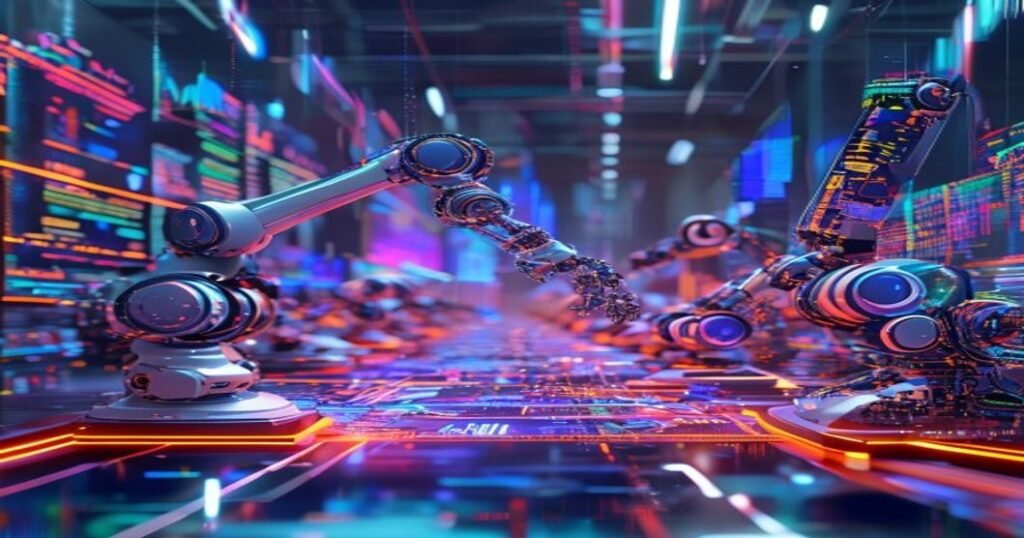

Alright, let’s cut through the noise. Everywhere you look, from the headlines screaming about job losses to the breathless pronouncements of a new golden age, Artificial Intelligence is the dominant conversation. It’s an earthquake, folks. A seismic shift that’s not just rattling the foundations of specific industries but fundamentally altering the very landscape of what we call ‘work’. As a seasoned observer of the tech world, I’ve seen a lot of trends come and go, but nothing, and I mean nothing, has felt quite as transformative or as urgent as this.
For too long, the narrative has been split into two extreme camps: the doomsayers predicting mass unemployment, and the starry-eyed optimists promising a utopia of leisure. The truth, as it almost always is, lies somewhere in the messy middle. AI isn’t simply taking jobs; it’s *reshaping* them, often in ways we’re only just beginning to grasp. My take? It’s less about AI stealing your job and more about someone using AI doing your job better, faster, and cheaper. And that, my friends, is a distinction we all need to understand if we want to not just survive, but truly thrive, in this brave new world.
The Unstoppable March of Automation: What’s Really Happening?
Think about it. AI is already deeply integrated into countless facets of our lives. From the algorithms suggesting your next binge-watch to the predictive text on your phone, the invisible hand of AI is quietly rewriting every aspect of our digital lives. In the workplace, this means mundane, repetitive tasks are prime targets for automation. Customer service chat-bots handle initial queries, AI-powered tools draft marketing copy, and sophisticated algorithms analyze data faster than any human ever could.
It’s easy to point to manufacturing jobs replaced by robots, but the current wave of AI is hitting knowledge work with unprecedented force. Legal research, accounting, content creation, even coding – these fields are experiencing significant shifts. This isn’t just about efficiency; it’s about a fundamental redefinition of the human role. If a machine can do it, and do it well, why are we still doing it?
Jobs Under Pressure: It’s Not Just Manufacturing Anymore
- Data Entry & Clerical Roles: Highly repetitive tasks are easily automated.
- Customer Service: AI chatbots are handling an increasing volume of inquiries, escalating only complex cases to human agents.
- Basic Content Creation: From news summaries to marketing emails, generative AI can produce drafts quickly.
- Routine Financial Analysis: Algorithms can crunch numbers and identify patterns far faster than human analysts.
- Logistics & Supply Chain: Optimization through AI reduces the need for manual planning and oversight.
But here’s the crucial point: this isn’t necessarily a death knell. It’s a call to evolve. Many of these roles won’t disappear entirely, but they will transform. The human element will shift from execution to oversight, from data input to strategic interpretation, from simple creation to nuanced refinement.
The Phoenix Effect: Where New Opportunities Are Soaring
Every revolution, however disruptive, also spawns new opportunities. The AI earthquake is no different. Just as the internet created entirely new industries and job categories unimaginable before its advent, AI is giving birth to a fascinating array of new roles and expanding existing ones. This is where the truly exciting stuff happens, where innovation meets necessity.
Consider the Generative AI Revolution, how a new era of creation is reshaping our world and our future. It’s not just about creating content; it’s about the people who can *prompt* these AIs effectively, who can curate and refine their outputs, and who can design the systems that make them useful. These aren’t jobs for robots; these are jobs for humans with a unique blend of technical understanding and creative insight.
Emerging Roles & High-Demand Skills for the AI Era
- AI Ethicists & Governance Specialists: Ensuring AI is developed and used responsibly, fairly, and without bias.
- Prompt Engineers: Crafting precise instructions for generative AI models to achieve desired outputs. This requires creativity, critical thinking, and technical understanding.
- AI Trainers & Annotators: Guiding AI models through data, correcting errors, and improving their learning.
- Data Scientists & AI Developers: The architects and builders of AI systems, requiring deep technical expertise.
- Human-AI Interaction Designers: Creating intuitive and effective interfaces for humans to collaborate with AI tools.
- AI Integration Specialists: Helping businesses implement and leverage AI technologies effectively.
- Creatives (Enhanced by AI): Artists, writers, musicians who use AI as a powerful co-pilot, not a replacement.
These roles demand a different kind of skill set. They emphasize critical thinking, problem-solving, creativity, emotional intelligence, and above all, adaptability. The ‘soft skills’ we used to talk about are now becoming the ‘power skills’ of the AI era.
The Human Edge: Skills AI Can’t Replicate (Yet)
Here’s my strong opinion: the uniquely human attributes are not just safe; they’re more valuable than ever. While AI excels at tasks that are logical, repetitive, and data-driven, it struggles with ambiguity, empathy, genuine creativity, and complex ethical dilemmas. This is where we humans truly shine, and it’s where our focus should be.
- Critical Thinking & Complex Problem Solving: AI can analyze data, but humans can identify novel problems and devise truly innovative, out-of-the-box solutions.
- Creativity & Innovation: While generative AI can produce impressive outputs, the spark of truly original ideas, the ‘aha!’ moment, remains a human domain.
- Emotional Intelligence & Empathy: Understanding nuanced human emotions, building relationships, motivating teams, and providing compassionate care are inherently human.
- Strategic Vision & Leadership: Setting long-term goals, inspiring change, and navigating uncertainty require human judgment and foresight.
- Interpersonal Communication & Collaboration: Working effectively in diverse teams, negotiating, and building consensus are skills that AI cannot replicate.
Don’t fall into the trap of trying to compete with AI on its own terms. Instead, learn to leverage AI to enhance your uniquely human capabilities. Think of AI as an incredibly powerful tool, an amplifier for your intelligence, not a replacement for it.
Upskilling and Reskilling: Your New Career Imperative
So, what does all this mean for you, right now, staring at your career path? It means that continuous learning is no longer an optional extra; it’s the absolute core of career survival and growth. The skills that got you here might not be the skills that take you there. This isn’t about fear-mongering; it’s about a pragmatic assessment of reality. The job market is changing at an unprecedented pace, fueled by technological advancements like those that make your phone just got smarter or that are driving the AI-powered telecom tsunami. You need to be proactive.
Strategies for Future-Proofing Your Career:
- Embrace AI Literacy: Understand how AI works, its capabilities, and its limitations. Even if you’re not an AI developer, you need to be an informed user.
- Identify AI-Proof Skills: Double down on your human skills – creativity, critical thinking, emotional intelligence, complex problem-solving.
- Learn to Collaborate with AI: Think of AI as your co-pilot. How can you use AI tools to make your work more efficient, accurate, and impactful?
- Continuous Learning Mindset: The days of learning a trade and sticking with it for 40 years are largely over. Embrace online courses, certifications, workshops, and self-directed learning.
- Network & Adapt: Stay connected with industry trends and professionals. Be open to pivoting your career direction as new opportunities arise.
- Specialize in Human-Centric Fields: Roles that require deep human interaction, compassion, or bespoke creative output will likely remain resilient.
I genuinely believe this is an exciting time. Yes, there’s uncertainty, but there’s also immense potential for those willing to adapt. Instead of lamenting the jobs that might change or disappear, let’s look at the incredible new avenues opening up, the problems AI can help us solve, and the innovations it will unlock.
The Entrepreneurial Wave: AI as a Business Partner
For the entrepreneurial spirits out there, AI isn’t a threat; it’s an accelerator. Small businesses and startups can now leverage AI tools that were once exclusive to large corporations. This levels the playing field, making it easier to automate processes, personalize customer experiences, and analyze market trends with unprecedented precision. If you’ve got an idea, AI can help you build, market, and scale it faster than ever before. This is the ultimate tool for agile innovation.
Navigating the Future: My Takeaway for You
The AI earthquake is here, and its aftershocks will continue for years to come. It’s not a question of ‘if’ but ‘how’ it will impact your career. My advice is simple but profound: don’t be a passive observer. Be an active participant in this transformation. Learn, adapt, and innovate. Lean into the skills that make you uniquely human, and master the tools that make AI so powerful.
The future of work isn’t a dystopian nightmare or a utopian dream; it’s a dynamic, evolving landscape shaped by our choices, our willingness to learn, and our capacity for human ingenuity. Let’s build that future together, shall we?


