
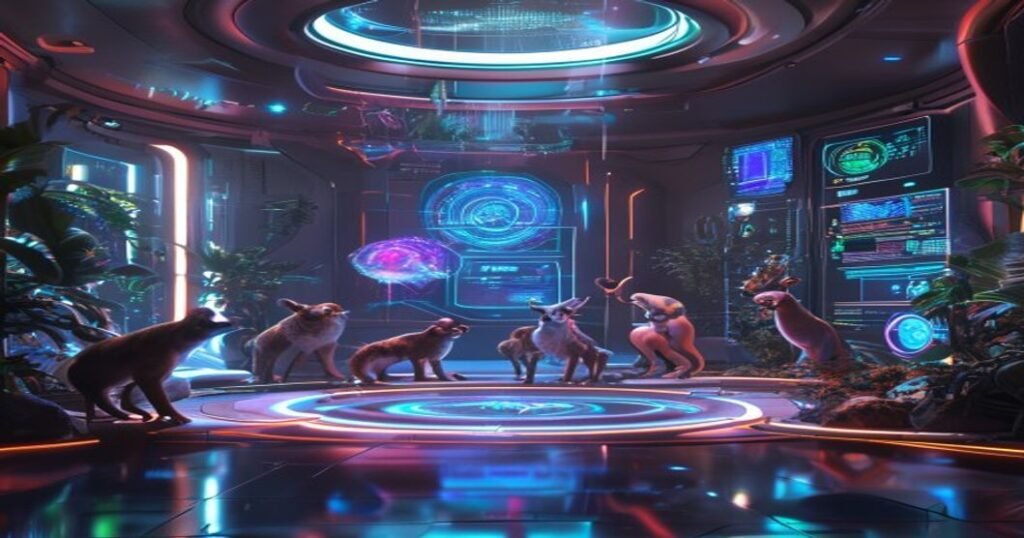

Remember that childhood fascination with animals? That awe-inspiring documentary showcasing the majesty of a lion pride, the grace of a migrating whale, or the playful antics of a mischievous monkey? It’s a primal connection, isn’t it? A deep-seated wonder at the sheer diversity and resilience of life on our planet. But beneath that wonder, there’s a stark reality: our planet’s incredible biodiversity is under unprecedented threat. From habitat destruction to poaching, climate change to pollution, the animal kingdom is facing challenges on an unimaginable scale.
It’s easy to feel overwhelmed, perhaps even helpless, in the face of such enormous problems. But what if I told you that the very same cutting-edge AI that’s rewriting everything from finance to art is now stepping up as a crucial, groundbreaking ally for the animal kingdom? We’re not just talking about incremental improvements; we’re witnessing a revolution. Artificial Intelligence is transforming how we monitor, protect, and even understand our animal companions, both wild and domestic. It’s a shift so profound, it’s literally changing the game for conservationists, researchers, and pet owners alike.
The Eyes, Ears, and Brains of the Wild: AI on Patrol
Imagine vast, remote wilderness areas – dense rainforests, sprawling savannas, or deep oceans – where human surveillance is practically impossible. This is where AI truly shines. Historically, tracking wildlife, detecting illegal activities like poaching, or even just understanding animal behavior relied heavily on manual labor, satellite imagery, and often, pure luck. Now, AI-powered systems are providing an unprecedented level of insight and intervention.
Drones equipped with thermal cameras and machine learning algorithms can patrol vast areas, distinguishing between animals and humans, identifying poachers in real-time, and even predicting their movements based on historical data. Picture a ranger receiving an alert on their tablet, pinpointing the exact location of an intruder in a national park – not hours after the fact, but as it’s happening. This isn’t science fiction; it’s happening now, making anti-poaching efforts significantly more effective and putting wildlife criminals on the back foot.
Beyond security, AI is revolutionizing ecological research. Bio-acoustic sensors deployed in forests can record countless hours of animal sounds. Instead of a human sifting through weeks of audio, AI can quickly analyze these recordings to identify specific species, monitor population health, track migratory patterns, and even detect subtle changes in ecosystems that might indicate environmental distress. Think about the silent, intricate orchestra of a healthy rainforest – AI is helping us hear every instrument, every subtle shift in harmony, allowing us to react proactively to threats before they become catastrophes. This isn’t just surveillance; it’s extending our sensory capabilities exponentially, giving us an omnipresent, intelligent guardian for the wild.
Decoding the Whispers: AI and Animal Communication
This is where things get truly mind-blowing. For centuries, humanity has dreamt of understanding animal ‘language.’ We’ve studied their calls, their body language, their rituals, but a true ‘dialogue’ has always remained elusive. Until now. Several ambitious projects are leveraging AI to try and unlock the secrets of animal communication.
From analyzing the complex clicks and whistles of sperm whales to the intricate songs of birds and the low-frequency rumbles of elephants, AI algorithms are sifting through massive datasets of animal vocalizations. They’re looking for patterns, syntax, and meaning – elements that could indicate not just emotional states, but potentially even specific information being conveyed. Projects like CETI (Cetacean Translation Initiative) are using advanced machine learning to decipher whale communication, hoping to engage in the first interspecies dialogue. Imagine, truly understanding what a pod of whales is ‘discussing’ as they traverse the ocean! It’s enough to send shivers down your spine.
We’re moving beyond mere observation into a realm where we might truly begin to grasp the intricate narratives unfolding in their lives. It’s like discovering an entirely new civilization right under our noses, and it makes you wonder if The AI Tsunami is Here: Are You Riding the Wave, or Being Swept Away? A Deep Dive into Humanity’s Latest Frontier is only just beginning to reveal its true scope. This ability to potentially bridge the communication gap could fundamentally alter our perception of animals, fostering a deeper empathy and respect that could, in turn, drive more effective conservation efforts. If we could truly hear their pleas, their warnings, their stories, how could we not act?
From Wild Safaris to Cozy Couches: AI in Pet Care
It’s not just the wild animals benefiting; our beloved domesticated companions are also experiencing a tech-driven transformation. The pet care industry is currently awash with AI-powered innovations designed to improve animal health, happiness, and our connection with them.
Smart feeders can dispense precise portions of food at scheduled times, even adjusting based on activity levels recorded by wearable trackers. These trackers, much like human fitness bands, monitor everything from sleep patterns to calorie burn, alerting owners and vets to potential health issues like unusual heart rhythms or lethargy before they become critical. My friend’s dog tracker, for example, once alerted her to an elevated heart rate that led to an early diagnosis of a treatable condition, potentially saving her beloved pet’s life.
AI-powered cameras allow us to monitor our pets remotely, even dispensing treats or engaging in two-way audio communication. Think about that anxious feeling when you leave your dog alone – now you can check in, reassure them, or even distract them with a game. Furthermore, AI is making inroads into personalized pet training, offering tailored programs and analyzing pet behavior through video to provide owners with actionable insights. This isn’t just about convenience; it’s about a deeper, data-driven understanding of our pets’ needs, leading to better care and a stronger bond.
Rewriting Nature’s Script? AI, De-extinction, and the Ethical Frontier
But the most profound, and perhaps most controversial, application of AI might lie in its potential to truly rewrite ancient history – not just for humans, but for entire species. We’re talking about de-extinction here, folks. Imagine bringing back the woolly mammoth to restore the Arctic tundra, or the Tasmanian tiger (thylacine) to its native Australian ecosystem. These aren’t just fantasy concepts anymore.
Scientists are leveraging advanced gene-editing technologies like CRISPR, combined with sophisticated AI algorithms, to analyze ancient DNA, reconstruct genomes, and even simulate the embryonic development of long-lost species. AI helps sift through vast genetic data, identify viable pathways for resurrection, and predict the ecological impact of reintroducing these animals. The idea of bringing back creatures like the woolly mammoth or the thylacine isn’t just sci-fi anymore; it’s becoming a tangible scientific pursuit, leveraging advanced genomics and AI to guide the incredibly complex process. It makes you realize that The AI Avalanche: Why The Future Arrived Yesterday, And Are You Still Playing Catch-Up? isn’t just a catchy phrase, but a stark reality for those pushing the boundaries of biology.
This raises profound ethical questions, of course. Should we play God? What are the unforeseen ecological consequences? Are we creating a ‘Jurassic Park’ scenario? These are valid concerns that demand careful consideration and robust public debate. The technology is advancing rapidly, and humanity must collectively decide how responsibly to wield this incredible power. It’s a tightrope walk between scientific ambition and ecological humility.
The Ethical Tightrope: Navigating AI’s Responsibilities
While the potential benefits of AI in the animal kingdom are immense, it’s crucial to approach this revolution with open eyes and a healthy dose of caution. Technology, no matter how advanced, is a tool. Its impact is ultimately determined by the intentions and ethics of those who wield it.
- Data Privacy and Surveillance: If we’re tracking every move of a rhino or every chirp of a bird, who owns that data? How is it protected from misuse? Could it inadvertently lead to new forms of exploitation?
- Over-reliance on Technology: There’s a risk that relying too heavily on AI might reduce human presence and traditional conservation methods, which are often vital for local community engagement and on-the-ground understanding.
- Bias and Unforeseen Consequences: AI algorithms are only as good as the data they’re trained on. Biases in data could lead to skewed conservation priorities or even negative outcomes for certain species. What if an AI-driven system makes a recommendation that, while logical on paper, overlooks a crucial, nuanced ecological factor?
- The ‘Digital Zoo’ Dilemma: As our understanding grows through AI, will we be tempted to create increasingly controlled, artificial environments, rather than focusing on preserving natural habitats?
These are not easy questions, and there are no simple answers. The key lies in collaborative, ethical development. Scientists, ethicists, local communities, and policymakers must work together to establish guidelines and ensure that AI serves as a true ally for animals, rather than inadvertently creating new problems. Human judgment, empathy, and a deep respect for the natural world must always remain at the forefront.
The Future is Now: A Call to Action
We are living through an extraordinary time where the ancient wisdom of nature is meeting the cutting-edge power of artificial intelligence. It’s a partnership that offers a glimmer of hope in what often feels like a losing battle for our planet’s biodiversity. From preventing poaching to decoding intricate animal languages, from optimizing pet care to potentially bringing back the extinct, AI is proving to be an indispensable force.
But remember, technology is not a magic bullet. It amplifies our efforts, but it doesn’t absolve us of our responsibility. It’s up to us, as inhabitants of this planet, to stay informed, support ethical research and conservation efforts, and advocate for responsible technology deployment. The future of the animal kingdom, and our relationship with it, is being written right now, one algorithm, one drone flight, one decoded chirp at a time. Are you ready to be a part of it?


