
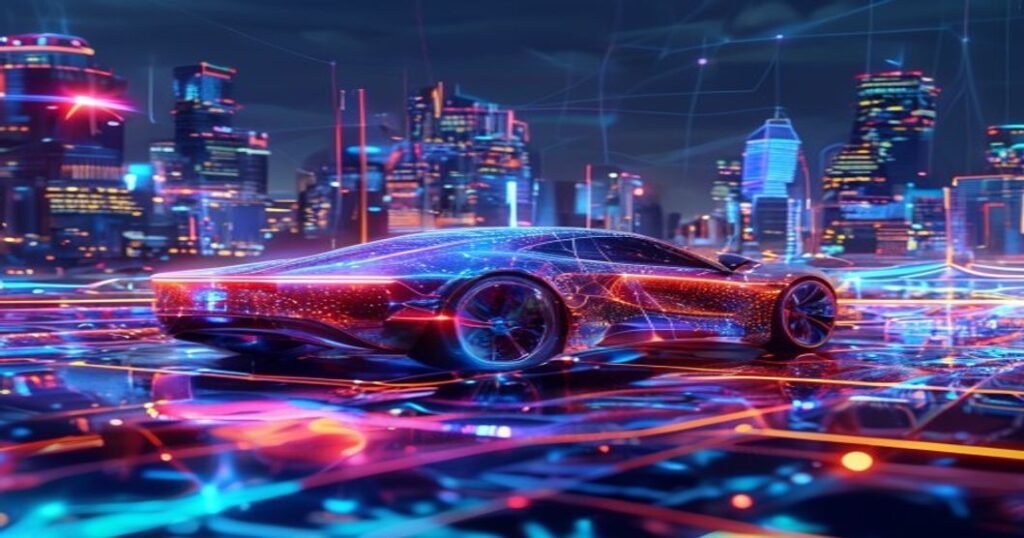

Remember the days when a car was just… a car? A glorious machine of metal, rubber, and internal combustion, designed primarily to get you from point A to point B. It was a symbol of freedom, a personal space, a testament to engineering. But let’s be brutally honest: that era, while romantic, is rapidly fading into the rearview mirror. Today, the automotive world isn’t just evolving; it’s undergoing a seismic transformation, morphing into something far more intelligent, far more connected, and dare I say, far more alive. What we’re witnessing is nothing less than the redefinition of what a car fundamentally is, driven by the relentless march of Artificial Intelligence and hyper-connectivity.
The Car as a Supercomputer on Wheels: An AI Revolution
Gone are the days when the most advanced piece of tech in your car was a CD player. Now, every new vehicle hitting the asphalt is less a collection of mechanical parts and more a sophisticated, rolling data center. At the heart of this revolution is AI, quietly (or not so quietly) running the show from the engine bay to the infotainment screen. From optimizing fuel efficiency in traditional engines to managing the complex power delivery of electric vehicles, AI is the unseen hand guiding performance.
But it’s not just under the hood. Imagine a car that learns your driving habits, anticipates traffic, and even suggests alternative routes based on your calendar. This isn’t science fiction; it’s the present. AI algorithms are processing vast amounts of data – from your driving style and external road conditions to internal sensor readings – to make every journey smoother, safer, and more personalized. It’s truly incredible how The AI Quake: How Intelligent Algorithms Are Shattering and Rebuilding Our Global Future, not just in tech firms or data centers, but right there in our daily commute.
From Dumb Box to Digital Cocoon: The Connected Cabin
Once you step inside, the transformation is even more apparent. The cabin is no longer just a space; it’s a digital cocoon. Connected car technology means your vehicle is constantly communicating – with other cars (V2V), with infrastructure (V2I), and with the cloud. This constant data exchange is the backbone of features like real-time traffic updates, predictive maintenance alerts, and seamless integration with your smart home devices. Forget fumbling for your phone; your car is your phone, your office, your entertainment hub, and even your personal assistant.
The infotainment systems today are mini-computers themselves, running sophisticated operating systems, offering over-the-air updates, and providing an unparalleled level of customization. Voice assistants, once clunky and frustrating, are now becoming incredibly intuitive, powered by advanced natural language processing. Want to order coffee on your way home? Check your home security camera? It’s all just a spoken command away. This level of integration isn’t just convenient; it’s fundamentally changing our relationship with our vehicles, turning them into extensions of our digital lives.
The Autonomous Dream: Driving or Being Driven?
And then, of course, there’s autonomous driving. This is perhaps the most talked-about, most controversial, and most revolutionary aspect of the automotive transformation. While fully self-driving cars that require no human intervention are still on the horizon for widespread adoption, advanced driver-assistance systems (ADAS) are already here. Lane-keeping assist, adaptive cruise control, automatic emergency braking, and self-parking features are becoming standard, reducing driver fatigue and significantly enhancing safety.
The journey towards full autonomy is complex, fraught with technological hurdles, ethical dilemmas, and regulatory challenges. But the underlying technology, driven by powerful AI and machine learning algorithms, is progressing at an astounding pace. Cars are learning to ‘see’ their surroundings with unprecedented accuracy, predict the behavior of other road users, and make split-second decisions. It’s a The AI Tsunami: Why You Can’t Afford to Ignore The Silent Revolution That’s Reshaping Our World, and its impact on how we move and live will be profound.
The Electric Revolution’s Intelligent Core
You can’t talk about the future of auto without talking about electric vehicles (EVs). And guess what? AI is just as crucial here. From optimizing battery performance and range to managing charging infrastructure and predicting battery degradation, AI is the silent hero making EVs more efficient, more reliable, and ultimately, more appealing. Smart charging systems learn your habits to charge your car when electricity is cheapest, while AI-powered navigation systems don’t just find the fastest route, but also factor in charging stops, elevation changes, and energy consumption.
This symbiosis between electrification and intelligence is creating a new paradigm for personal mobility. It’s not just about cleaner air; it’s about a smarter, more integrated energy ecosystem where your car can even become a power source for your home during peak hours. This kind of innovation, often spearheaded by agile startups, highlights the dynamic nature of this industry. Indeed, it reminds me of how Pakistan’s Digital Odyssey: How Youth and Tech are Igniting a Future, One Startup at a Time, leveraging technology to leapfrog traditional challenges and create new opportunities in various sectors, including the burgeoning automotive tech space.
Challenges on the Intelligent Road Ahead
Of course, this transformation isn’t without its bumps. Cybersecurity is paramount; a connected car is only as secure as its weakest link. Data privacy is another massive concern – who owns all the data your car generates, and how is it being used? The ethical implications of AI making life-or-death decisions in autonomous vehicles are complex and require thoughtful societal debate. And let’s not forget the sheer cost and infrastructure investment required to support this intelligent ecosystem.
Moreover, the human element cannot be ignored. While AI promises convenience and safety, there’s a genuine concern about the potential loss of the ‘joy of driving’ for enthusiasts. Will cars become glorified living rooms on wheels, removing the visceral connection between driver and machine? I believe the answer lies in balance: offering intelligence when you need it, and pure driving pleasure when you want it. The future isn’t about replacing the human; it’s about augmenting the experience.
The Future is Now: A Human-Centric Perspective
So, what does this all mean for us, the drivers (or future passengers)? It means our relationship with our vehicles is evolving from a mere mechanical interaction to a deeply personalized, intelligent partnership. Our cars are becoming companions, assistants, and guardians. They will know us better, predict our needs more accurately, and offer experiences that go far beyond simple transportation.
The shift is profound. We’re moving from a product-centric view of automobiles to a service-centric model, where the car delivers experiences and solutions throughout its lifecycle. This isn’t just about faster or flashier cars; it’s about reimagining mobility itself, making it safer, more efficient, more sustainable, and ultimately, more integrated into our increasingly digital lives. It’s an exciting, albeit complex, journey, and one that promises to reshape not just our roads, but our very way of living. The intelligent algorithm isn’t just coming; The AI Revolution Isn’t Coming, It’s Here: How Intelligent Algorithms Are Reshaping Our Global Future, and the automotive industry is a prime example of its transformative power.


