

The AI Tsunami: How to Ride the Wave and Thrive in the Future of Work (Instead of Drowning!)
Let’s be honest. The buzz around Artificial Intelligence lately isn’t just a hum; it’s a roaring wave, and for many, it feels like a tsunami heading straight for their careers. Everywhere you look, from tech headlines to dinner table conversations, the same questions echo: Is AI going to take my job? Will I become obsolete? How do I even compete with a machine?
It’s a natural reaction to feel a mix of awe and apprehension. We’re witnessing a technological revolution that’s arguably more profound than the internet or even the industrial revolution before it. But here’s my take, as someone who’s been tracking tech trends for a good while: while AI is undeniably a disruptive force, it’s not a death knell for human labor. Instead, it’s a massive, exhilarating opportunity for those willing to adapt, learn, and lean into the unique strengths that make us human.
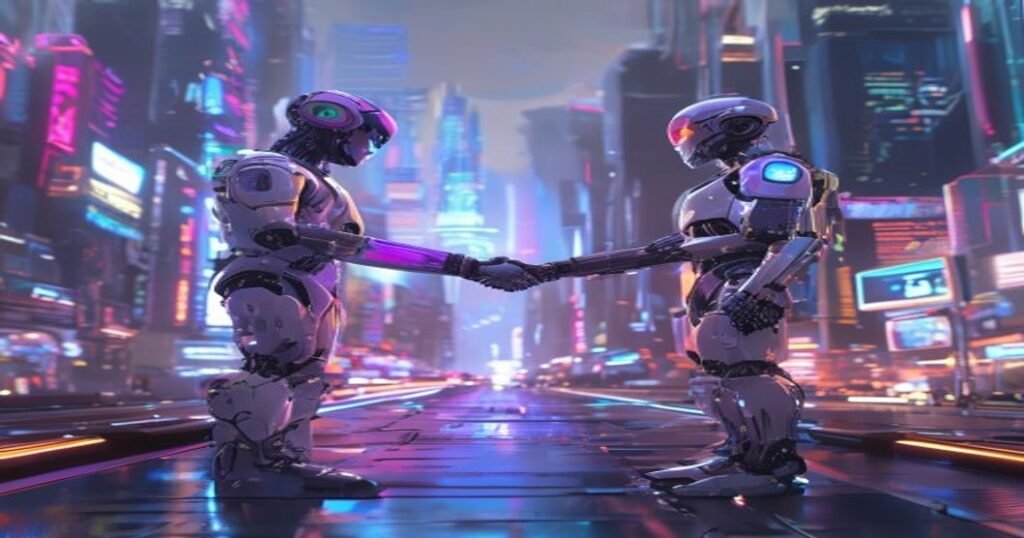
So, let’s unpack this together. This isn’t about fear-mongering; it’s about understanding, preparing, and ultimately, thriving in the algorithmic age. Because, make no mistake, the future of work isn’t about humans vs. AI; it’s about humans with AI.
The Unstoppable March of AI: What’s Happening Now?
AI is no longer confined to sci-fi movies or sterile research labs. It’s here, now, weaving itself into the fabric of our daily lives and industries at an astonishing pace. Think about it: personalized recommendations on your favorite streaming service, the voice assistant in your phone, the fraud detection systems protecting your bank account – all powered by AI. It’s become so ubiquitous that we often don’t even recognize it as AI.
In the professional world, AI is automating repetitive tasks, analyzing vast datasets in seconds, and optimizing processes that once took human teams weeks. Manufacturing plants are more efficient, supply chains are smarter, and customer service is becoming more personalized thanks to AI-driven chatbots and analytics. From optimizing logistics to enhancing autonomous systems, AI is already at work, making decisions and executing tasks with incredible speed and precision. If you’ve ever wondered how AI is transforming transportation, you might find this fascinating: Beyond the Dashboard: How AI is Revolutionizing Our Cars, Our Drives, and Our Lives Forever.
This isn’t just about replacing human effort; it’s about creating entirely new levels of efficiency and capability, allowing businesses to achieve things previously considered impossible.
The Jobs on the Algorithmic Chopping Block: What Will AI Take Over?
Let’s address the elephant in the room: yes, some jobs, or at least significant portions of them, are indeed susceptible to automation. Generally, these are roles characterized by:
- Repetitive, routine tasks: Anything that follows a predictable pattern, like data entry, assembly line work, or basic administrative functions.
- Data processing and analysis: AI can sift through vast amounts of information and identify patterns far quicker and more accurately than a human.
- Basic customer service: Chatbots are becoming increasingly sophisticated at handling common queries, freeing up human agents for more complex issues.
It’s crucial to understand that AI often automates *tasks* rather than entire *jobs*. A paralegal might find AI systems handling document review, but their role will evolve to focus on strategic legal research, client interaction, and complex case analysis. The key is to look at your current role and identify the most routine, predictable elements. Those are the ones AI will likely take over first, giving you an opportunity to re-focus your energy on more valuable contributions.
The New Horizon: Where Are the Opportunities?
But here’s the exciting part! For every job transformed or task automated, new roles and opportunities are springing up. The AI revolution isn’t just a destroyer; it’s a creator. Think of the internet revolution – it didn’t just automate tasks; it spawned entirely new industries and job categories that no one could have predicted.
We’re seeing an explosion in demand for roles such as:
- AI Trainers and Prompt Engineers: People who can effectively communicate with AI, guide its learning, and craft the precise instructions (prompts) to get the desired output.
- AI Ethicists and Governance Specialists: Ensuring AI systems are fair, unbiased, and used responsibly.
- Data Scientists and Machine Learning Engineers: The architects and builders of AI models.
- Human-AI Interaction Designers: Creating intuitive and effective interfaces for humans to work with AI.
- Creative Professionals (Enhanced): Artists, writers, designers, and musicians who leverage AI as a tool to amplify their creativity, generate ideas, and streamline production. Even in creative fields, AI is reshaping the landscape, not just by automating but by providing powerful new tools. For instance, the gaming industry is experiencing a profound shift. Explore how Generative AI is Rewriting the Rules of Gaming Forever, opening up new roles for human creators who can leverage these advanced tools.
The truth is, many of the most impactful jobs of tomorrow don’t even exist yet. They will be born out of the innovative ways we learn to integrate AI into our lives and work.
Skill Up or Ship Out: Essential Skills for the AI Age
So, how do you ensure you’re part of the ‘thrive’ group and not the ‘drown’ group? It boils down to a commitment to continuous learning and a focus on developing uniquely human skills.
1. Adaptability and Lifelong Learning
The most crucial skill will be the ability to learn, unlearn, and relearn. The pace of technological change demands that we view our careers as an ongoing journey of skill acquisition, not a fixed destination. Embrace online courses, workshops, and certifications. Stay curious and open to new tools and methodologies.
2. Critical Thinking and Problem-Solving
While AI can provide answers, humans must ask the right questions and critically evaluate the AI’s output. Complex, unstructured problems that require nuanced understanding and judgment will always need a human touch.
3. Creativity and Innovation
AI can generate variations, but true innovation, imaginative leaps, and the ability to connect disparate ideas in novel ways remain human domains. These skills will only increase in value.
4. Emotional Intelligence and Interpersonal Skills
Empathy, collaboration, communication, negotiation, leadership – these are the bedrock of human interaction and vital for any team-based environment. AI struggles with the subtle nuances of human emotion and complex social dynamics, making these skills indispensable.
5. Digital Literacy and AI Fluency
You don’t need to be a coding wizard, but understanding how AI works, its capabilities, and its limitations is paramount. Learning how to effectively use AI tools, from advanced search engines to generative AI platforms, will become as fundamental as knowing how to use email or a spreadsheet. Our reliance on these intelligent tools is growing, often without us even realizing it. From managing our smart homes to the devices in our pockets, AI is everywhere. Curious how Your Pocket Supercomputer: How On-Device AI is Revolutionizing Smartphones and Our Lives Forever? It’s fundamentally changing how we interact with technology and, by extension, our work.
AI as a Collaborator, Not Just a Competitor
The most powerful future scenario isn’t one where AI replaces humans entirely, but where it acts as a powerful co-pilot. Imagine a financial analyst using AI to instantly sift through market data and identify trends, freeing them to focus on strategic insights and client relationships. Or a doctor leveraging AI to rapidly diagnose rare diseases from imaging scans, allowing them to spend more quality time with patients. Consider the medical field, where AI is not replacing doctors but empowering them with unprecedented analytical capabilities. This collaboration between human expertise and machine intelligence is redefining possibilities. Read more about The Algorithmic Doctor: How AI is Rewriting the Future of Personalized Health and Longevity for Everyone and how it’s shaping future healthcare jobs.
AI’s strength lies in its ability to process information and automate routine tasks at scale. Our strength lies in our creativity, critical judgment, empathy, and ability to navigate complex, ambiguous situations. When we combine these strengths, we unlock unparalleled productivity and innovation.
The Entrepreneurial Angle: Building Businesses in the AI Era
For the entrepreneurial spirit, AI offers a gold rush of opportunities. New businesses are emerging that are entirely built around AI-driven solutions, from specialized AI consulting firms to companies developing niche AI tools for specific industries. Identifying problems that AI can solve – whether it’s optimizing small business operations, creating personalized learning experiences, or developing new forms of entertainment – can be the genesis of the next big startup. The barriers to entry for developing AI-powered solutions are also falling, making it easier for individuals and small teams to innovate and disrupt.
Ready to Ride the Wave?
The AI tsunami is indeed here, but it’s not an unmanageable force of nature. It’s a powerful current that will reshape the landscape of work, much like electricity or the internet did before it. To treat it as an enemy is to miss the immense opportunities it presents. Instead, view it as a challenge to evolve, to learn new skills, and to redefine what ‘work’ truly means for humans.
My advice? Don’t wait for AI to come knocking. Proactively seek to understand it, experiment with it, and integrate it into your professional toolkit. Identify the human-centric skills that AI can’t replicate and hone them. Embrace lifelong learning not as a chore, but as your most vital asset. The future of work isn’t about fear; it’s about empowerment, innovation, and an exciting new chapter for human potential. Let’s ride this wave together and shape a future where humans and AI flourish side-by-side.


