
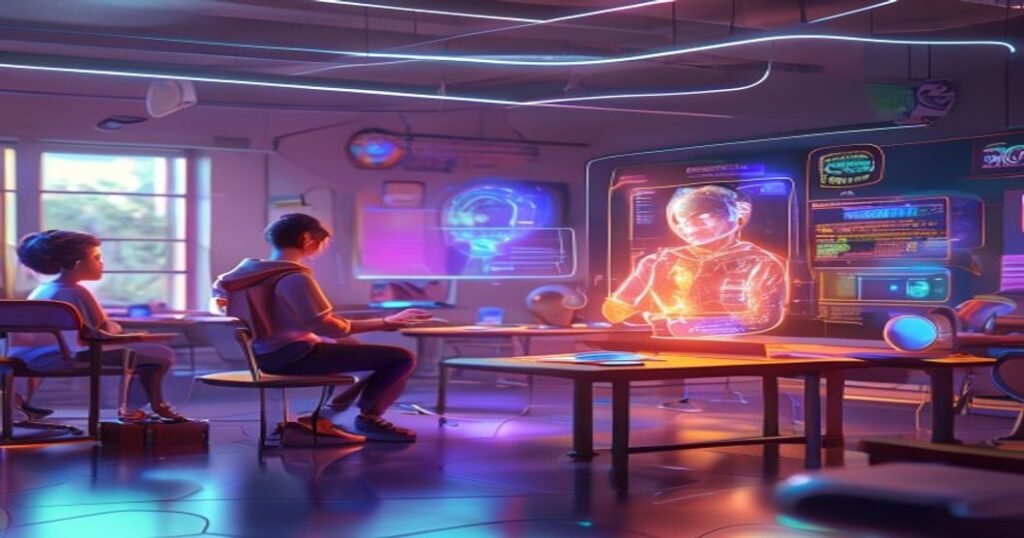

Remember sitting in a classroom, listening to a lecture, and feeling like the information just wasn’t quite clicking for you? Or perhaps you excelled in one subject but struggled in another, with no real avenue for personalized support. For generations, education has largely followed a one-size-fits-all model, a system designed for industrial efficiency rather than individual brilliance. But here’s the kicker: that model is officially, irrevocably, undergoing a seismic shift. And the architect of this revolution? Artificial Intelligence.
It’s not hyperbole to say that The AI Awakening: Why This Isn’t Just Tech Hype, But a Complete Reshaping of Your World (And How You Can Thrive) is fundamentally altering how we acquire knowledge. Forget the dystopian sci-fi scenarios; the reality is far more nuanced, exciting, and frankly, a little terrifying if we don’t prepare. AI isn’t just a fancy new gadget; it’s a foundational technology that promises to redefine everything from how we learn our ABCs to how professionals upskill for dynamic careers. As someone who’s been tracking technological shifts for years, I can tell you this isn’t just another trend; it’s the beginning of a new era for education, and we all need to pay attention.
The Dawn of Personalized Learning: No More One-Size-Fits-All
The biggest promise AI brings to education is personalization, a concept that has long been the holy grail for educators. Imagine a tutor who knows your exact strengths and weaknesses, adapts lessons to your learning style, and provides feedback in real-time. This isn’t a dream anymore; it’s happening.
-
Adaptive Learning Platforms: Your Personal Academic GPS
AI-powered platforms can analyze a student’s performance, identify gaps in understanding, and then dynamically adjust the curriculum. If you’re acing algebra, it moves you ahead. If you’re struggling with geometry, it offers additional exercises, different explanations, or even connects you with relevant resources. This means no student is left behind, and no student is held back. It’s about moving at the speed of *your* understanding, not the slowest or fastest in the class.
-
Intelligent Tutoring Systems: The Always-On Mentor
From language learning apps that correct your pronunciation on the fly to advanced systems that walk you through complex physics problems, AI tutors are becoming incredibly sophisticated. They can engage in Socratic dialogue, explain concepts in multiple ways, and even identify emotional cues to gauge frustration. This level of immediate, tailored support was once reserved for the privileged few; now, it’s becoming accessible to millions.
-
Automated Assessment and Feedback: Beyond the Red Pen
Grading essays and exams is time-consuming for teachers. AI can now grade multiple-choice questions, short answers, and even provide preliminary feedback on essays, identifying grammatical errors, structural issues, and suggesting improvements. This frees up educators to focus on higher-level critical thinking, discussions, and the human element of teaching.
Reshaping the Curriculum: Skills for an AI-Driven World
As AI becomes more sophisticated, automating routine tasks and analyzing vast datasets, the skills deemed essential for human workers are shifting dramatically. Education needs to respond by preparing learners not just for existing jobs, but for roles that haven’t even been invented yet.
Beyond Rote Memorization: The Ascent of Human Skills
The new curriculum must prioritize uniquely human capabilities that AI struggles to replicate:
- Critical Thinking and Problem-Solving: AI can provide data, but humans must interpret it, question assumptions, and devise creative solutions to complex, unstructured problems.
- Creativity and Innovation: From artistic expression to scientific breakthroughs, the ability to generate novel ideas and approaches remains a deeply human endeavor.
- Adaptability and Lifelong Learning: The pace of change means that learning can’t stop after graduation. Education must foster a mindset of continuous inquiry and skill acquisition.
Emotional Intelligence and Collaboration: Working effectively in teams, understanding diverse perspectives, empathy, and leadership are paramount in an increasingly interconnected and automated world.
Indeed, it’s The Unseen Hand: How AI is Quietly Reshaping Every Corner of Our World (And Why You’re Already Living It), making the transformation of education not just an academic exercise, but an urgent societal imperative. We need to move beyond teaching ‘what to think’ and focus intensely on ‘how to think’ and ‘how to learn’.
The Educator’s Evolving Role: From Sage on the Stage to Guide on the Side
This isn’t about replacing teachers with robots. Far from it. Instead, AI empowers educators to be more effective, more personalized, and more human in their interactions.
-
Data-Driven Insights for Teachers
AI can provide teachers with a panoramic view of their students’ progress, highlighting who needs extra help, what concepts are proving difficult for the class as a whole, and even predicting potential difficulties. This allows for targeted interventions and more efficient lesson planning.
-
Focus on Mentorship and Coaching
With AI handling much of the rote grading and administrative tasks, teachers can dedicate more time to mentorship, facilitating project-based learning, fostering critical discussions, and providing emotional support. The human connection, far from being diminished, becomes even more central.
-
Professional Development Reinvented
Teachers themselves will need continuous learning to leverage AI tools effectively and design curricula for the new era. AI can even personalize professional development, recommending resources and training based on a teacher’s specific needs and goals.
Navigating the Treacherous Waters: Challenges and Ethical Considerations
While the potential of AI in education is immense, we’d be naive to ignore the significant challenges and ethical dilemmas it presents. For educational institutions, this feels akin to The AI Tsunami: How Startups Are Riding the Wave or Drowning in Innovation, forcing them to adapt or risk obsolescence. But adaptation must be thoughtful and ethical.
-
The Digital Divide and Equity
Access to AI-powered tools and reliable internet remains uneven globally. Without conscious effort, AI could exacerbate existing inequalities, creating a deeper divide between those with access to cutting-edge learning and those without. We must ensure equitable access to these powerful tools.
-
Data Privacy and Security
AI systems in education collect vast amounts of student data. Protecting this sensitive information from breaches and ensuring its ethical use is paramount. Who owns this data? How is it used? These are questions that demand robust policies and transparent practices.
-
Algorithmic Bias
AI systems are only as unbiased as the data they are trained on. If historical biases exist in educational data, AI could inadvertently perpetuate or even amplify them, leading to unfair or inaccurate assessments for certain student demographics. Constant auditing and ethical design are crucial.
-
Over-Reliance and Loss of Human Skills
Will students become overly reliant on AI for answers, potentially hindering their own critical thinking and research skills? Striking the right balance – where AI assists rather than dictates – is a delicate act.
The Future is Now: A Call to Action
The integration of AI into education is not a distant future; it’s a present reality that is accelerating at an unprecedented pace. The question isn’t whether AI will transform learning, but how we, as educators, learners, policymakers, and parents, choose to shape that transformation.
My opinion? We have an incredible opportunity to create a more equitable, engaging, and effective educational system than ever before. A system where every student can unlock their full potential, where learning is lifelong and deeply personalized. But this future won’t just happen; it requires proactive engagement, thoughtful investment, ethical considerations, and a willingness to embrace change.
Let’s not be passive observers. Let’s engage with this technology, understand its implications, and collaboratively build an educational future that truly serves humanity. The classroom, as we know it, is gone. Long live the new era of learning.


