
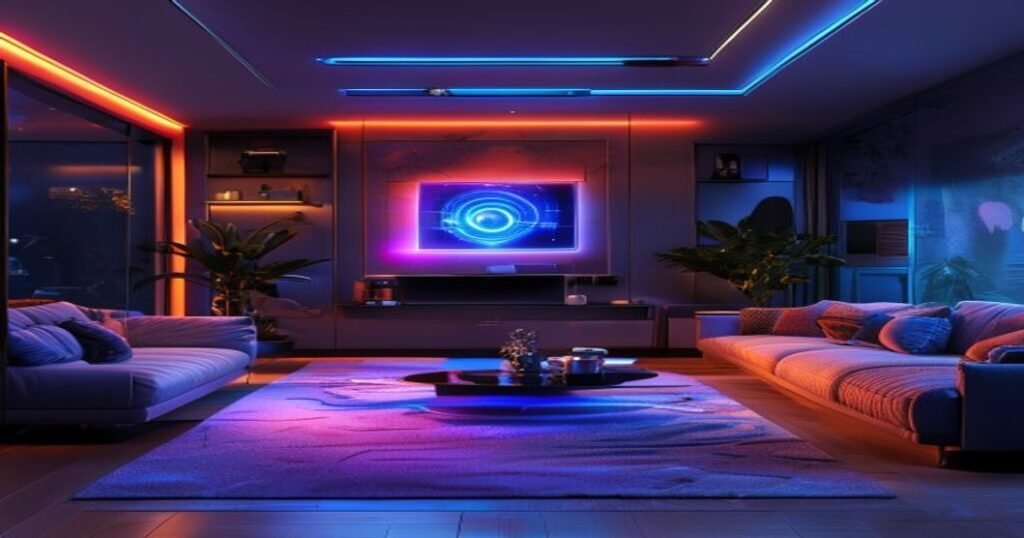

Welcome to the Intelligent Home: Where Walls Don’t Just Stand, They Think!
Remember when ‘smart home’ meant you could turn your lights on and off with an app? Oh, how quaint that feels now! We’re standing on the precipice of an interior design revolution, one where our homes aren’t just pretty spaces but intuitive entities that understand us, anticipate our needs, and even help us design our own little slice of paradise. I’m talking about the profound impact of Artificial Intelligence on interior design and smart living, and frankly, it’s mind-blowing.
For too long, the idea of a ‘smart home’ has been relegated to gadgets and gizmos – a fancy speaker here, a security camera there. But the true game-changer isn’t just connectivity; it’s intelligence. It’s about how AI is weaving itself into the very fabric of our living spaces, making them more comfortable, efficient, and deeply personal. This isn’t just about convenience; it’s about creating environments that actively enhance our well-being.
Beyond Aesthetics: How AI is Crafting Truly Personal Spaces
Let’s be honest, everyone wants a beautiful home that reflects their personality. But what if your home could help you design it? That’s where AI steps in as your silent, incredibly powerful design assistant. Forget endless Pinterest boards and second-guessing paint swatches. AI-powered design platforms are transforming the initial stages of home renovation and decoration.
AI as Your Virtual Interior Designer
- Personalized Mood Boards: Imagine feeding an AI your preferences – your favorite colors, textures, furniture styles, even your desired mood (calm, energetic, luxurious). It can then generate hyper-realistic 3D renderings and mood boards tailored precisely to your taste, offering options you might never have considered.
- Space Optimization: AI algorithms can analyze floor plans, furniture dimensions, and traffic flow to suggest optimal layouts that maximize space, light, and functionality. No more awkward furniture placements or cramped corners!
- Budget-Friendly Solutions: These intelligent systems can even recommend materials and furniture within your specified budget, ensuring your dream home doesn’t turn into a financial nightmare.
It’s truly incredible to see how Generative AI is proving to be an unstoppable creative force, not just in art or content, but in democratizing high-quality interior design. It allows individuals to visualize complex design concepts with unprecedented ease, turning what was once a luxury service into an accessible tool for everyone.
The Intelligent Home: Where Your Environment Adapts to YOU
Once the design is set, AI’s role shifts from creation to curation, making your home a living, breathing entity that learns and adapts. This is where the ‘smart’ truly becomes ‘intelligent.’
Climate Control That Knows You
AI-driven thermostats go far beyond scheduled temperature changes. They learn your family’s routines, monitor external weather patterns, and even integrate with occupancy sensors to ensure optimal comfort and energy efficiency. Imagine arriving home to a perfectly cooled living room on a hot day, without ever having to adjust the AC manually. Your home understands your comfort levels and anticipates them.
Lighting That Sets the Scene (and Mood!)
Smart lighting systems, powered by AI, do more than just turn on and off. They can adjust brightness and color temperature throughout the day to mimic natural light cycles, promoting better sleep and focus. They can create dynamic scenes for movie night, dinner parties, or quiet reading, all based on your previous preferences and even your current activities. It’s a subtle but significant way the AI effect is silently reshaping your daily life, often without you even realizing it.
Security and Peace of Mind
AI-powered security cameras aren’t just recording; they’re analyzing. They can differentiate between pets, package deliveries, and potential intruders, reducing false alarms and providing more accurate alerts. Facial recognition, motion sensing, and even anomaly detection are becoming standard, offering a level of peace of mind that was once reserved for high-tech compounds.
Personalized Entertainment and Wellness
Your AI-driven home assistant can learn your musical tastes, recommending playlists that match your mood or activity. It can even integrate with smart mirrors for personalized workout routines or monitor air quality and suggest purifiers. It’s all about creating an environment that responds to and supports your personal journey, be it relaxation or productivity.
Navigating the AI-Powered Home: The Human Element and Digital Well-being
Of course, with great power comes great responsibility. While the allure of an intelligent home is undeniable, it’s crucial to consider the human element. The goal is not to replace human interaction or personal effort but to augment it, making life smoother and more enjoyable. My opinion? We need to consciously design these spaces to support our mental and physical health.
- Privacy Concerns: With so much data being collected about our habits, privacy is a major consideration. It’s vital to choose platforms and devices that prioritize data security and transparency.
- The Unplugging Paradox: An always-on, always-listening home can be overwhelming. We must ensure our smart homes provide opportunities for genuine downtime, for those moments when we want to disconnect. Paradoxically, the same tech that makes us ‘always on’ can also be leveraged to help us find balance.
This brings me to an important point: how do we ensure our advanced homes contribute positively to our peace of mind? Finding that sweet spot where technology serves us without overwhelming us is key. It’s about consciously embracing the benefits while setting boundaries, and for a deeper dive into this balance, you might find some valuable insights in learning how to master digital well-being in our AI-powered world, even within the most sophisticated smart homes.
The Future is Now: Adaptive and Predictive Spaces
What’s next? I believe we’re moving towards truly adaptive and predictive spaces. Imagine a home that anticipates a busy workday and subtly adjusts your lighting and music to help you focus. Or a kitchen that orders groceries based on your meal planning and pantry inventory. This isn’t science fiction; it’s the immediate horizon.
Even for professionals in the interior design space, adapting to these changes is critical. Understanding and leveraging these AI tools isn’t just a bonus; it’s becoming a necessity. It truly brings to mind the broader discussion around AI & The Job Market: How to Future-Proof Your Career in the Age of Intelligent Machines, reminding us that no industry, including creative ones, is immune to profound transformation.
Embracing the Intelligent Interior
The AI revolution in interior design is more than a trend; it’s a fundamental shift in how we conceive, create, and interact with our living environments. It promises homes that are not just beautiful, but deeply intuitive, efficient, and responsive to our every need. For me, it’s about unlocking a new level of comfort and personalization that was previously unimaginable.
As we continue to integrate AI into our homes, the conversation will evolve from ‘can it do this?’ to ‘how can it make my life better?’ It’s an exciting time to be alive, watching our homes transform from static structures into dynamic partners in our daily lives. So, are you ready to reimagine your home? Because with AI, the possibilities are truly endless.


