
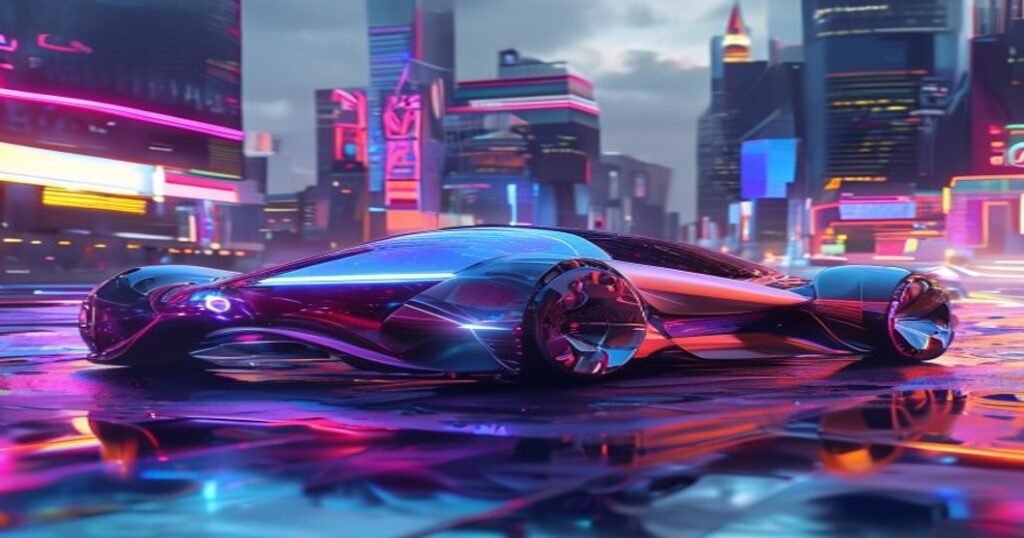

Remember when cars were just, well, cars? A metal box on wheels designed to get you from point A to point B, perhaps with a radio and a cassette player if you were lucky. Those days, my friends, are rapidly fading into the rearview mirror. What’s unfolding before our eyes isn’t just an evolution; it’s a radical, mind-bending transformation of what a car fundamentally is. We’re not just talking about minor upgrades; we’re talking about a complete reimagining of our relationship with personal transportation, driven by an incredible confluence of artificial intelligence, hyper-connectivity, and a relentless pursuit of efficiency. And honestly, it’s exhilarating.
For years, the phrase ‘car of the future’ conjured images of flying vehicles or elaborate sci-fi concepts. But the real future, the one happening right now, is far more subtle yet profoundly impactful. Our cars are becoming sentient extensions of our digital lives, sophisticated mobile data centers that learn, adapt, and communicate with the world around them. It’s a shift so monumental that it feels less like a technological upgrade and more like the dawn of a new era in human mobility. And trust me, once you experience it, there’s no going back.
The AI Brain Behind the Wheel: More Than Just ‘Self-Driving’
Let’s be clear: autonomous driving isn’t just some far-off fantasy; it’s a living, breathing reality in various stages of deployment. But AI’s role in our vehicles extends far beyond simply taking over the steering wheel. It’s the unseen intelligence powering everything from predictive maintenance that alerts you to a potential issue before it becomes a breakdown, to advanced safety systems that can anticipate collisions and intervene faster than any human. Think about parking assist systems that practically parallel park for you, or adaptive cruise control that intelligently maintains a safe distance and speed on the highway.
These aren’t just clever gadgets; they are the early iterations of truly intelligent companions. AI algorithms are constantly crunching data from countless sensors – cameras, lidar, radar – to understand the vehicle’s surroundings, predict traffic patterns, and even anticipate driver behavior. This isn’t just about convenience; it’s about making our roads safer and our commutes less stressful. The sheer complexity and processing power required for these systems are staggering, and it’s no surprise that the automotive industry is seeing a massive influx of innovation from startups specializing in AI and machine learning. In fact, it’s becoming increasingly clear that The AI Avalanche: How Startups Are Seizing the Edge and Reshaping Industries (Don’t Get Left Behind!) is redefining not just software, but also hardware and manufacturing within the auto sector, pushing the boundaries of what’s possible at an unprecedented pace.
From Dumb Iron to Smart Hub: The Connected Car Ecosystem
Imagine your car not as an isolated unit, but as a node in a vast, interconnected network. This isn’t just a vision; it’s the foundation of the connected car ecosystem. Vehicles are now equipped with 5G capabilities, allowing them to communicate not only with each other (V2V – Vehicle-to-Vehicle) but also with traffic infrastructure (V2I – Vehicle-to-Infrastructure) like traffic lights and road sensors, and even with pedestrians’ devices (V2P – Vehicle-to-Pedestrian). This ‘Vehicle-to-Everything’ (V2X) communication is a game-changer.
Think about a world where your car knows, seconds in advance, that a light two blocks away is about to turn red, allowing it to coast and save fuel. Or where it receives real-time data about an accident ahead and reroutes you automatically. This level of communication requires robust, low-latency networks, and it highlights why understanding Beyond Speed: How Future Telecom Networks Are Quietly Building a World We Can Barely Imagine (And Why You Need to Pay Attention NOW) is absolutely crucial, not just for our phones, but for our entire transportation infrastructure. Without these unseen architects of connectivity, the smart car revolution would simply stall.
Beyond safety and efficiency, connectivity also brings unparalleled convenience. Over-the-air (OTA) updates mean your car’s software can improve and evolve without ever needing a trip to the dealership. Personalized infotainment systems, streaming services, and seamless integration with your smart home devices are becoming standard. Your car can pre-condition its cabin before you even step inside, or even order groceries for delivery while you’re stuck in traffic. It’s about making every moment you spend in or around your vehicle more productive, enjoyable, and effortless.
The Electric Pulse: Powering a Sustainable Future
We can’t talk about the future of autos without discussing the electric revolution. Electric Vehicles (EVs) are no longer just niche products for environmental enthusiasts; they are rapidly becoming mainstream. The benefits are compelling: instant torque for exhilarating acceleration, quieter rides, reduced emissions, and lower running costs (especially with fluctuating fuel prices). As battery technology improves, range anxiety is becoming a relic of the past, and charging infrastructure is expanding at an astonishing rate.
But EVs are more than just a different powertrain; they are fundamentally digital platforms. Their electric architecture is inherently better suited for integrating advanced AI systems, sophisticated sensors, and constant connectivity. This synergy between electrification and digitalization is what truly accelerates the smart vehicle transformation. It’s not just about cleaner energy; it’s about a more intelligent, responsive, and integrated vehicle experience.
Inside the Digital Cockpit: Immersive Experiences and Personalized Comfort
As cars become more autonomous, the role of the driver begins to shift, opening up new possibilities for in-car experiences. If you’re not constantly focused on the road, what will you do with that time? Manufacturers are already thinking about this, transforming car interiors into lounges, offices, or even personal entertainment pods. Large, customizable display screens are replacing traditional dashboards, offering intuitive control and rich visual experiences.
We’re talking about personalized climate zones, seats that adapt to your posture, and ambient lighting that sets the mood. For passengers, especially in future autonomous vehicles, the possibilities are limitless. Imagine putting on a VR headset and being instantly transported to a virtual world, making a long road trip feel like mere minutes. Or perhaps augmented reality overlays on the windows, turning the passing landscape into an interactive information display. The concept of in-car entertainment is rapidly evolving, moving towards something far more engaging and personalized. It’s about creating an environment where you don’t just travel; you truly experience. In many ways, the automotive industry is looking to leverage similar technologies that are beginning to Escape Reality: How Immersive Tech is Rewriting the Rules of Entertainment (And Why You’ll Never Watch the Same Way Again) in our homes, bringing those same mind-bending possibilities to the open road.
The Road Ahead: Navigating Challenges and Embracing the Future
Of course, such a monumental shift isn’t without its hurdles. Cybersecurity is paramount; connecting vehicles to the internet opens them up to potential threats, making robust security protocols absolutely essential. Ethical considerations surrounding autonomous decision-making in critical situations are complex and require careful societal debate. Regulatory frameworks need to evolve rapidly to keep pace with technological advancements, and the infrastructure to support widespread charging and V2X communication requires significant investment.
Yet, despite these challenges, the momentum is undeniable. The benefits – safer roads, reduced congestion, increased efficiency, and unparalleled convenience – are too compelling to ignore. This isn’t just about selling more cars; it’s about redefining our cities, optimizing our commutes, and ultimately, giving us back precious time and peace of mind.
My Take: This Isn’t Just a Car, It’s Your Co-Pilot in Life
I genuinely believe we are on the cusp of the most exciting period in automotive history since the invention of the internal combustion engine itself. This isn’t just about a vehicle that drives itself; it’s about a co-pilot that learns your habits, anticipates your needs, and seamlessly integrates into your daily routine. It’s a mobile sanctuary that doubles as a productivity hub or an entertainment lounge. The lines between our digital and physical worlds are blurring, and the automobile is at the forefront of this convergence.
Will there be a learning curve? Absolutely. Will we have to adjust our understanding of driving and ownership? Without a doubt. But the rewards – the sheer liberation from the monotony of traffic, the enhanced safety, and the personalized experiences – are going to be monumental. Get ready, because the future of driving isn’t just coming; it’s already here, transforming every aspect of how we move through the world, one smart vehicle at a time. It’s a revolution that promises to be as thrilling as it is inevitable.


