
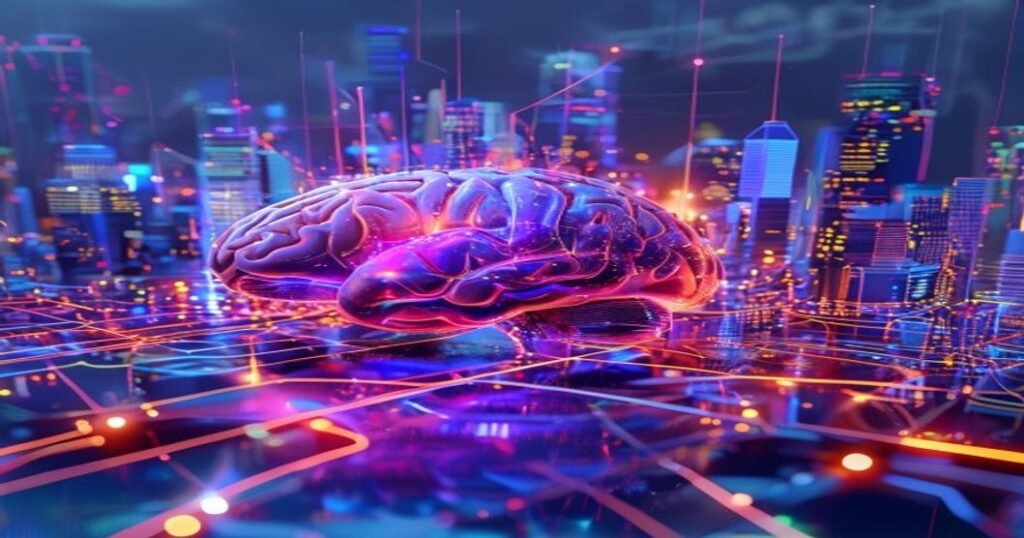

Alright, let’s talk about the elephant in the digital room. Forget the sci-fi movies and the doomsday predictions for a moment. What’s unfolding right now, in real-time, is nothing short of a seismic shift, a profound re-architecture of how we live, work, and interact. I’m talking about Artificial Intelligence – and trust me, it’s not just hype anymore. It’s here, it’s impacting every facet of our existence, and frankly, if you’re not paying attention, you’re already falling behind.
For years, AI felt like a distant promise, something confined to research labs or the pages of speculative fiction. Now, it’s a tangible force, powering everything from the recommendations on your favorite streaming service to the complex algorithms dictating global supply chains. It’s analyzing medical data, designing new materials, and even composing music. The speed at which these intelligent machines are evolving is breathtaking, often outpacing our ability to fully grasp their implications. It’s a revolution, plain and simple, and it’s rewriting the rules of the game for individuals, businesses, and nations alike.
The Unstoppable Tide: AI’s Pervasive Reach
Where do we even begin to unpack this? From smart assistants like Siri and Alexa becoming ubiquitous household fixtures to advanced AI systems driving autonomous vehicles and optimizing energy grids, AI has truly become the invisible engine of modern life. It’s like the internet in its early days – something that started as a niche technology but rapidly became indispensable. The difference? AI’s growth curve is steeper, its capabilities more diverse, and its potential for disruption far more profound.
Consider the healthcare sector, for instance. AI isn’t just helping doctors diagnose diseases faster and more accurately; it’s accelerating drug discovery, personalizing treatment plans, and even assisting in complex surgeries. In finance, AI algorithms are detecting fraud, predicting market trends, and managing vast investment portfolios with precision human traders could only dream of. Manufacturing, logistics, education, agriculture – name an industry, and AI is either already transforming it or poised to do so dramatically.
This isn’t just about efficiency; it’s about unlocking entirely new capabilities and solving problems that were once deemed intractable. It’s about augmented intelligence, where human creativity and critical thinking are amplified by machine speed and analytical power. We’re moving beyond mere automation into a realm of true intelligent assistance.
The Geopolitical Chessboard: Nations in the AI Race
Beyond individual industries and personal gadgets, AI has emerged as a critical determinant of national power and global influence. The competition among nations to lead in AI research, development, and deployment is, in my opinion, an unseen war reshaping nations, power, and your future. It’s not fought with tanks and fighter jets, but with data scientists, computing infrastructure, and groundbreaking algorithms.
Countries are pouring billions into AI initiatives, establishing national strategies, and fostering ecosystems of innovation. Why? Because leadership in AI translates directly into economic competitiveness, national security advantages, and geopolitical leverage. A nation that can leverage AI for advanced defense systems, predictive analytics for economic forecasting, or revolutionary healthcare solutions will undoubtedly hold a significant edge. This ‘AI arms race’ isn’t just a race for technological supremacy; it’s a race for the future itself. Those who master it will likely dictate the terms of the next global era, while those who lag risk being left behind in a dramatically altered landscape.
The AI Tsunami: Reshaping Every Corner of Our World
It’s easy to get caught up in the high-level policy discussions or the technical jargon, but the truth is, this AI tsunami is reshaping every corner of our world – and that absolutely means you. Think about your daily interactions online. The personalized news feeds, the product recommendations, the sophisticated spam filters – all driven by AI. It’s subtly influencing your choices, your perspectives, and even your understanding of the world.
On a more fundamental level, AI is challenging our traditional notions of work and employment. While some jobs are being automated, new roles are emerging, demanding different skill sets centered around AI development, maintenance, and ethical oversight. The future workforce will be one that collaborates with intelligent machines, leveraging their strengths to enhance human capabilities. It’s a call to upskill and adapt, because complacency in the face of such rapid change is no longer an option.
The AI Takeover of Entertainment: Rewriting Our Fun
Let’s shift gears to something a bit more fun, though no less impactful: entertainment. The creative industries, often seen as bastions of human ingenuity, are undergoing their own AI-driven transformation. From scriptwriting assistance to generating realistic visual effects, from personalizing content recommendations to creating entirely new forms of interactive media, the AI takeover of entertainment is rewriting our fun (and our future).
Imagine AI helping screenwriters overcome creative blocks by suggesting plot twists or character arcs. Picture AI-generated musical scores dynamically adapting to a film’s emotional beats, or intelligent gaming environments that learn from player behavior to create truly unique experiences. While some might worry about AI replacing human artists, I see it more as a powerful new tool, an extension of the creative palette, enabling artists to push boundaries previously unimaginable. The human element – the raw emotion, the unique perspective – will always remain vital, but AI is undoubtedly changing the ‘how’ of content creation and consumption.
AI or Bust: Why Your Startup’s Future Hinges on Embracing the Machine
Now, for the entrepreneurs and innovators out there, listen closely. This isn’t just a trend to observe; it’s a mandate to act. For startups, especially, the choice is clear: AI or bust – your startup’s future hinges on embracing the machine before it’s too late. Ignoring AI is no longer a viable strategy; it’s a recipe for obsolescence.
Startups have a unique advantage: agility. They’re not burdened by legacy systems or entrenched corporate cultures. This allows them to integrate AI-first strategies from the ground up, identifying pain points that AI can solve, creating innovative products and services powered by intelligent algorithms, and gaining a competitive edge against slower-moving incumbents.
Whether it’s using AI to streamline customer service, personalize user experiences, automate repetitive tasks, or derive deeper insights from data, the opportunities are endless. The key is to start experimenting, to invest in AI talent, and to foster a culture of AI literacy within your organization. The market isn’t waiting, and neither should you.
Navigating the Future: Challenges and Opportunities
While the opportunities presented by AI are immense, it would be naive to ignore the significant challenges. Ethical considerations around data privacy, bias in algorithms, job displacement, and the potential for misuse are all valid concerns that demand thoughtful discussion and proactive solutions. We need robust regulatory frameworks, transparent AI development practices, and a global commitment to responsible AI governance.
The conversation needs to move beyond fear-mongering to constructive engagement. How do we ensure AI benefits all of humanity, not just a select few? How do we retrain workforces and create safety nets for those whose livelihoods are impacted? These are complex questions, and there are no easy answers, but ignoring them will only lead to greater problems down the road.
However, despite these challenges, my overall sentiment remains one of cautious optimism. The potential for AI to accelerate scientific discovery, tackle global crises like climate change and disease, and elevate human potential is truly inspiring. We are at a pivotal moment in history, standing on the cusp of an era defined by intelligent machines. It’s a time for both wonder and wisdom, for innovation and introspection.
Conclusion: The Time to Act is Now
The AI revolution isn’t coming; it’s here, now. It’s an unstoppable force that is already reshaping our economies, our societies, and our daily lives. For individuals, it means a continuous commitment to learning and adaptation. For businesses, it’s about embracing AI as a core strategic imperative. For nations, it’s about fostering innovation while ensuring equitable and ethical development.
To simply watch from the sidelines is to risk becoming irrelevant. The intelligent machines are not just tools; they are catalysts for unprecedented change. It’s up to us to harness their power responsibly, to steer this revolution towards a future that is more prosperous, more innovative, and more equitable for everyone. The conversation has started, the technology is advancing, and the time for meaningful engagement and decisive action is unequivocally now.


