
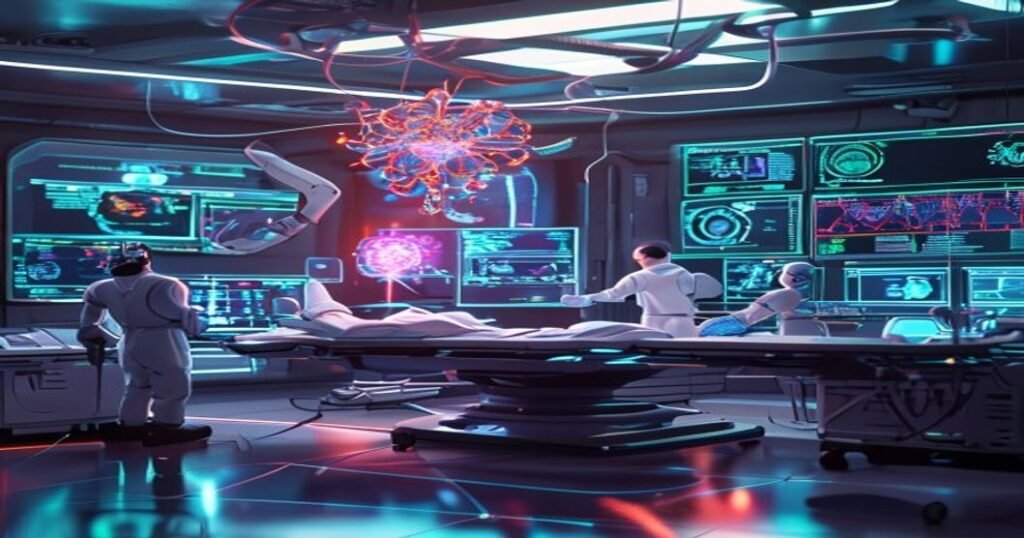

Let’s be real: for centuries, medical breakthroughs have felt like a painstaking crawl, a battle of trial and error against the relentless march of disease. Think about it – identifying a new drug, getting it through rigorous testing, and finally to patients? It’s a process that can take a decade or more, costing billions, and with a staggering 90% failure rate in clinical trials. It’s slow, it’s expensive, and frankly, it’s often heartbreaking. But what if I told you that the doctor of the future isn’t just a human in a white coat, but an incredibly powerful, intelligent machine capable of accelerating discovery and tailoring treatments like never before?
Welcome to the era of the AI Doctor, where intelligent machines are not just assisting but actively rewriting the future of health. This isn’t science fiction anymore; it’s the cutting edge of science, happening right now, and it’s nothing short of a revolution.
The Staggering Challenge: Why Traditional Drug Discovery Is So Broken
Before we dive into how AI is fixing things, let’s briefly understand the scale of the problem. Traditional drug discovery is like searching for a needle in a haystack, except the haystack is the size of a galaxy, and there are trillions of ‘needles’ that might or might not work. Researchers spend years manually sifting through potential compounds, testing them in labs, and then moving to animal models before even considering human trials. Each step is a bottleneck, fraught with complexity and uncertainty. The human body is an incredibly intricate system, and finding a molecule that specifically targets a disease without causing unacceptable side effects is a monumental task. This often leads to promising candidates failing late in the development process, after massive investments of time and money have already been made.
Enter the AI Scientist: Accelerating Discovery at Warp Speed
This is where Artificial Intelligence steps in, transforming virtually every stage of the drug discovery pipeline. No longer are we solely reliant on human intuition or exhaustive, slow manual experiments. AI brings computational prowess to bear on problems that were previously intractable.
1. Target Identification and Validation
The first hurdle in drug discovery is identifying the right biological target – a protein, a gene, or a pathway that, when modulated, can effectively treat a disease. AI, especially machine learning, can analyze vast datasets of genomic information, proteomic data, and patient medical records to identify potential disease drivers with unprecedented speed and accuracy. It can spot patterns and correlations that human researchers might miss, highlighting the most promising targets for further investigation.
2. De Novo Drug Design and Optimization
Once a target is identified, the next step is to design a molecule that can interact with it effectively. This is where AI truly shines. Instead of synthesizing and testing thousands of compounds manually, AI algorithms can ‘learn’ the properties of existing drugs and then generate novel molecular structures predicted to have the desired therapeutic effect. They can optimize these structures for potency, selectivity, and safety even before they are physically created. It’s like having an infinite number of chemists working simultaneously, designing and refining compounds in a virtual lab. If you want to dive deeper into how intelligent machines are fundamentally changing the game in scientific breakthroughs, check out The AI Scientist: How Intelligent Machines Are Accelerating Breakthroughs and Changing Everything We Know.
3. Predicting Efficacy and Toxicity
Imagine being able to predict how a drug will behave in the human body before a single pill is manufactured. AI models can analyze chemical structures and predict their absorption, distribution, metabolism, and excretion (ADME) properties, as well as potential toxicity. This allows researchers to filter out problematic compounds early on, saving significant resources and reducing the risk of late-stage failures.
4. Streamlining Clinical Trials
Clinical trials are the most expensive and time-consuming part of drug development. AI is making inroads here too, from identifying suitable patient populations for trials to monitoring patient responses and even predicting trial outcomes. By optimizing trial design and execution, AI can reduce the time and cost associated with bringing life-saving drugs to market.
The Holy Grail: Personalized Medicine for YOU
Beyond drug discovery, AI’s impact on healthcare extends into the realm of personalized medicine – tailoring medical treatment to the individual characteristics of each patient. For too long, medicine has largely been a ‘one-size-fits-all’ approach, often leading to treatments that are ineffective for some or cause adverse reactions in others. But our genetic makeup, lifestyle, and environment are all unique.
This is where AI unleashes its true potential. By analyzing vast amounts of individual patient data – including genomics, proteomics, electronic health records, wearable device data, and even social determinants of health – AI can:
- Predict Disease Risk: Identify individuals at high risk for certain diseases long before symptoms appear, enabling proactive interventions.
- Optimize Treatment Plans: Recommend the most effective drug and dosage for a specific patient, minimizing trial and error.
- Develop Targeted Therapies: Create therapies specifically designed for an individual’s unique biological profile, particularly critical in areas like oncology where tumor genetics vary widely.
- Enhance Diagnostic Accuracy: Assist radiologists and pathologists in identifying subtle anomalies in medical images or tissue samples that might be missed by the human eye.
The ability of AI to process and derive meaning from these massive, complex datasets is akin to turning raw information into pure gold. This data-driven approach is truly revolutionary, and if you’re curious about how intelligent machines are making sense of mountains of information across various fields, you absolutely have to read The AI Alchemist: How Intelligent Machines Are Turning Data into Gold (And Why You Can’t Afford to Miss Out).
The Unseen Revolution: More Than Just Speed
The shift AI is bringing to healthcare isn’t just about making things faster; it’s about fundamentally changing our approach to human health. It’s about moving from reactive treatment to proactive prevention, from generalized medicine to highly individualized care. This isn’t just a technological upgrade; it’s a paradigm shift that will touch every aspect of our lives, from how we manage chronic conditions to how we age. This silent but profound transformation in how we understand and interact with the world around us is what makes this truly an Unseen Revolution: How AI is Silently Reshaping Everything We Know – And Your Place In It.
Challenges and the Road Ahead
Of course, no revolution comes without its challenges. The integration of AI into medicine raises critical questions about data privacy, algorithmic bias, regulatory frameworks, and the ethical implications of autonomous decision-making in healthcare. Ensuring the transparency and explainability of AI models, building trust among medical professionals and patients, and establishing robust safeguards are paramount.
My take? These challenges, while significant, are not insurmountable. They represent the necessary growing pains of any transformative technology. Collaboration between AI developers, clinicians, policymakers, and ethicists will be crucial in navigating these waters and ensuring that AI serves humanity’s best interests.
The Great AI Reboot for Healthcare
Ultimately, AI in medicine isn’t about replacing doctors; it’s about empowering them with tools that were once unimaginable. It’s about reducing the burden of disease, extending healthy lifespans, and making healthcare more accessible and effective for everyone. From finding cures for rare diseases to making personalized cancer treatments a reality, the potential is mind-boggling.
The journey has only just begun, but the trajectory is clear: AI is poised to usher in an unprecedented era of medical innovation. It’s an exciting time to be alive, witnessing firsthand how technology is being harnessed to solve some of humanity’s oldest and most persistent problems. The impact of this shift is so profound that it’s no exaggeration to say that this is part of The Great AI Reboot: Why Every Industry, Every Job, and Every Life is About to Be Transformed (And How to Thrive). Get ready, because the future of health is here, and it’s powered by AI.


