

Beyond Pinterest Boards: How AI is Rewriting the Rules of Interior Design (and Why Your Next Renovation Will Blow Your Mind)
Let’s be real. For years, designing our dream spaces often felt like a grand adventure, albeit one fraught with endless Pinterest scrolling, conflicting advice, and the constant fear of making a costly mistake. We’d collect swatches, agonize over layouts, and try to articulate a vague ‘vibe’ to a designer, hoping they’d somehow magically translate our abstract desires into a tangible, beautiful reality. Well, buckle up, because that entire paradigm is shifting, and it’s being driven by one of the most transformative technologies of our time: Artificial Intelligence. I’m talking about AI stepping out of the lab and right into our living rooms, fundamentally altering how we conceive, create, and experience interior spaces.
This isn’t some far-off sci-fi fantasy; it’s happening now. The tools available to designers, architects, and even enthusiastic DIYers are becoming incredibly sophisticated. We’re moving beyond simple mood boards and into an era where our homes can be designed not just for aesthetics, but for our unique lifestyles, our daily routines, and even our emotional well-being. And honestly, it’s exhilarating to watch this evolution unfold.
The Dawn of Algorithmic Aesthetics: What AI Brings to the Table
Gone are the days when interior design was solely about an individual’s eye for color or a knack for spatial arrangement. While the human touch remains invaluable (and always will, in my humble opinion), AI is emerging as the ultimate design co-pilot, offering capabilities that were once the stuff of dreams. It’s not just about automating mundane tasks; it’s about enhancing creativity, unlocking efficiencies, and most importantly, delivering a level of personalization that was previously unattainable.
Hyper-Personalization on Steroids
Imagine a design process that doesn’t just ask about your favorite color, but truly understands you. AI can analyze vast amounts of data – from your preferred decor styles across various platforms to your social media activity, even your spending habits on home goods – to build an incredibly nuanced profile of your aesthetic and functional preferences. It can learn whether you thrive in minimalist serenity or maximalist exuberance, whether natural light is paramount or mood lighting is your jam, and even how your existing furniture might integrate into a new scheme.
This level of individual tailoring reminds me of how personalized medicine is redefining healthcare, offering treatments specifically tuned to an individual’s genetic makeup and lifestyle. In the design world, it means no more generic solutions; every recommendation is precision-engineered for you. The result? Spaces that don’t just look good, but truly feel like ‘you,’ supporting your well-being and daily flow in ways you never thought possible.
Space Optimization & Functional Flow Made Brilliant
One of the perennial challenges in interior design is maximizing space, especially in urban environments where every square foot counts. AI excels here. By processing architectural plans and understanding the intended use of a room, AI algorithms can suggest optimal furniture placement, identify potential traffic flow issues, and even propose innovative storage solutions that might escape the human eye. It can simulate how different layouts impact light, sound, and even air circulation, helping designers create spaces that are not only beautiful but also incredibly functional and efficient.
Think about it: no more awkwardly placed sofas blocking doorways, or kitchens that feel like a maze. AI can run countless simulations in mere seconds, pinpointing the most effective and aesthetically pleasing arrangements, ultimately saving time, effort, and often, costly rework.
Material Magic & Sustainable Choices
The sheer volume of materials, textures, and finishes available in the market today can be overwhelming. Add to that the growing importance of sustainability, and the selection process becomes even more complex. This is where AI truly shines. It can sift through massive databases of materials, cross-referencing them with your aesthetic preferences, budget constraints, durability requirements, and critically, their environmental footprint.
Want a flooring option that’s durable, pet-friendly, within budget, *and* made from recycled materials? AI can narrow down thousands of options to a handful of perfect matches, complete with suppliers and cost estimates. This capability not only democratizes access to sustainable design choices but also empowers designers to make more informed decisions, contributing to a healthier planet one interior at a time.
From Concept to Completion: AI in Every Step
AI’s influence isn’t confined to the initial brainstorming phase; it permeates the entire design journey, from visualization to project management.
Instant Virtual Staging & VR Walkthroughs
Remember those blurry, hand-drawn sketches? Or even the expensive 3D renders that took days to produce? AI-powered visualization tools are transforming this. Designers can now upload basic floor plans and, with a few clicks, generate photorealistic renderings of a space, complete with furniture, lighting, and decor, all tailored to the client’s preferences. Want to see how that mid-century modern sofa looks with a bohemian rug? No problem. AI can generate multiple variations almost instantly.
But it goes further. Virtual Reality (VR) walkthroughs, powered by AI, allow clients to immerse themselves in their future homes before a single nail is hammered. You can ‘walk’ through your new kitchen, ‘sit’ in your new living room, and even ‘experience’ the morning light filtering through the windows. This level of experiential design not only eliminates uncertainty but also fosters a deeper emotional connection with the space, making the design process incredibly engaging.
The Smart Home Ecosystem: Where Design Meets Tech
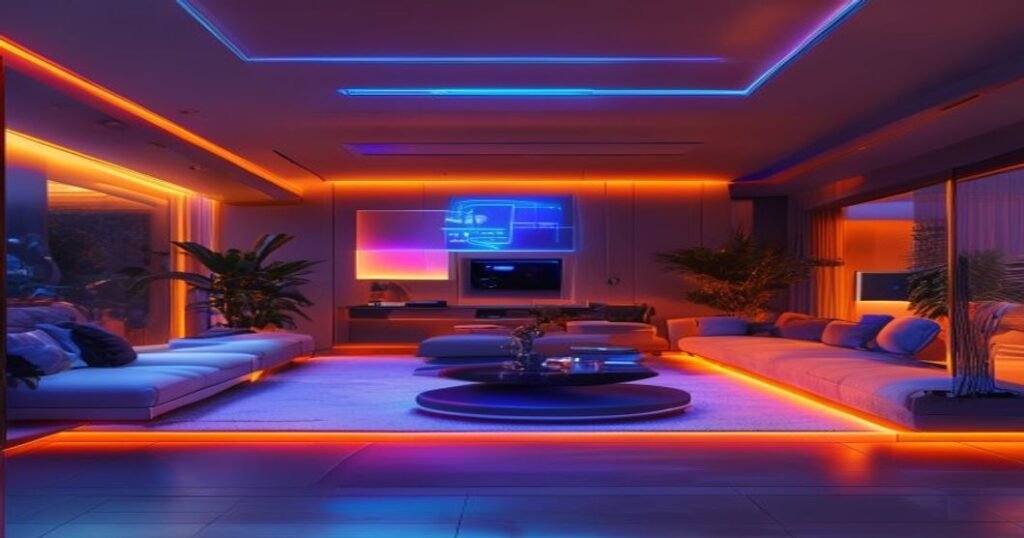
Interior design in the latest era isn’t just about static aesthetics; it’s about dynamic environments that respond to our needs. AI is at the heart of the smart home revolution, seamlessly integrating lighting, climate control, security systems, and entertainment into a cohesive, intuitive experience. Designers can now plan for AI-driven automation from the outset, ensuring that smart devices are not just bolted on, but intrinsically woven into the fabric of the design.
Imagine a home where the lighting adjusts automatically based on the time of day and your activity, where the thermostat learns your preferred temperature cycles, and where your morning coffee is brewing before you even get out of bed. The seamless integration of these smart elements is truly remarkable, mirroring the way AI is secretly rewriting your smartphone’s entire DNA, making our devices more intuitive and responsive to our every command. This isn’t just about convenience; it’s about creating living spaces that are truly responsive and adaptive, enhancing comfort and efficiency.
The Human Touch: Still Irreplaceable?
Now, I know what some of you might be thinking: Is AI going to replace human designers? And my answer, emphatically, is no. What AI does is empower designers to do their jobs better, faster, and with more profound results. The emotional intelligence, the nuanced understanding of a client’s unspoken desires, the ability to tell a compelling story through design – these are uniquely human traits that AI, for all its brilliance, simply cannot replicate.
Instead, AI frees designers from repetitive, data-intensive tasks, allowing them to focus on the higher-level strategic thinking, the creative conceptualization, and the essential client relationship building. Designers become visionaries, curators, and strategists, using AI as a powerful tool to bring their most ambitious ideas to life. It’s about augmentation, not replacement.
The Future is Now: What to Expect Next
The pace of innovation in AI is staggering, and its application in interior design is only just beginning. We can anticipate even more sophisticated predictive analytics, where AI might anticipate our needs and suggest adjustments to our environment before we even consciously realize them. Imagine a home that preemptively adjusts lighting to combat seasonal affective disorder or suggests layout changes to accommodate a new hobby.
We’re also likely to see more widespread use of generative AI, where algorithms can autonomously create entirely new, novel design concepts based on a set of parameters, pushing the boundaries of aesthetics in ways we haven’t even conceived yet. This transformation in interior design is just one ripple in a much larger wave, a testament to AI’s global game-changing power, redefining everything we thought we knew across industries.
Conclusion: Designing Smarter, Living Better
The convergence of AI and interior design is more than just a passing trend; it’s a fundamental shift that is empowering us to create spaces that are smarter, more beautiful, and deeply personal. It’s about democratizing good design, making it accessible and tailored to a broader audience than ever before. For homeowners, it means less guesswork, more confidence, and ultimately, a space that truly resonates with who they are.
For designers, it’s an invitation to innovate, to push creative boundaries, and to focus on the art of design, leaving the heavy lifting of data analysis and iteration to their AI co-pilots. We’re entering an era where our homes won’t just be places we live, but dynamic, intelligent partners in our daily lives, constantly adapting and enhancing our experience. And honestly, as someone who loves both tech and beautiful spaces, I couldn’t be more excited for what’s next. The future of interior design isn’t just bright; it’s brilliantly intelligent.


