
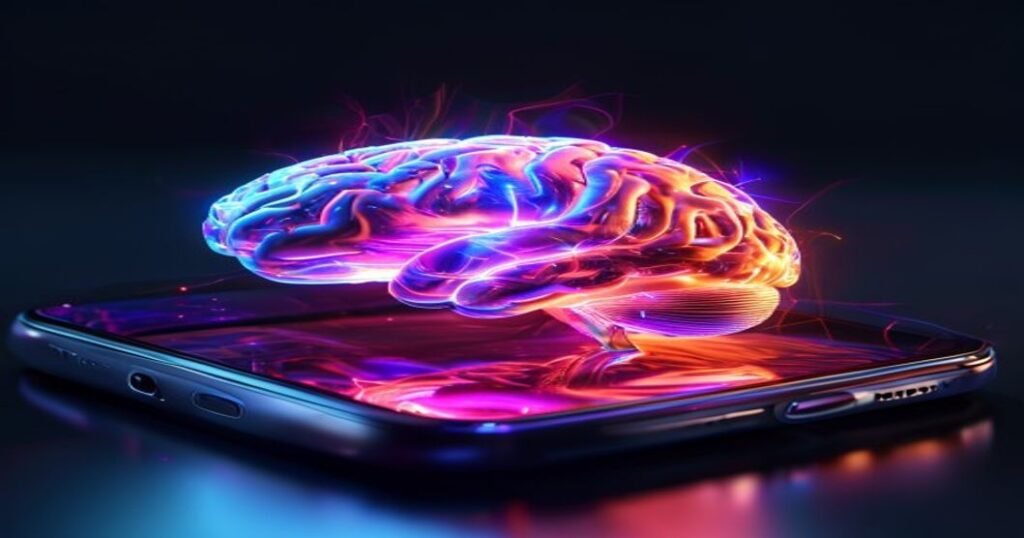

The Invisible Brain: How AI Transformed Your Smartphone from Gadget to Genius
Remember when your smartphone was, well, just a phone that could send texts and maybe play a pixelated game of Snake? Those days feel like a distant echo in the digital past, don’t they? Today, the device nestled in your pocket is a powerhouse, a personal assistant, a professional photographer, and even a health coach, all rolled into one impossibly slim slab of glass and metal. But what truly powers this meteoric evolution? It’s not just faster processors or sharper screens anymore. The real magic, the silent revolution, is happening beneath the surface, driven by Artificial Intelligence.
For years, AI felt like a futuristic concept, something confined to sci-fi movies or the labs of tech giants. Now, it’s not just knocking on the door; it’s practically moved in, unpacking its bags, and making itself comfortable right inside your smartphone. This isn’t just about voice assistants responding to your commands (though that’s a part of it); it’s about a fundamental shift in how your phone understands, anticipates, and interacts with you and the world around it. It’s truly The Silent Revolution: How AI is Transforming Your Smartphone into Your Smartest Companion, and frankly, it’s mind-blowing.
Beyond the Hype: What Does AI *Actually* Do in Your Phone?
Let’s cut through the buzzwords and get real. When we talk about AI in smartphones, we’re not talking about Skynet becoming sentient and taking over your selfies. We’re talking about sophisticated algorithms and neural networks working tirelessly to enhance virtually every aspect of your phone’s operation. Here are just a few ways AI is already making your daily life smoother, smarter, and just plain better:
1. The Camera: Your Personal Photo Studio in Your Pocket
Gone are the days when a great photo required expensive DSLR cameras and a keen eye for lighting. Modern smartphone cameras, powered by AI, are doing the heavy lifting for you. Ever wonder how your phone manages to take stunning low-light photos, blur backgrounds with exquisite precision in portrait mode, or identify objects in your frame to optimize settings? That’s computational photography, a fancy term for AI working overtime.
- Scene Recognition: AI instantly identifies if you’re shooting a landscape, a pet, food, or a sunset, adjusting exposure, color, and contrast accordingly.
- HDR+ and Low Light: It intelligently combines multiple exposures to create a perfectly balanced image, pulling out detail from shadows and highlights, even in challenging conditions.
- Portrait Mode Perfection: AI precisely delineates the subject from the background, creating that professional-looking bokeh effect with remarkable accuracy.
- Photo Editing on the Fly: From subtle touch-ups to AI-powered content aware fills that remove unwanted objects, your phone is now an intelligent photo editor.
2. Performance and Battery Life: The Smart Manager You Never Knew You Needed
It used to be that the more powerful your phone, the faster its battery drained. Not anymore. AI plays a crucial role in optimizing your phone’s performance and extending its battery life. It learns your usage patterns – which apps you use most often, when you typically charge your phone, and even your bedtime routine. With this knowledge, it can:
- Prioritize Resources: AI intelligently allocates processing power to the apps you’re actively using, throttling background apps to save energy.
- Adaptive Battery: It learns which apps consume the most power and limits their usage when not critical, extending your day-to-day battery life.
- App Prediction: Ever notice your phone seems to have your favorite app ready even before you tap it? AI anticipates your next move, pre-loading essential data for a seamless experience.
3. Communication and Productivity: Smarter Than Your Average Assistant
Your smartphone is becoming an increasingly sophisticated communication hub, and AI is at the heart of it. From making your conversations more efficient to breaking down language barriers, the impact is profound.
- Smart Replies: Those short, context-aware reply suggestions in your messaging apps? That’s AI analyzing your conversation and offering relevant responses.
- Live Translation: Imagine speaking to someone in a foreign language, and your phone instantly translates your words in real-time, both audibly and on-screen. This is no longer sci-fi; it’s a rapidly evolving reality.
- Call Screening and Spam Blocking: AI helps identify and filter out unwanted spam calls, protecting you from annoying interruptions.
- Personalized Suggestions: From recommending relevant news articles to suggesting calendar events based on your emails, AI is turning your phone into a genuinely proactive assistant.
4. Gaming and Augmented Reality: Level Up Your Mobile Experience
Mobile gaming has exploded, and AI is making these experiences even more immersive and intelligent. Think about games that adapt to your skill level, or augmented reality apps that seamlessly blend digital objects with your real-world environment. AI is fundamental to creating these dynamic and engaging experiences. It’s clear that AI is not just playing games, but *making* them smarter than ever before, offering a depth of interaction previously unimaginable on a handheld device.
5. Security and Privacy: Your Digital Guardian
While AI brings convenience, it also enhances security. Facial recognition and advanced fingerprint sensors use AI to learn and adapt, making your phone more secure and harder to bypass. AI can also detect suspicious activity, flag potential malware, and help protect your personal data in ways that simple password protection never could. It’s an invisible guardian, constantly monitoring for threats and working to keep your digital life safe.
The On-Device AI Revolution: Why It Matters
Much of the early AI power came from the cloud, where massive data centers crunched numbers. While cloud AI is still vital, a significant trend now is the rise of on-device AI. This means more AI processing happens directly on your phone’s chip, rather than sending data to remote servers. Why is this a big deal?
- Speed: Tasks are completed faster without the latency of network communication.
- Privacy: Sensitive data stays on your device, reducing privacy concerns.
- Offline Functionality: Many AI features can work even without an internet connection.
- Efficiency: Less data transfer means less battery drain and more efficient use of resources.
This shift towards on-device AI is fundamentally changing the capabilities of what a smartphone can do, allowing for even more personalized and immediate responses from your device. It’s a testament to how AI is not just playing games, but radically rewriting the rules for how all our technology, especially our personal devices, will function moving forward.
Embracing the AI-Powered Future: A Global Perspective
The embrace of AI in smartphones isn’t confined to a few tech hubs; it’s a global phenomenon. From Silicon Valley to emerging markets, developers and manufacturers are racing to integrate the latest AI advancements. In places like Pakistan, for instance, there’s a growing understanding of how these technologies can drive local innovation and create new opportunities. The enthusiasm for adopting and even contributing to these global trends is palpable, and it’s clear that Pakistan’s AI Revolution: The Unstoppable Wave Reshaping a Nation’s Destiny extends right into the mobile sphere, impacting everything from app development to consumer expectations for their devices.
As a user, this means your next smartphone isn’t just a hardware upgrade; it’s an intelligence upgrade. You’re not just buying a faster chip; you’re investing in a smarter companion that understands your needs, anticipates your desires, and makes your digital life effortlessly efficient.
The Human Element: Our Evolving Relationship with Smart Devices
It’s fascinating to observe how our relationship with our smartphones is evolving. They’re no longer mere tools; they’re extensions of ourselves, acting as digital proxies and personalized assistants. This increasing reliance on AI, while undeniably convenient, also sparks conversations about privacy, data security, and the ethical implications of machines that understand us perhaps better than we understand ourselves at times. These are important dialogues that will continue as AI becomes even more integrated into our daily lives.
Conclusion: The Smartphone as a Living, Learning Entity
The journey of the smartphone, from a humble communication device to a sophisticated, AI-powered genius, is one of the most compelling stories in modern technology. AI is no longer a feature; it’s the fundamental operating principle that elevates your phone from a mere gadget to a genuinely intelligent companion. It’s the invisible brain making every interaction smoother, every photo better, and every moment more efficient. So, the next time you pick up your phone, take a moment to appreciate the silent revolution happening within. It’s not just a device; it’s a testament to how far we’ve come, and a tantalizing glimpse into an even smarter future. What will your AI-powered smartphone do for you tomorrow? The possibilities, quite frankly, are endless, and I, for one, can’t wait to find out.


