
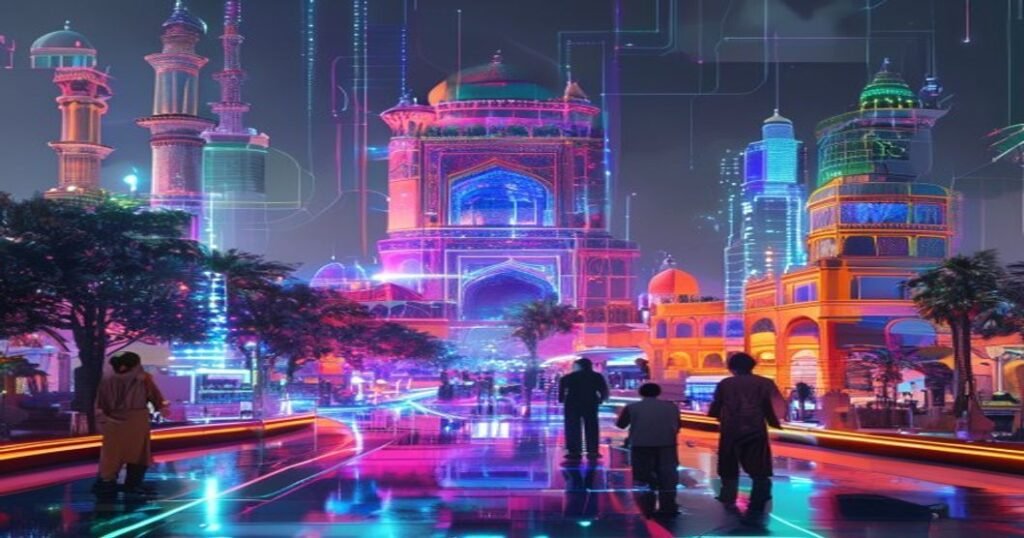

Imagine a Pakistan where every challenge, from agricultural productivity to healthcare accessibility, is met with intelligent, data-driven solutions. Where young minds aren’t just consumers of technology but architects of the next global breakthroughs. This isn’t some distant utopia; it’s the nascent reality unfolding across the nation, driven by the relentless, transformative power of Artificial Intelligence.
I’ve been observing the tech landscape for a while, and I can tell you, the AI wave isn’t just a ripple here; it’s becoming a tsunami. It’s not just about flashy gadgets or abstract algorithms; it’s about a fundamental shift in how we live, work, and connect. For a broader perspective on this global phenomenon and its sheer inevitability, you might want to delve into The Global Brain: Why AI’s Unstoppable March is the Biggest Story of Our Time, but trust me, Pakistan’s story within this global narrative is uniquely compelling and filled with both immense potential and unique challenges.
The Dawn of Pakistan’s AI Awakening
Let’s be real: for years, Pakistan often felt like it was playing catch-up in the global tech race. We had brilliant individuals, no doubt, but the ecosystem struggled. However, something profound has shifted in recent times. There’s a palpable energy, a collective realization that AI isn’t just a tool; it’s a new frontier, and Pakistan is determined to stake its claim.
Government initiatives, like those spearheaded by the Ministry of IT and Telecom, alongside organizations like Ignite, are no longer just bureaucratic efforts. They are actively fostering a conducive environment for AI research, development, and entrepreneurship. Academia, too, is stepping up, with universities launching specialized AI programs and research labs, churning out a new generation of data scientists and machine learning engineers. This isn’t just talk; it’s a tangible transformation happening across the country. Indeed, it feels like Pakistan’s AI Awakening: A Nation’s Leap into the Future of Intelligence and Disruption is unfolding right before our eyes, a testament to the collective ambition and ingenuity within our borders.
Sectors Feeling the AI Pulse
Where exactly is AI making its mark? Almost everywhere, it seems. Here are a few key areas where I see real impact:
Healthcare Transformation
Imagine AI-powered diagnostic tools assisting doctors in remote areas, identifying diseases earlier and more accurately. Picture personalized treatment plans derived from vast datasets, leading to better patient outcomes. Startups are emerging, using AI to predict outbreaks, manage patient records, and even facilitate remote consultations, bringing quality healthcare closer to everyone, regardless of location.
Agriculture Reinvented
For a nation heavily reliant on agriculture, AI offers revolutionary possibilities. Smart farming solutions are employing drones and satellite imagery combined with AI to monitor crop health, predict yields, optimize irrigation, and even detect pests before they cause widespread damage. This translates directly into increased productivity, reduced waste, and, ultimately, food security.
Education for the Digital Age
AI is personalizing education like never before. Intelligent tutoring systems can adapt to individual learning paces, identify knowledge gaps, and recommend tailored content. This is crucial for Pakistan’s massive youth population, allowing for scalable, high-quality education that prepares them for the jobs of tomorrow. It’s about moving beyond rote learning to fostering critical thinking and problem-solving skills.
E-commerce & Fintech Innovation
From personalized product recommendations that make online shopping eerily intuitive to sophisticated fraud detection systems that secure digital payments, AI is the engine driving Pakistan’s burgeoning e-commerce and fintech sectors. As digital transactions grow, AI ensures convenience, security, and efficiency, fostering trust in the digital economy.
Daily Life and Connectivity
And let’s be honest, how many of us realize just how much AI is already powering our daily lives? Every time you unlock your phone with your face, get a smart recommendation from a streaming service, or use voice commands to find information, you’re interacting with it. It makes you wonder, doesn’t it: Is Your Smartphone Secretly Getting Smarter Than You? The answer, increasingly, is a resounding yes! This pervasive integration into everyday devices is normalizing AI and creating a fertile ground for further innovation.
Navigating the Road Ahead: Challenges and Opportunities
While the horizon looks bright, we can’t ignore the bumps in the road. Pakistan’s AI journey is not without its hurdles:
The Skill Gap
Despite the efforts, there’s still a significant gap between the demand for AI talent and the available supply. We need more specialized training programs, bootcamps, and a continuous focus on re-skilling the existing workforce to remain competitive.
Infrastructure & Connectivity
A robust AI ecosystem requires cutting-edge digital infrastructure. Reliable, high-speed internet access across the country is non-negotiable. While progress has been made, bridging the digital divide, especially in rural areas, remains a critical challenge. This challenge, however, isn’t just about speed; it’s about creating an intelligent, responsive backbone for an AI-powered future. For a deeper dive into this symbiotic relationship, explore how 6G and AI are Weaving the Fabric of Our Hyper-Connected Future – it’s a vision Pakistan absolutely needs to embrace to fully capitalize on its AI ambitions.
Funding & Investment
Attracting consistent local and international investment into AI startups and research initiatives is vital. Local venture capital needs to mature, and government incentives for tech investment can play a crucial role.
Data Privacy & Ethics
As AI becomes more integrated, robust frameworks for data privacy, security, and ethical AI development are paramount. Building public trust requires transparency and strong regulatory oversight.
The Youth Bulge as an Asset
Here’s where Pakistan has a distinct advantage: its incredibly large, energetic, and adaptable youth population. This demographic dividend, if properly skilled and empowered, can become the driving force behind Pakistan’s AI revolution, transforming a challenge into an unparalleled opportunity.
My Take: Why This Matters More Than Ever
From where I stand, this isn’t just another tech trend; it’s a defining moment for Pakistan. The world is changing at an unprecedented pace, and nations that fail to embrace and strategically leverage AI risk being left behind. For Pakistan, a country with immense economic potential and persistent socio-economic challenges, AI offers a pathway to leapfrog traditional development hurdles.
I genuinely believe Pakistan has the raw talent and the entrepreneurial spirit to not just adopt AI, but to innovate within it, creating unique solutions tailored to its own context and even for the global market. We’ve seen glimmers of this already, and it fills me with optimism. However, optimism alone won’t cut it. It requires unwavering commitment from policymakers, sustained investment from the private sector, and a collective educational push to equip our workforce for the future.
This isn’t a luxury; it’s an economic imperative. It’s about creating jobs, fostering innovation, improving quality of life, and ultimately, securing Pakistan’s place in the digital future.
The Road Ahead
The journey has only just begun. Pakistan stands at a crossroads, poised to harness the incredible power of Artificial Intelligence. The potential for economic growth, societal improvement, and global competitiveness is immense, but the effort required is equally significant. It demands collaboration between government, academia, industry, and every citizen willing to learn and adapt.
The AI revolution isn’t coming; it’s already here, unfolding in our cities, our farms, and even in the devices in our pockets. Pakistan’s destiny in this new intelligent era will be written by how boldly, strategically, and collectively we choose to embrace it.


