
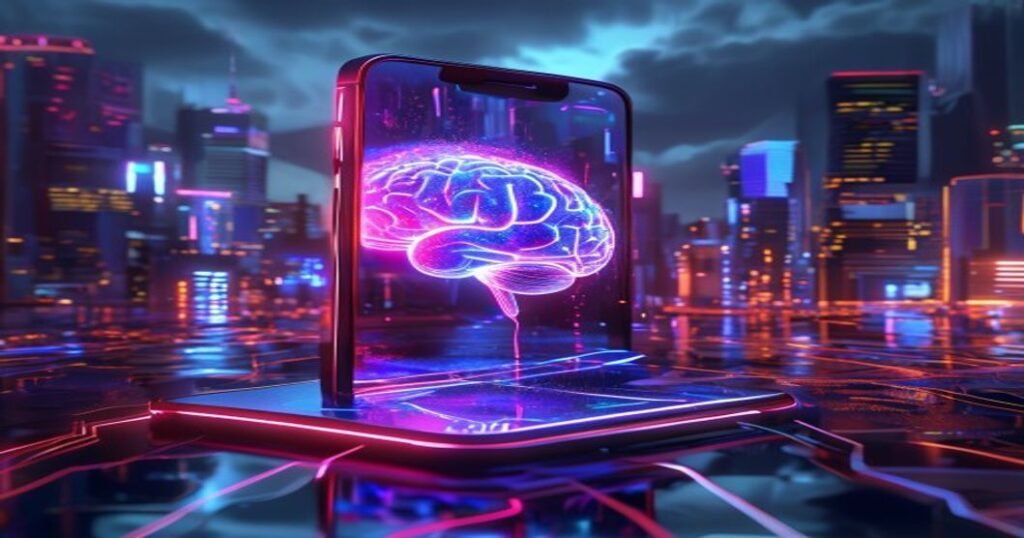

The AI Revolution in Your Pocket: How Your Smartphone Just Got a Brain Upgrade (And Why It Matters)
Remember a time when your phone was just… a phone? A device for calls, texts, and maybe a basic web search. Feels like ancient history, doesn’t it? These days, the slab of glass and metal you carry around is less a mere communication tool and more a personal assistant, a professional photographer, a health guru, and an entertainment hub – all thanks to a silent, tireless force working behind the scenes: Artificial Intelligence.
For a while, ‘AI’ felt like this futuristic concept, relegated to sci-fi movies or complex data centers. But I’m here to tell you, it’s not just in the cloud or in advanced robots; it’s right here, in your hand, making every interaction with your smartphone smoother, smarter, and incredibly more powerful. It’s no longer a gimmick or a buzzword; it’s the very core of what makes our modern smartphones ‘smart’. And if you haven’t noticed it yet, that’s the beauty of it – good AI is often invisible, seamlessly enhancing your life without you even realizing it’s there.
Beyond the Hype: What *is* AI in Your Phone?
Let’s clear something up. When I talk about AI in your phone, I’m not just talking about your voice assistant, though Siri, Google Assistant, and others are certainly prominent examples. That’s just the tip of the iceberg. The real magic of AI lies in its ability to learn from your usage patterns, analyze vast amounts of data, and make intelligent decisions to optimize your phone’s performance and enhance your experience. It’s the engine that powers a plethora of features you probably take for granted every single day.
Think about it: how does your phone seem to know which app you’ll want to open next, or suggest relevant information based on your current location or time of day? How does it manage to stretch your battery life when you’re low on juice, or keep your most frequently used apps running smoothly without a hitch? That, my friends, is AI at work. It’s constantly observing, predicting, and adapting, turning your generic device into a truly personalized companion.
The Camera Genius: Computational Photography’s Magic
If there’s one area where AI’s impact on smartphones has been nothing short of revolutionary, it’s photography. Gone are the days when you needed bulky DSLRs to capture stunning images. Now, your phone can often outshine them in certain scenarios, not because of bigger lenses, but because of computational photography – a fancy term for AI doing the heavy lifting.
When you snap a picture, your smartphone’s AI doesn’t just record light. It takes multiple exposures, analyzes the scene, identifies subjects, adjusts lighting, sharpens details, and even synthesizes information from different frames to create a single, breathtaking image. Features like Night Mode, Portrait Mode with stunning bokeh, and intelligent scene recognition are all miracles of AI. It’s why your phone can turn a dimly lit restaurant photo into a vibrant memory or perfectly separate a subject from a busy background. It literally ‘sees’ and ‘understands’ the scene, much like a human photographer, but with unparalleled speed and precision.
Powering Your Day: Battery, Performance, and Efficiency
Another unsung hero of smartphone AI is its role in managing your device’s core functions. We all want our phones to last longer and run faster, right? Well, AI is the silent guardian making that happen.
- Adaptive Battery: Your phone’s AI learns your daily charging routines and app usage. It then optimizes battery consumption by intelligently restricting background activity for less-used apps, predicting when you’ll need power most, and even adapting charging speeds to prolong battery health. No more ‘battery anxiety’ because your phone is actively working to make it last.
- Performance Optimization: Lagging phones are a nightmare. AI actively monitors app usage, identifies resource-hungry processes, and intelligently allocates CPU and RAM. It anticipates which apps you’re likely to open and pre-loads them, ensuring a snappier, more fluid user experience. This intelligent resource management keeps your phone feeling new for longer, even with demanding tasks.
The Personal Touch: A Phone That Knows You
Perhaps the most intimate aspect of AI in smartphones is its ability to personalize your experience. From suggesting the right word as you type to curating your news feed, AI is constantly learning your preferences, habits, and even your mood. It’s like having a digital butler who understands your nuances without you ever having to explicitly state them.
Think about fitness trackers and health apps integrated into your smartphone. They collect vast amounts of data – your steps, heart rate, sleep patterns, and even your mood. AI algorithms then analyze this data to provide personalized insights, detect anomalies, and suggest wellness routines. It’s not just about tracking; it’s about understanding your body’s unique rhythms and offering proactive advice. This hyper-personalization extends beyond health. Imagine a future where your phone proactively manages your schedule, anticipates your travel needs, and even offers tailored learning experiences based on your career goals. This profound ability to use your data to create a truly bespoke experience is why I believe Your Health, Your Data, Your Future: How AI is Unlocking Hyper-Personalized Wellness is not just a concept, but a current reality being shaped by the devices in our hands.
The Brain on Board: On-Device AI vs. Cloud AI
A significant shift in the world of smartphone AI is the move towards ‘on-device’ processing. Historically, many complex AI tasks were offloaded to powerful cloud servers. Your phone would send data, the cloud would process it, and send the result back. While effective, this introduced latency, privacy concerns, and required a constant internet connection.
Now, thanks to specialized hardware like Neural Processing Units (NPUs) or AI accelerators built directly into smartphone chipsets, much of this AI heavy lifting can happen right on your device. This means faster processing, enhanced privacy (as your data doesn’t leave your phone), and the ability for AI features to work even without an internet connection. This local intelligence is crucial for real-time tasks like live language translation, advanced facial recognition, and complex image processing.
Unmasking the Broader Impact: Algorithms Everywhere
While we focus on the specific features within our phones, it’s important to zoom out and see the bigger picture. The AI residing in our smartphones is a microcosm of a much larger, global algorithmic ecosystem. These algorithms, which learn and adapt based on data, are increasingly influencing every facet of our lives – from the news we see to the products we buy, and even the services we access. Our phones are the primary interface to this world, making us active participants whether we realize it or not. Understanding this pervasive influence is key, and it’s why I often find myself pondering how Unmasking the AI Takeover: Why Algorithms Are Our New Global Architects (And How to Thrive In Their World) is a discussion that starts right in our pockets.
The sophistication of AI in smartphones is also a testament to the rapid advancements in the broader AI landscape. Technologies that once seemed futuristic are now being miniaturized and optimized for mobile devices, pushing the boundaries of what’s possible. This continuous innovation fuels the development of even more powerful and intuitive AI capabilities, driving a virtuous cycle of progress.
What’s Next? The Generative AI Frontier
The current buzz around Generative AI, capable of creating new content from text to images, is already making its way into our smartphones. Imagine not just editing photos, but completely transforming them with a text prompt. Or having your phone draft emails, summarize articles, or even compose music based on your preferences. This isn’t just about making existing tasks easier; it’s about unlocking entirely new forms of creativity and interaction.
The integration of generative AI directly into smartphone operating systems and apps means we’re on the cusp of a new era of personal computing. Our phones won’t just be tools for consumption; they’ll be powerful engines for creation, limited only by our imagination. The companies that harness this power effectively will redefine industries, much like the early days of the smartphone itself. It’s a game-changer, and it perfectly illustrates why Generative AI: The Startup Superpower Reshaping Industries – Are You Ready to Unleash It? is such a critical question for innovators and users alike.
My Take: The Future is Already Here
As a tech enthusiast and someone who’s watched the smartphone evolution unfold, I can confidently say that AI is not just another feature; it’s the fundamental operating principle of the modern smartphone. It’s what differentiates a truly smart device from a glorified feature phone. The seamlessness, the personalization, the sheer capability – it all boils down to intelligent algorithms working tirelessly to make your life easier and more productive.
Some might worry about privacy or over-reliance on technology, and those are valid concerns we must address responsibly. However, the undeniable truth is that AI has elevated our pocket computers to a level of sophistication we could only dream of a decade ago. It has democratized high-end photography, made complex tasks accessible, and woven itself into the fabric of our digital lives.
So, the next time you pick up your smartphone, take a moment to appreciate the silent genius at work. It’s not just a device; it’s a portal to an increasingly intelligent world, and its capabilities are only going to grow. Embrace it, explore it, and prepare to be amazed, because the brain upgrade in your pocket is just getting started.


