
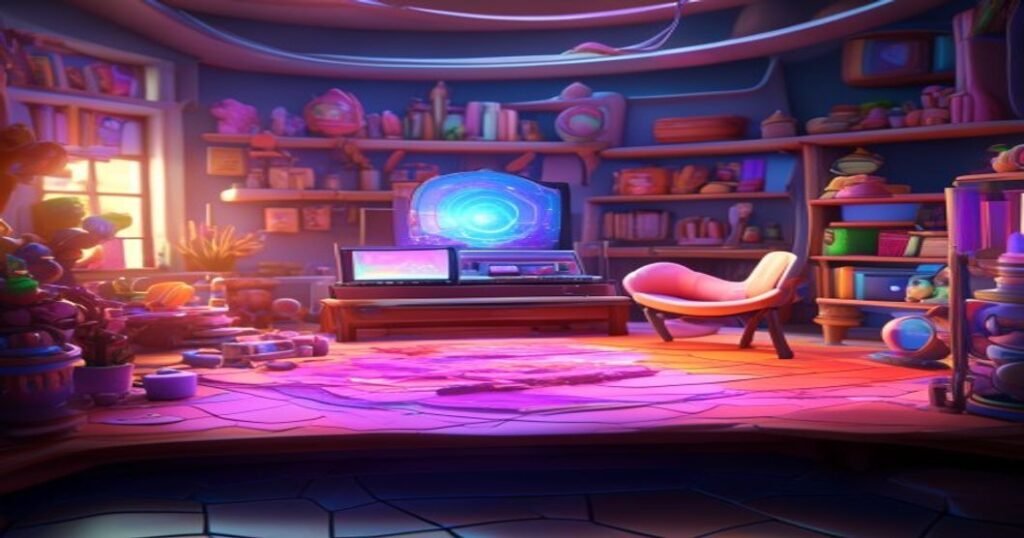

The AI Alchemist: How Generative Tech is Forging the Future of Gaming and Why You’ll Never Play the Same Way Again
Remember that feeling? The first time you stepped into a truly open world, gazed at a sprawling digital landscape, and thought, “Wow, how did they build all this?” For years, the answer was simple: an army of incredibly talented artists, designers, and writers, toiling away for years, sometimes even a decade, to bring these fantastical visions to life. But what if I told you that the very bedrock of game creation is undergoing a seismic shift, powered by an invisible force that’s not just assisting developers, but actively conjuring entire worlds, characters, and stories out of thin air? Welcome to the era of Generative AI in gaming, and trust me, it’s going to redefine every pixel, every quest, and every interaction you’ll ever have with a game.
For a long time, AI in games meant smarter enemies, better pathfinding, or perhaps a rudimentary dialogue tree. It was about making existing systems more efficient or challenging. But that’s old news. What we’re seeing now, and what’s accelerating at an incredible pace, is AI that creates. This isn’t just about tweaking parameters; it’s about algorithmic alchemy, transforming data into design, code into creativity. And for anyone still on the fence, it’s clear now that the unstoppable AI wave is here, washing over every industry, and gaming is right in its powerful current.
The Digital Forge: AI’s Role in World-Building
One of the most immediate and mind-blowing applications of Generative AI is in content creation. Imagine a vast, procedurally generated universe like No Man’s Sky, but multiplied by a thousand in terms of detail, variety, and narrative depth. That’s the promise of AI in world-building.
Landscapes That Breathe and Evolve
- Environments on Demand: AI can now generate sprawling terrains, intricate cave systems, dense forests, and bustling cities with incredible speed and fidelity. Not just random noise, but coherent, aesthetically pleasing, and playable spaces that adhere to specific themes or styles. This frees up environmental artists to focus on refining specific areas, adding unique set pieces, and injecting their human touch, rather than painstakingly placing every rock and tree.
- Dynamic Ecosystems: Beyond static landscapes, AI can simulate entire ecosystems. Imagine a game where the wildlife genuinely reacts to environmental changes, where plants grow and decay, and where resource scarcity impacts creature behavior – all generated and managed dynamically by AI, creating a living, breathing world that feels genuinely alive.
Assets That Materialize from Ideas
Every tree, every sword, every piece of armor in a game is an ‘asset.’ Traditionally, these require concept artists, 3D modelers, texture artists, and animators. It’s a hugely time-consuming and expensive process. Generative AI is changing this game entirely:
- Texture Generation: AI can create high-resolution textures from simple prompts or reference images, instantly generating variations that perfectly fit the desired aesthetic.
- 3D Model Creation: From character models to props and entire architectural structures, AI can interpret sketches or textual descriptions and output fully realized 3D models, complete with UV maps and basic rigging. This drastically cuts down development time, especially for indie studios, allowing them to iterate faster and build richer worlds with smaller teams.
- Animation Automation: Generating realistic character animations is notoriously difficult. AI-powered tools can now animate characters based on motion capture data, text descriptions, or even by analyzing video, making character movement more fluid and diverse without manual keyframing for every action.
Characters That Converse, Quests That Adapt: The Player Experience Revolution
Beyond the static elements of a game world, Generative AI is profoundly impacting the way we interact with games and the stories they tell. This is where the magic truly begins to transform the player experience, making games feel more personal and alive.
NPCs with Personalities and Memory
No more generic villagers repeating the same three lines of dialogue! Generative AI is giving Non-Player Characters (NPCs) an unprecedented level of depth:
- Dynamic Dialogue: Imagine an NPC who remembers your previous interactions, comments on your recent actions, and even adapts their personality based on your playstyle. AI-powered language models can generate natural, context-aware dialogue in real-time, making conversations feel organic and meaningful. This isn’t just pre-written branching paths; it’s genuine, on-the-fly interaction.
- Adaptive Behavior: NPCs can learn from player behavior, developing unique combat strategies, social patterns, or even evolving loyalties. A shopkeeper might remember you haggled too hard last time and offer a slightly higher price, or a guard might recognize you as a notorious troublemaker. This creates a sense of consequence and realism that was previously impossible.
Quests That Write Themselves
The dreaded ‘fetch quest’ might finally be a thing of the past. Generative AI is capable of crafting unique, engaging narratives:
- Procedural Storylines: AI can generate entire quest lines, complete with objectives, characters, and dramatic twists, based on a set of parameters or an overarching narrative theme. This means potentially infinite replayability, with every playthrough offering a fresh adventure.
- Personalized Lore: Imagine a game that weaves a unique backstory for your character or generates lore specific to your in-game actions and discoveries. AI can adapt the narrative to your choices, making you feel truly central to the evolving world.
This isn’t just about making games bigger; it’s about making them smarter, more responsive, and infinitely more personal. Just as AI is rewiring telecom’s future with intelligent networks and predictive maintenance, it’s fundamentally reshaping how games are made and played, pushing the boundaries of what we thought possible in interactive entertainment.
The Great Equalizer: Indie Studios and AAA Powerhouses
The impact of Generative AI isn’t limited to a single segment of the gaming industry; it’s a transformative force for everyone, from bedroom developers to massive corporations.
Empowering the Indies
For small, independent studios, AI is nothing short of a superpower. With limited budgets and small teams, creating vast, detailed worlds or complex characters was often a pipe dream. Now, AI tools can:
- Automate Tedious Tasks: Freeing up precious human talent from grunt work like asset creation or basic level design, allowing them to focus on unique gameplay mechanics, narrative depth, and artistic vision.
- Expand Scope Exponentially: An indie team of five can now conceive of a game world that previously would have required a team of fifty, democratizing ambitious game development like never before.
- Rapid Prototyping: Quickly generate multiple iterations of environments, characters, or game mechanics to test ideas and find what works best, accelerating the development cycle.
Supercharging AAA Production
For the colossal AAA studios, Generative AI isn’t about replacing talent but augmenting it. It’s about achieving unprecedented scale and detail:
- Unfathomable Worlds: Creating game worlds of truly planetary scale with unique, handcrafted quality in every corner becomes a possibility.
- Hyper-Realistic Immersion: AI can fine-tune details, from subtle cloth physics to nuanced facial expressions, pushing the boundaries of photorealism and immersive experience.
- Personalized Blockbusters: Imagine a AAA title that tailors its narrative, challenges, and even character relationships specifically to your playstyle, offering a uniquely crafted experience for every player within the same massive budget.
The Human Element: Why Developers Still Reign Supreme
With all this talk of AI creating worlds and stories, you might wonder if human developers are on the way out. Absolutely not. Instead, their roles are evolving, becoming more akin to digital architects, visionary directors, and skilled curators. AI is a tool, a powerful paintbrush in the hands of an artist, not the artist itself.
- Vision and Direction: AI needs clear parameters, themes, and creative direction. It’s the human developer who defines the soul of the game, the emotional core, and the unique artistic style that makes it stand out.
- Refinement and Oversight: While AI can generate a thousand different trees, it’s the human eye that picks the perfect one, tweaks its branches, and places it just so to achieve maximum impact. Human oversight ensures quality, consistency, and artistic integrity.
- Innovation and Storytelling: True innovation, groundbreaking gameplay mechanics, and deeply moving stories still require the spark of human ingenuity and empathy. AI can assist in the telling, but the profound emotional resonance comes from human understanding.
The truth is, the world is shifting under our feet in a myriad of ways thanks to these technological advancements. It’s not just gaming; industries across the board are feeling the AI quake. From healthcare to finance, the principles of AI-driven efficiency and creation are at play.
Looking Ahead: The Untapped Potential
We are just scratching the surface of what Generative AI can do for gaming. Imagine real-time game updates and content generation based on player feedback, or AI that learns player preferences to recommend not just games, but specific in-game experiences. Consider AI as a personal Dungeon Master in a tabletop RPG, crafting unique adventures on the fly, or games that adapt their entire genre based on your mood. The possibilities are truly boundless.
Forget future predictions; the AI revolution isn’t coming, it’s *here*. It’s reshaping how games are conceived, developed, and played, offering a richer, more diverse, and intensely personal experience than ever before. As players, we stand on the precipice of a golden age where our favorite digital worlds will be more vast, more dynamic, and more engaging than we ever dared to dream. And as content creators and innovators in the gaming space, the tools at our disposal are becoming nothing short of miraculous. Get ready; your games are about to get a serious upgrade.


