
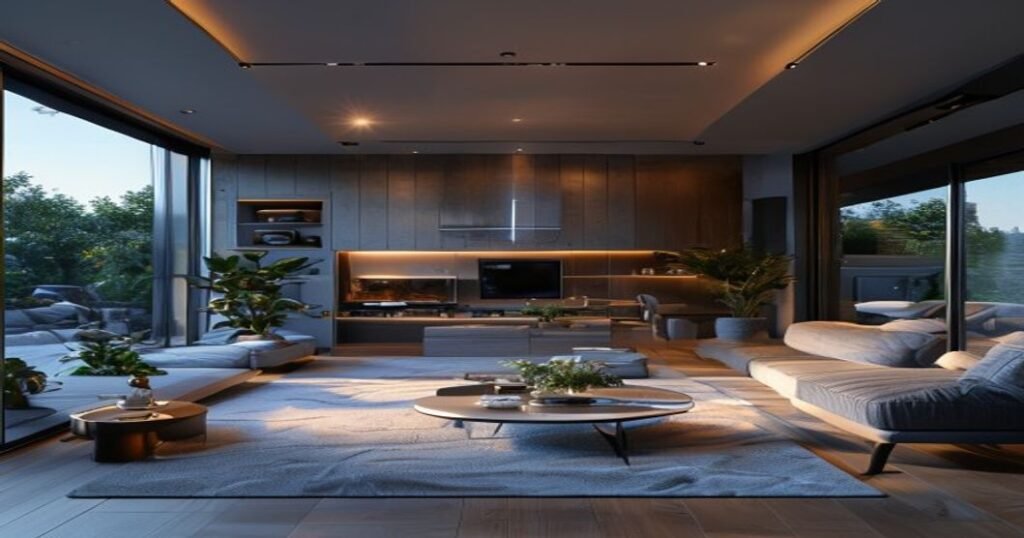

Beyond Walls: How AI-Driven Adaptive Interiors Will Redefine Your Home by 2026
Imagine a home that doesn’t just house you, but truly understands you. A living space that anticipates your needs, adapts to your mood, optimizes your well-being, and even evolves with your lifestyle. This isn’t a scene from a science fiction movie; it’s the imminent reality of AI-driven adaptive interiors, and by 2026, it will be fundamentally redefining how we interact with our most personal spaces.
For decades, interior design has been about static beauty and functional layouts. Smart homes brought convenience, allowing us to control lights or thermostats with a tap or voice command. But as we stand on the cusp of 2026, the paradigm is shifting dramatically. Thanks to breakthroughs in artificial intelligence, machine learning, and hyper-connectivity, our homes are transforming from inanimate structures into sentient, responsive ecosystems. This evolution promises not just comfort, but a profound enhancement of our daily lives, productivity, and overall well-being.
The Dawn of the Sentient Home: AI’s Role in Adaptive Interiors
The journey from a ‘smart home’ to a ‘sentient home’ is marked by the integration of sophisticated AI. While early smart homes relied on pre-programmed rules or simple sensor triggers, the adaptive interiors of 2026 leverage AI to learn, predict, and proactively respond. Think of it as your home developing its own intelligence, observing patterns, analyzing data from countless inputs, and making real-time adjustments to create the optimal environment for you at any given moment.
This goes far beyond dimming lights at sunset. An AI-driven interior considers everything from the natural light outside, the air quality inside, your personal biometrics (via wearables), your calendar, and even subtle shifts in your voice tone or posture detected by integrated sensors. The goal is to create an environment that is not just aesthetically pleasing but is a dynamic partner in your life, reducing stress, boosting focus, and promoting health. This level of responsiveness is truly unprecedented, moving beyond mere automation to genuine collaboration between humans and their living spaces.
Key Pillars of Adaptive Interior Design in 2026
1. Hyper-Personalization: Your Home, Tailored by AI
At the heart of adaptive interiors is an unparalleled degree of personalization. AI algorithms continuously collect and analyze data about your routines, preferences, and even your emotional state. Do you prefer cool, energizing blue lights for morning workouts and warm, ambient tones for evening relaxation? Does a certain aroma calm you after a stressful day? Your home will learn this, not through explicit commands, but by observing your reactions and adjusting accordingly. This isn’t just about setting preferences; it’s about an evolving, intuitive understanding that makes your home uniquely yours. Indeed, this deep dive into individual needs highlights a broader trend: The Reality Shift: How Hyper-Personalized AI is Rewiring Our World in 2026, extending from personal devices to the very fabric of our living spaces.
2. Dynamic Environments: Spaces That Breathe and Transform
Imagine walls that change color or display dynamic art based on your mood or the time of day. Furniture that reconfigures itself to create a sprawling lounge for movie night or a focused workspace for productivity. Adaptive lighting systems not only adjust brightness and color temperature but also mimic natural light cycles to regulate your circadian rhythm. Acoustic panels can dampen noise for concentration or enhance sound for entertainment. These dynamic elements ensure that your home is never static but is always optimized for the activity or feeling you desire.
3. Biometric Integration: Wellness at Your Core
The next frontier involves integrating biometric data. Sensors embedded in flooring, seating, or even mirrors can monitor heart rate, sleep patterns, posture, and even detect early signs of illness or stress. Your home’s AI can then respond by suggesting adjustments to lighting, temperature, or air purification. For instance, if your sleep quality is poor, your bedroom environment might proactively adjust its climate and light settings to encourage deeper rest. This level of proactive wellness support transforms your home into a personal health sanctuary.
4. Sustainability & Resource Optimization: Eco-Conscious Living
AI-driven adaptive interiors are inherently sustainable. By continuously monitoring environmental factors and user behavior, AI can precisely manage energy consumption, water usage, and waste. Heating and cooling systems learn optimal settings to minimize waste, smart windows adjust tint to reduce solar gain, and intelligent irrigation systems only water plants when necessary. This not only reduces your carbon footprint but also translates into significant cost savings, making eco-friendly living both effortless and economical.
5. Wellness & Biophilia: Nature Reimagined Indoors
The adaptive home of 2026 prioritizes human well-being by seamlessly integrating biophilic design principles. AI can manage automated indoor gardens, optimize natural light exposure, and even project calming nature scenes onto digital surfaces. Environmental sensors ensure optimal humidity and air quality, filtering pollutants and diffusing therapeutic essential oils. The goal is to create a harmonious balance between cutting-edge technology and the innate human need for connection with nature, fostering a sense of calm and rejuvenation.
The Tech Tapestry: Weaving Intelligence into Every Thread
The realization of adaptive interiors in 2026 relies on a sophisticated convergence of several advanced technologies:
- AI & Machine Learning (AI/ML): The brain that processes vast amounts of data, learns patterns, and makes predictive adjustments. Deep learning algorithms enable the home to understand complex human behaviors and preferences.
- Internet of Things (IoT) Sensors & Actuators: The eyes, ears, and hands of the smart home. Tiny, unobtrusive sensors embedded everywhere – in walls, furniture, appliances – gather data on occupancy, temperature, light, air quality, and more. Actuators then execute AI’s commands, from adjusting blinds to modulating room temperature.
- Augmented Reality (AR) & Virtual Reality (VR): Beyond design visualization, AR and VR will offer immersive experiences within the home, from virtual windows displaying any landscape to interactive projections that transform surfaces into dynamic displays or educational tools.
- 6G Connectivity: The backbone of this hyper-connected reality. With ultra-low latency, massive bandwidth, and pervasive coverage, 6G ensures that all sensors, devices, and AI systems communicate seamlessly and instantaneously. This real-time data exchange is critical for the adaptive home to respond without any perceptible delay, truly Unleashing the Sixth Sense: How 6G and AI Will Forge Our Hyper-Connected Reality in 2026 and enabling the intuitive responsiveness we expect.
- Digital Twins of Your Home: A virtual replica of your physical living space, constantly updated with real-time data. This digital twin allows AI to simulate scenarios, predict outcomes, and optimize settings without physically altering the environment. It’s an invaluable tool for predictive maintenance, energy management, and future design iterations, playing a key role in the broader trends explored in The Hyper-Real Metaverse Unlocked: How AI, 6G, and Digital Twins Are Reshaping Our World in 2026.
Real-World Scenarios and Benefits
Consider a typical day in 2026:
- Morning: As you begin to stir, your bedroom’s AI gently increases natural light, warms the room to your preferred temperature, and plays soothing sounds, gradually preparing you to wake up refreshed. The aroma diffuser releases an invigorating scent.
- Work-from-Home: When you enter your home office, AI detects your focus level. It adjusts lighting to optimal levels for concentration, dampens external noise, and even subtly reminds you to take screen breaks if it senses prolonged sedentary behavior.
- Evening Relaxation: After a long day, your home anticipates your desire to unwind. Lights dim to a warm glow, ambient music fills the air, and perhaps a virtual fireplace flickers on a wall display. The air purification system quietly cycles, and the automated blinds close for privacy.
- Health Monitoring: For elderly residents or those with specific health needs, the adaptive home can become a guardian. It can monitor movements, detect falls, remind individuals to take medication, and provide real-time alerts to family or caregivers if anomalies are detected, offering peace of mind and enhanced safety.
Challenges and Considerations for the Future
While the promise of adaptive interiors is immense, several challenges must be addressed:
- Privacy and Data Security: With so much personal data being collected, robust security measures and transparent data usage policies are paramount to building trust.
- Cost and Accessibility: Initially, these advanced systems may be a luxury. The goal will be to democratize the technology, making it accessible to a broader demographic.
- Ethical AI Design: Ensuring AI systems are unbiased, respectful of individual autonomy, and designed with human well-being at their core is crucial.
- The Human Element: While intelligent homes are beneficial, designers must ensure they don’t become overly sterile or intrusive, preserving the warmth and personal character that make a house a home.
The Future Beyond 2026: Seamless Integration
Looking beyond 2026, adaptive interiors will become seamlessly integrated with broader smart city infrastructures. Your home’s AI might communicate with your smart vehicle to pre-cool or pre-heat your space based on your arrival time, or with urban environmental sensors to optimize internal air filtration during periods of poor outdoor air quality. The boundaries between our personal spaces and the wider world will continue to blur, creating a truly holistic and responsive living experience.
Conclusion
The year 2026 marks a pivotal moment in interior design. We are moving past the era of mere ‘smart’ homes into a future of truly ‘sentient’ and ‘adaptive’ living spaces. AI is not just a tool; it’s becoming the very soul of our homes, learning, predicting, and evolving alongside us. These intelligent environments promise unprecedented levels of comfort, well-being, sustainability, and personalization, transforming our homes into active partners in our lives. The future of interior design isn’t just about how a space looks, but how it feels, how it supports us, and how it intelligently adapts to the ever-changing rhythm of human existence.


