
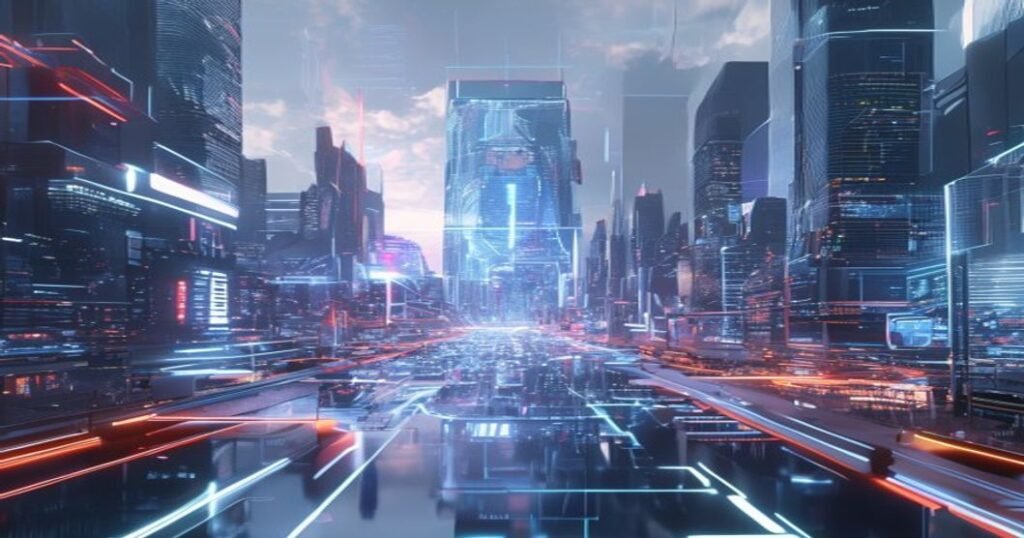

Welcome to 2026, a year not just marked by technological advancement, but by a profound fusion of the physical and digital. The term ‘metaverse,’ once a speculative concept, has matured into a hyper-real ecosystem, driven by the relentless march of Artificial Intelligence (AI), the lightning-fast capabilities of 6G networks, and the precise replication offered by digital twin technology. This isn’t just about virtual reality headsets; it’s about an interwoven tapestry of experiences, services, and opportunities that are fundamentally reshaping our world.
For entrepreneurs, innovators, and everyday citizens alike, understanding this paradigm shift is paramount. We are living through a period where the boundaries between the ‘real’ and the ‘digital’ are dissolving, creating a new frontier ripe for exploration and exponential growth. This article dives deep into how this hyper-real metaverse, powered by its triumvirate of enabling technologies, is not just a trend but the defining characteristic of our interconnected existence in 2026.
The Unseen Architects: 6G and AI Forge Our Hyper-Connected Reality
At the heart of the hyper-real metaverse lies an inseparable duo: 6G and AI. Where 5G offered speed and low latency, 6G, now more broadly deployed, brings unprecedented levels of omnipresent connectivity, near-zero latency, and truly massive data throughput. It’s the invisible nervous system that allows the metaverse to breathe, facilitating real-time interactions, streaming of volumetric data, and seamless transitions between physical and digital spaces.
Complementing this robust infrastructure is AI, acting as the brain and soul of this new reality. From predictive analytics that personalize our experiences to generative AI creating dynamic virtual environments and intelligent avatars, AI is making the metaverse not just functional but intuitive, adaptive, and truly immersive. It learns our preferences, anticipates our needs, and curates our digital journeys, often without explicit instruction. Indeed, the ability of these technologies to work in concert is unleashing the sixth sense, forging our hyper-connected reality in 2026, making our digital interactions feel as natural as our physical ones.
Digital Twins: Mirroring the World with Uncanny Precision
While 6G provides the pipe and AI provides the intelligence, digital twins are providing the incredibly detailed, living blueprints for the hyper-real metaverse. A digital twin is a virtual replica of a physical object, process, or even an entire city, updated in real-time with data from its physical counterpart. In 2026, these twins are no longer niche industrial tools; they are the fundamental building blocks of our digital environments.
-
Smart Cities and Infrastructure:
Urban planners use digital twins of entire metropolitan areas to simulate traffic flow, optimize energy consumption, predict environmental impacts, and even test new infrastructure projects virtually before any ground is broken. Residents interact with these digital cityscapes to find parking, report issues, or visualize future developments.
-
Industrial Revolution 4.0:
Factories are operating with digital twins of every machine, assembly line, and product. This allows for predictive maintenance, remote troubleshooting, and optimized production cycles, leading to unprecedented efficiency and reduced waste across sectors from automotive to aerospace.
-
Personalized Health and Wellness:
Individuals can possess digital twins of their own bodies, continuously updated with biometric data, health records, and lifestyle choices. This personalized twin can then be used by AI to recommend bespoke health plans, simulate the effects of treatments, or even predict potential health risks, moving us towards truly proactive healthcare.
Beyond Screens: Industry Transformation in the Hyper-Real
The impact of this convergence extends far beyond how we perceive reality; it’s fundamentally restructuring industries and creating entirely new economic models.
Education Reimagined: Immersive Learning for All
Classrooms are no longer confined by physical walls. Students can virtually explore ancient Rome, dissect a human heart in a simulated lab, or collaborate on complex engineering projects with peers across continents, all within a hyper-realistic metaverse environment. AI personalizes the learning journey for each student, adapting content and pace to their individual needs and learning styles. This dramatic shift is at the core of the AI education revolution, redefining classrooms by 2026 and making education more engaging, accessible, and effective than ever before.
Retail and E-commerce: Experiential Shopping Takes Center Stage
Imagine trying on clothes virtually that perfectly fit your digital avatar, feeling the fabric texture through haptic feedback, or test-driving a car on a simulated track before it’s even manufactured. The metaverse is transforming retail into an immersive, experiential journey. Brands are creating virtual storefronts that are more elaborate and interactive than their physical counterparts, offering hyper-personalized recommendations driven by AI that analyzes your digital twin’s preferences and past behaviors. This level of customization and immersive interaction is a key part of the reality shift: how hyper-personalized AI is rewiring our world in 2026, especially in consumer engagement.
The Creator Economy’s Golden Age
With the rise of the hyper-real metaverse, the creator economy has exploded into an AI-powered renaissance. Individuals and small studios are no longer limited by physical resources or complex software knowledge. Generative AI tools allow anyone to design intricate virtual worlds, craft stunning 3D assets, compose unique music, and develop interactive experiences with unprecedented ease. From digital fashion designers to metaverse architects and virtual event producers, new professions are emerging daily. The ability to monetize these creations within a vast, interconnected digital ecosystem has made the creator economy’s AI renaissance thrive in 2026’s digital frontier, empowering millions to turn their imagination into tangible (digital) assets.
Social Interaction and Entertainment: A New Fabric of Life
Beyond commerce and industry, the hyper-real metaverse is fundamentally changing how we connect, socialize, and entertain ourselves. Virtual concerts with millions of attendees, immersive storytelling experiences that adapt to individual participants, and highly realistic social spaces where friends from across the globe can meet and interact as if they were in the same room are now commonplace. AI-powered non-player characters (NPCs) are becoming more sophisticated, capable of engaging in nuanced conversations and providing companionship or guidance within these digital worlds. The potential for community building, shared experiences, and cultural exchange is immense, though it also brings new challenges related to digital well-being and identity.
Navigating the Ethical Landscape: Challenges and Responsibilities
As with any transformative technology, the hyper-real metaverse presents a complex array of ethical considerations and challenges that must be addressed proactively:
-
Privacy and Data Security:
With digital twins and hyper-personalized AI operating on vast amounts of personal data, safeguarding user privacy and preventing data breaches is paramount. Regulations and robust security protocols are constantly evolving to keep pace with technological advancements.
-
Digital Divide:
Ensuring equitable access to the hyper-real metaverse is crucial to prevent the creation of new forms of societal inequality. Governments and corporations are working to make the necessary infrastructure and devices accessible to all.
-
AI Ethics and Bias:
The AI systems powering the metaverse must be designed with fairness, transparency, and accountability in mind to avoid perpetuating biases or creating discriminatory experiences.
-
Digital Well-being and Addiction:
The immersive nature of the hyper-real metaverse raises concerns about potential addiction and the impact on mental health. Developing responsible usage guidelines and tools for digital well-being is an ongoing focus.
The Future is Now: What to Expect in 2026 and Beyond
In 2026, the hyper-real metaverse, driven by the symbiotic relationship between AI, 6G, and digital twins, is no longer a futuristic dream. It is a tangible, evolving reality that impacts every facet of our lives – from how we work and learn to how we socialize and consume. It is a testament to human ingenuity and our relentless pursuit of connection and immersion.
For entrepreneurs, this landscape represents an unparalleled opportunity for innovation, business creation, and value generation. For individuals, it promises unprecedented levels of personalization, convenience, and experiential richness. As we move forward, the evolution will continue, pushing the boundaries of what’s possible and challenging us to define what it means to be human in an increasingly digital world. StartupUrdu remains committed to bringing you the insights and analysis needed to navigate and thrive in this exciting new frontier.


